Emory University Launches MindfulEmory Initiative, Uniting 10 Offices for Campus Wellness
Emory unites 10 offices under one mindfulness initiative, revealing that the resources were never missing — just invisible to the people who needed them.
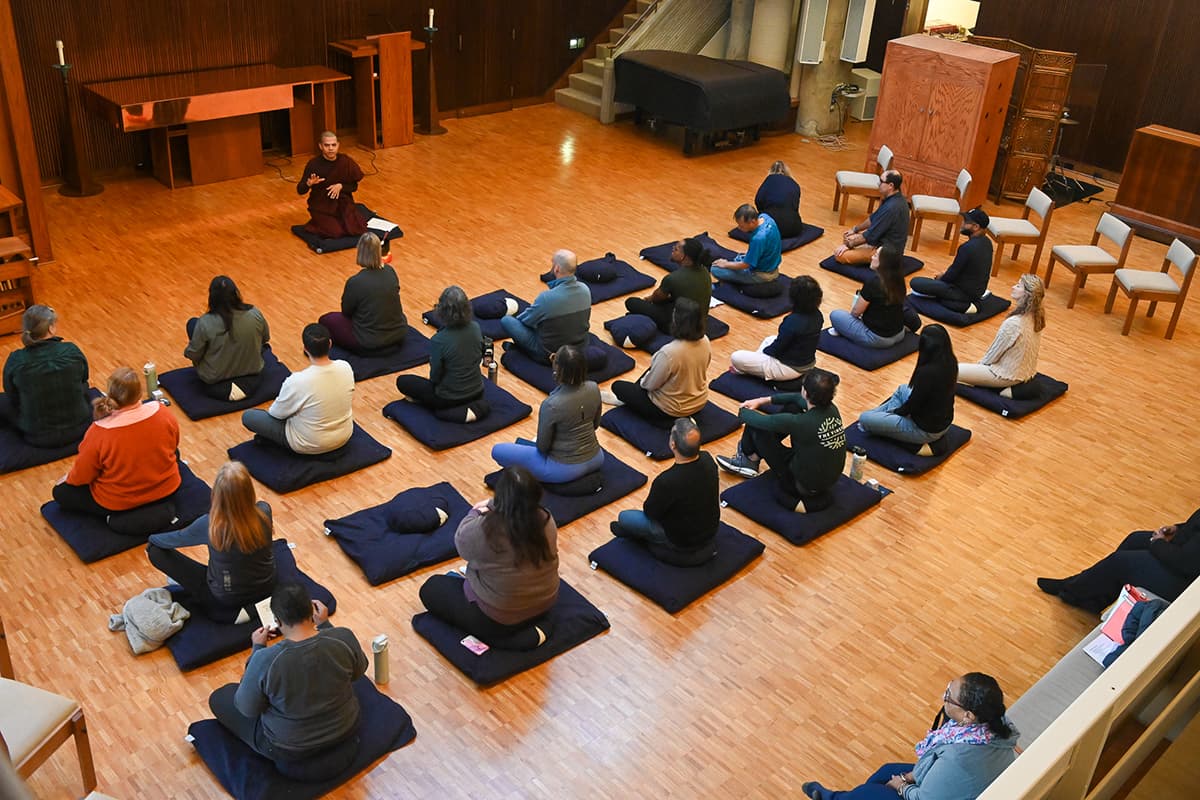
Ten offices across Emory University were already running meditation classes, sound baths, and guided practice sessions. The problem, according to university chaplain Rev. Dr. Gregory McGonigle, was that those offerings functioned in isolation — valuable but effectively invisible to anyone who hadn't stumbled across them by accident.
MindfulEmory, launched with a Faculty and Staff Retreat at Cannon Chapel on April 2, is Emory's answer to that fragmentation. The initiative convenes all 10 partner offices, including faculty wellbeing programs and student services, under the auspices of the Office of Spiritual and Religious Life, connecting what McGonigle calls "an interdependent web" of contemplative resources into something unified and findable.
The Cannon Chapel retreat drew nearly 50 participants through a day of layered offerings: yoga sessions, sound baths, guided meditations, and breakout sessions. Emory junior Vidhi Tiwary served as a student instructor, leading mindful movement practice and drawing on the cultural roots of surya namaskar, the sun salutation sequence embedded in yoga traditions. For Tiwary, teaching peers carried its own significance: not just passing on technique but restoring the cultural context that often gets stripped out when these practices travel into institutional settings.
A student retreat follows on April 24, and the initiative's next structural move arrives in fall 2026 with the formal launch of a Mindfulness Ambassador Program. The ambassador model reflects a pattern that campus wellness coordinators keep returning to: train peer leaders to carry brief, accessible practices into dorms, classrooms, and student organizations, lowering the entry barrier for people who would never visit a wellness center or register for a formal retreat. Peer-led access normalizes daily practice in ways that institutional scheduling alone cannot replicate.
The MindfulEmory structure offers a replicable framework for any meditator trying to build a more consistent home practice. The core insight isn't about adding more content; it's about reducing friction. When offerings are scattered across apps, drop-in classes, and informal group chats, the cost of showing up rises every time. Consolidating them into a single access point — one shared calendar, one accountability partner, one recurring weekly anchor session — removes the decision fatigue that quietly erodes even experienced practitioners.
Emory's approach works because it doesn't invent new resources. It connects existing ones and builds human infrastructure, specifically the ambassador network, to sustain peer entry points over time. A home equivalent follows the same logic: identify the two or three practices you already return to, put them on one calendar, and recruit one person to join you for a standing weekly sit. The buddy system, unglamorous as it sounds, is the mechanism that institutional mindfulness programs keep rediscovering as their most reliable retention tool.
McGonigle's framing of an "interdependent web" extends well beyond any single campus. No practice sustains itself indefinitely in isolation; practices reinforce each other when they're linked to people and rhythms. MindfulEmory is making that connection institutional at Emory. The architecture — one hub, peer ambassadors, consolidated scheduling — is straightforward enough to rebuild anywhere.
This article was produced by Prism’s automated news system from verified source data, official records, and press releases, then run through automated quality and moderation checks before publishing. The system is built and supervised by the people who set the standards it runs under. Read our full AI policy.
Did this article answer your question?