Mindfulness Association Releases April 2026 Calendar With 30 Daily Prompts
Jacky Seery's free 30-day Beginner's Mind calendar from the Mindfulness Association is already live for April; one daily prompt is all it asks, no cushion required.
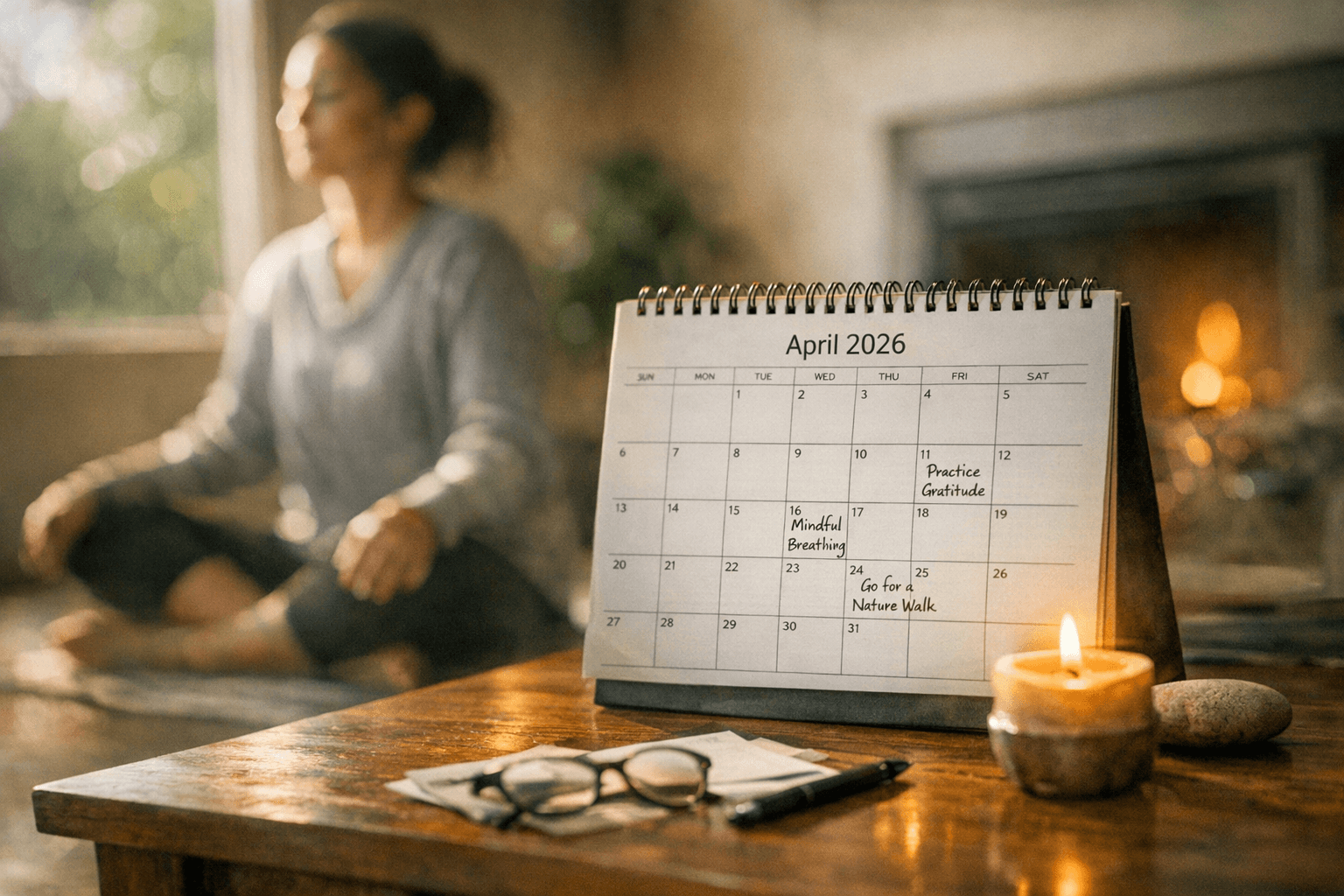
Jacky Seery's research background is in mindfulness for family carers, a group with less discretionary time than almost anyone in the practice community. That starting point shaped the Mindfulness Association's April 2026 calendar she authored: 30 prompts, one per day, none requiring more than a few minutes, and most designed to fit inside existing routines rather than compete with them. Seery, the Association's Communications Manager and an MSc graduate in Mindfulness Studies from the University of Aberdeen, published the PDF on March 27 under the theme "New Beginnings, Beginner's Mind."
With April already underway, the calendar functions less as a future plan and more as a live 30-day challenge. Download it now and you are entering on day 3 rather than day 1, which is closer to how the beginner's mind framing actually works: no perfect start, no prerequisite streak, just the next prompt.
The prompts represented in the calendar include a body awareness check, a mindful pause before reacting to a stressor, a period of single-task focus during a familiar activity, and short breathing practices. These are not warm-ups for longer sittings; they are the practice. The Mindfulness Association is explicit that the calendar works for all experience levels, positioning each prompt as a way to bring awareness into ordinary moments rather than carve out protected meditation time.
The habit loop the calendar is built for follows a recognizable structure. A consistent daily trigger, the first cup of tea, the commute, or the ninety seconds before a meeting, acts as the cue. The prompt itself runs from under a minute to a few minutes. The measure of success is not sustained concentration but noticing when attention has drifted and returning. Thirty iterations of that cycle, compounded, is closer to a reflex than a resolution.
Seery also tutors on the Association's Level 1 through Level 3 mindfulness courses, the Teacher Training pathway, and the Living Well to Die Well programme, and holds qualifications in Qi Gong, Tai Chi, and Yoga. That breadth is evident in the calendar's range: it accommodates someone who has never done a body scan and someone who has completed teacher training, asking both to meet the same prompt with the same fresh attention.
The Association has produced free themed monthly calendars as ongoing public outreach for several years, and April's printable PDF means a school, a workplace wellbeing team, or a clinical practice can deploy it at scale from a single download. The calendar is positioned as a tool for individuals, teachers, carers, and workplace leaders alike, which is exactly what makes it most effective when shared rather than kept private. Forward it to one person who has been talking about starting a practice and treat the rest of April as a joint experiment. Thirty days of returning to a single small prompt, done together, is where beginner's mind tends to stick.
This article was produced by Prism’s automated news system from verified source data, official records, and press releases, then run through automated quality and moderation checks before publishing. The system is built and supervised by the people who set the standards it runs under. Read our full AI policy.
Did this article answer your question?