Guided walking meditation turns city streets into mindful practice
Three breaths can turn a city block into a moving sit. Kazumi Igus shows how to train attention on a commute, no quiet room required.
Three breaths before the first block
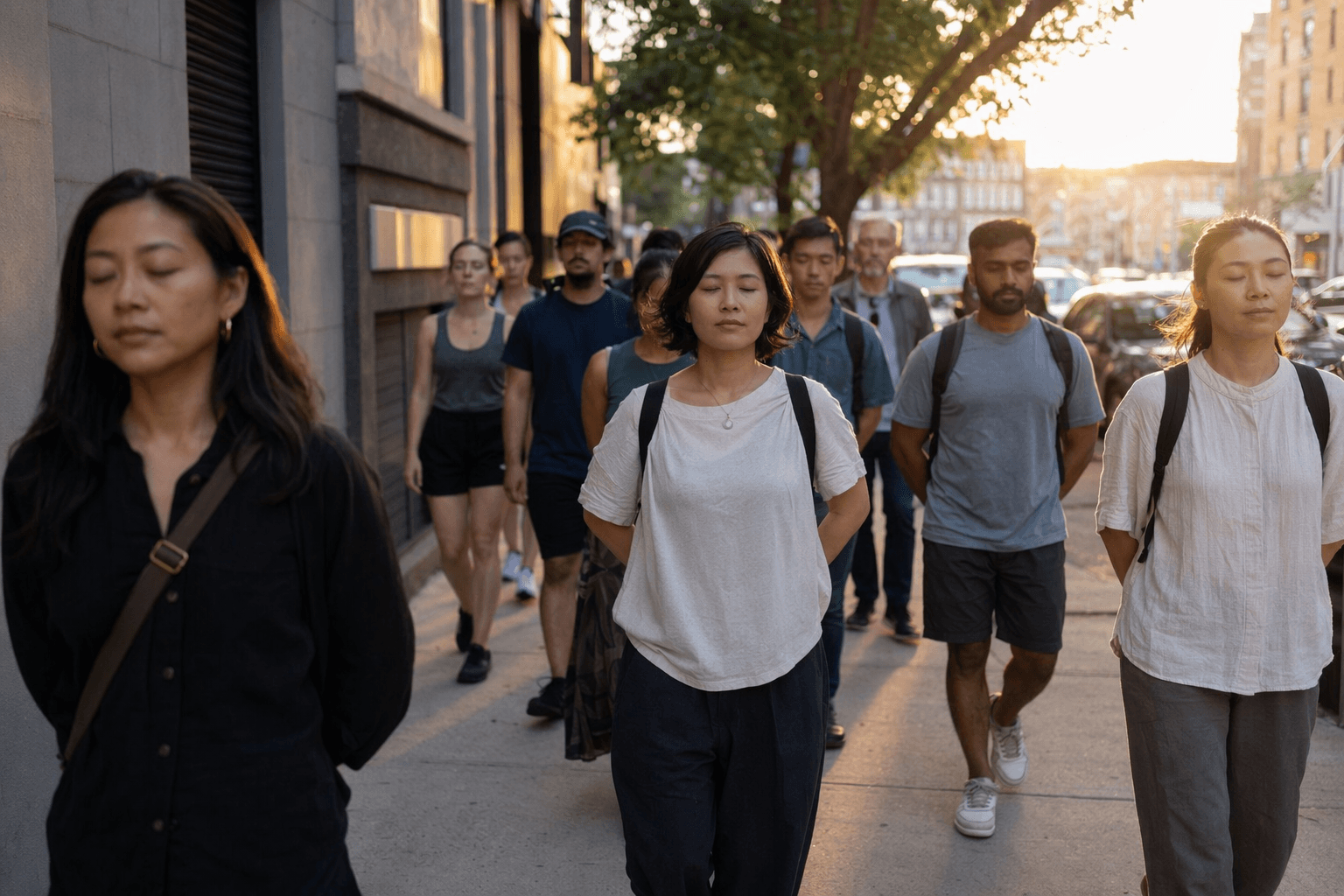
Three deep breaths can turn a sidewalk into a practice space. Kazumi Igus opens this guided walk by meeting the city exactly as it is, with noise, speed, errands, and the sense that there is always another obligation waiting ahead.
That is the quiet surprise of the piece: the city is not treated as the thing that gets in the way of meditation. It becomes the field of meditation itself. Instead of asking for silence, Igus asks for attention, and that makes the practice feel immediately usable on a lunch break, a train platform, or the walk from one appointment to the next.
Walk, then notice what the body already knows
The first instruction is simple and concrete: breathe three times, then notice pace, balance, and the mechanics of walking. From there, the awareness widens to the muscles doing the work, the swing of the hands and arms, and the feeling of carrying a bag or holding someone’s hand.
That sequence matters because it keeps mindfulness embodied. The practice does not begin as an abstract idea about calm. It begins with contact, with sensation, with the way a foot meets pavement and the way the body organizes itself in motion. The result is a form of attention that feels less like escaping the city and more like learning how to move through it awake.
Let the street become the object of practice
Igus also invites attention outward, not just inward. After the body comes the environment itself, including the smells that drift through the street. A bakery door opening, exhaust, rain on concrete, coffee, hot asphalt, all of it can become part of the meditation when it is noticed without judgment.
That is what makes the practice so transportable. You do not need a cushion, a retreat center, or even a particularly pleasant setting. A commute, a walk to the store, or a wheelchair journey through the city can all carry the same instruction: keep returning to the body, the breath, and the scene in front of you.
When the mind races, return without fuss
The heart of the meditation is not perfect focus. It is the repeated return. When the mind speeds ahead, Igus simply brings it back to the steps, the breath, and the body in motion. That repeated coming back is the real training, because it reframes distraction as part of the practice instead of proof that the practice has failed.
For city dwellers, that is a useful correction. Urban life is full of interrupts, from traffic lights to push alerts to the next errand on the list. This walking meditation does not require those interruptions to disappear. It teaches you to meet them, then come back to what your feet are doing right now.
A short practice built for real schedules
The format is as practical as the teaching. The audio version runs 16 minutes and 45 seconds, and the written script is designed to be read slowly, with pauses after each paragraph so the listener can follow along in real time. Mindful places the piece within its ongoing 12 Minute Meditation format, a structure built for everyday use rather than special occasions.
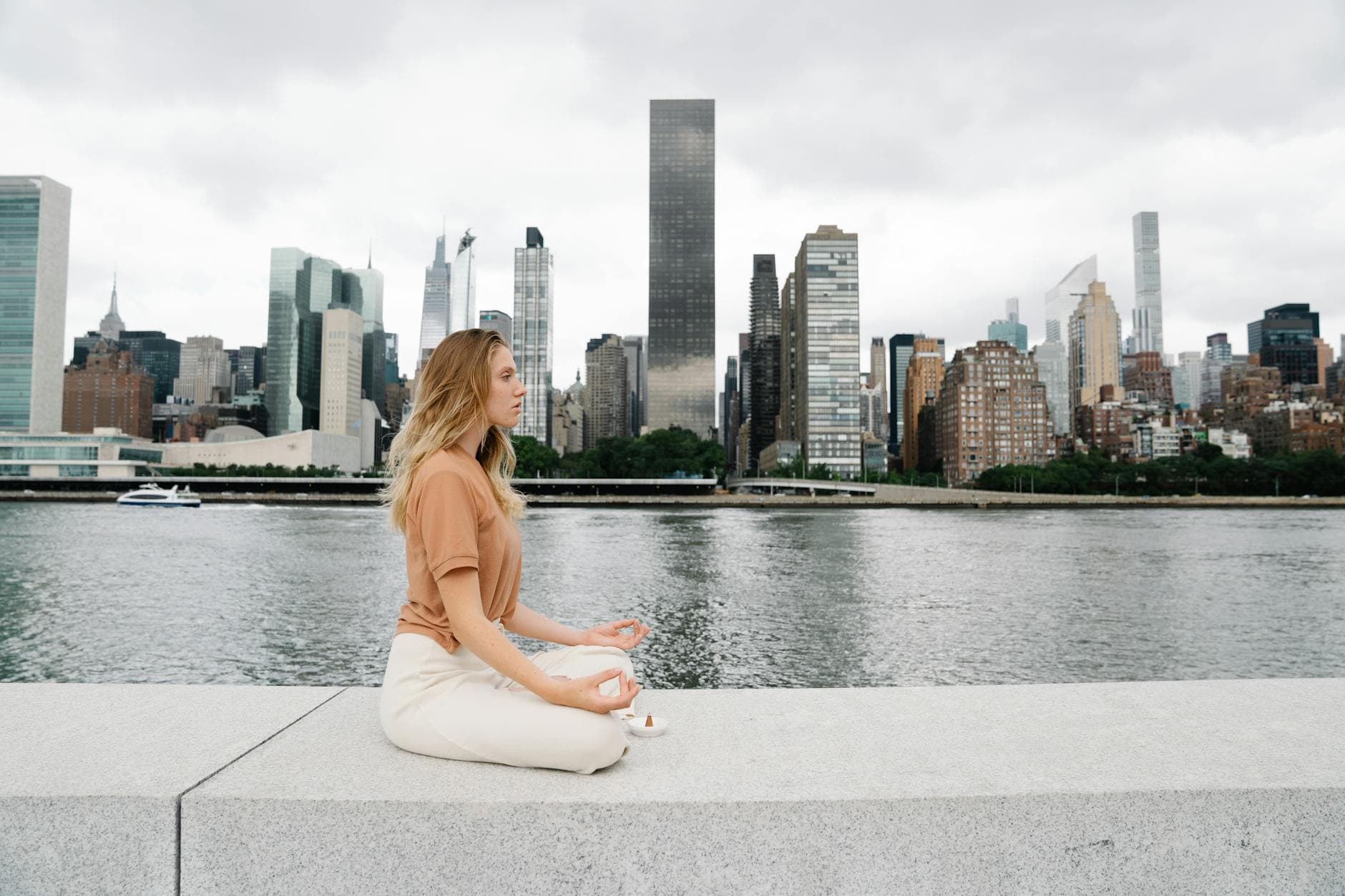
That matters because short, repeatable practices are often the easiest to keep. A brief guided walk can fit into the small seams of the day, the time between meetings or the stretch between transit stops. It is a meditation you can actually imagine doing on an ordinary weekday, which may be why it feels so shareable: the promise is not serenity in a perfect environment, but calm trained in a noisy one.
Why walking meditation belongs in the mindfulness toolkit
Walking meditation has deep roots. Cleveland Clinic describes it as a practice rooted in Buddhism, Taoism, and yoga, and Buddhist traditions across Sri Lanka, Thailand, Myanmar, Cambodia, and Laos have long treated walking as a companion to seated practice. In Theravada and related lineages, walking and sitting often alternate to sustain mindfulness and balance energy.
That lineage gives Igus’s city walk a wider frame. The modern, urban version is not a departure from tradition so much as an adaptation of it. Today’s walking meditation can happen indoors, outdoors, and even in a wheelchair, which makes the practice feel both ancient and unusually current.
Why this version feels especially accessible now
The accessibility is part of the point. UCLA Mindful teaches that mindfulness can be practiced while standing and walking, and that paying attention to sensations in motion can feel grounding. UCLA Mindful’s broader mission is to advance mindfulness education in ways that promote individual and cultural well-being and resilience, and Igus’s practice fits that ethic closely.
Her background helps explain the tone. Kazumi Igus is described as a Los Angeles native, a science teacher, and a trained meditation facilitator through UCLA’s Mindful Awareness Center. One profile also identifies her as a Black, female science teacher with 14 years of dedication to radical access for students of color, and another says she serves as a WholeSchool Mindfulness Director at one of the few predominantly Black high schools in the Los Angeles Unified School District. That combination of teaching, access, and mindfulness shows up in the practice itself, which is designed for ordinary people in ordinary places.
What the research says this kind of practice can do
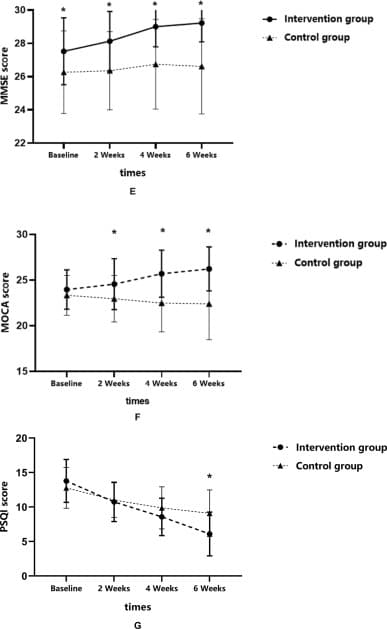
The broader research context backs up the appeal of a short walking meditation. A 2019 pilot study described mindful walking as a blend of physical activity and mindfulness practice, and noted that some interventions last four weeks instead of the more familiar eight-week mindfulness-based intervention model. That shorter structure may make the practice easier to try and easier to keep.
A recent systematic review also describes Buddhist walking meditation, walking meditation, or mindful walking as a mindfulness practice aimed at well-being and health in adults and older adults. Other public health sources add a practical reason to care: the National Institutes of Health and MedlinePlus emphasize the health value of regular physical activity, and MedlinePlus notes that mindfulness-based techniques are among nondrug approaches used in some pain-management contexts. A separate study on mindfulness-based physical activity also found audio delivery useful because it can reduce time demands and improve dissemination.
That combination explains why this format lands so well. Most adults in the United States are not active enough, so a practice that joins movement and attention is doing double duty. It offers a low-barrier entry point for people who want mindfulness but struggle to make room for stillness, and it does so without asking the city to quiet down first.
A practice that changes the walk without changing the route
The lasting appeal of Igus’s guided walk is how modest it is. It does not promise transcendence, only a clearer relationship to the ground underfoot, the breath in the chest, and the life moving past your eyes. Three breaths, a few minutes, one street, and the city starts to feel less like a blur and more like a place where beauty and attention can be trained together.
This article was produced by Prism’s automated news system from verified source data, official records, and press releases, then run through automated quality and moderation checks before publishing. The system is built and supervised by the people who set the standards it runs under. Read our full AI policy.
Did this article answer your question?