Headspace finds chronic workplace strain rising as AI changes accelerate
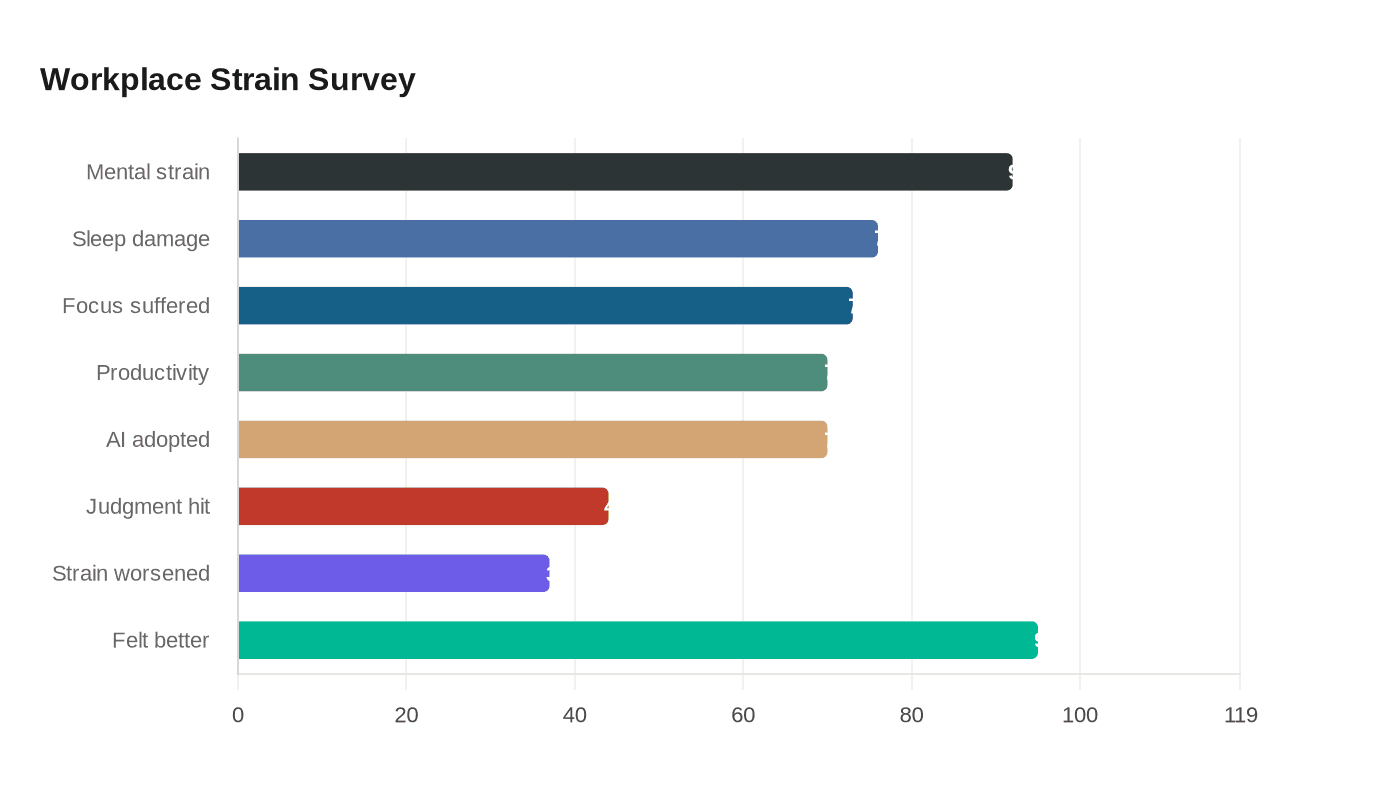
Headspace says 92% of workers felt mental strain and 70% faced new AI changes, calling the pressure a chronic strain crisis.

Headspace is no longer describing workplace stress as a bad stretch or a rough quarter. Its eighth annual Workforce State of Mind report, released May 20, framed the problem as a chronic strain crisis, a slow buildup of mental and cognitive pressure tied to unclear priorities, job insecurity and the pressure to keep up with artificial intelligence.
The company said it surveyed hundreds of employees and leaders for the report, and the numbers were severe. Ninety-two percent of workers reported mental or cognitive strain on the job, while 37% said that strain had worsened over the past 12 months. AI was the biggest driver of change in the survey, with 70% of employees saying their organization had adopted new AI technologies over the past year.

The strain was showing up far beyond mood or motivation. Headspace said 76% of workers reported damage to sleep, 73% said their focus had suffered, and 70% said productivity had taken a hit. Nearly half, 44%, said the pressure had affected their judgment when using AI and other new technologies, a sign that the issue is now touching daily decisions, not just morale.
The report also pointed to a support gap inside companies. More than half of employees said they had not received even one hour of resilience, stress-management or change-management training in the past year. Only 12% of organizations said they invest primarily in preventive support, and just 22% track mental health benefit utilization. Lisa Mulrooney Gross, Headspace’s chief people officer, put it bluntly: “We can’t keep waiting until people are already burned out to act.”
Headspace chief clinical officer Jenna Glover said resilience means “staying steady when pressure never fully lifts,” a definition that fits a work environment where change is constant and AI is accelerating expectations. The company’s 2025 report had already found that 58% of employees had considered quitting because of mental health and that 95% felt better after using employer-provided mental health benefits. In 2025, Gross and Edward Jones CHRO Suzan McDaniel also said in a U.S. Chamber of Commerce Foundation discussion that change had become constant and that AI was reshaping workplace wellbeing.
Taken together, the latest findings suggest the old burnout story is no longer enough. The pressure is lasting longer, changing faster and reaching into sleep, focus and judgment, which makes the case for shorter resets, clearer priorities and support built into the workday before strain hardens into collapse.
Know something we missed? Have a correction or additional information?
Submit a Tip