Mindful meditation helps parents reconnect with love amid child struggles
When fear spikes around a child’s struggle, this guided practice gives parents a fast way back to steadiness, love, and a softer response.
A direct reset for the moment parenting starts to tighten
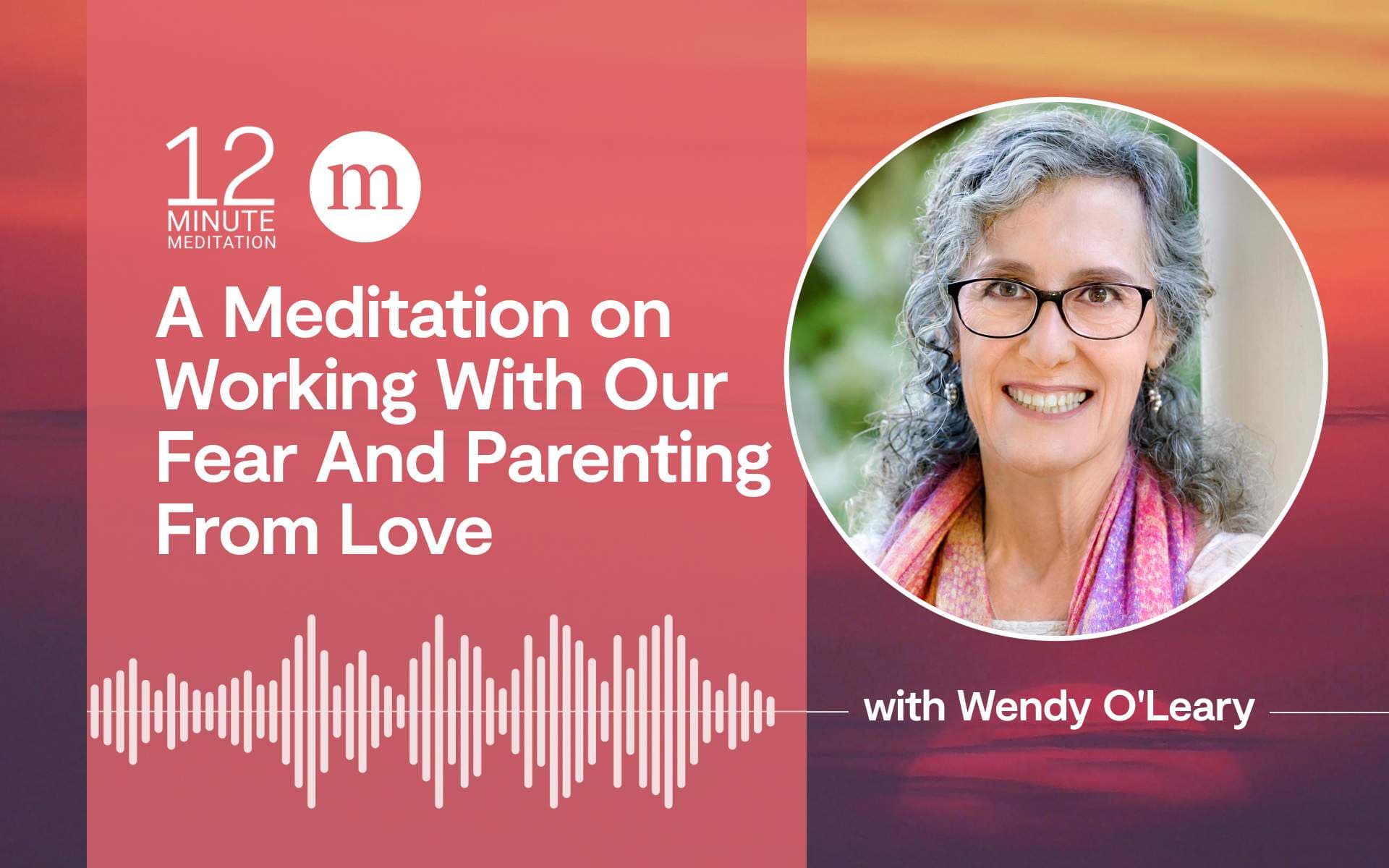
When worry starts taking over, Mindful’s new guided meditation gives parents something concrete to do right away. Written and led by Wendy O’Leary and published on May 20, 2026, it is built for the exact moment a parent feels pulled into fear, overprotection, or helplessness around a child’s struggle.
The strength of this practice is its format as much as its message. Mindful presents it both as a readable script and as an audio practice, which makes it easy to use in real life, whether you want to follow each line slowly or let O’Leary’s pacing carry you through it. For parents juggling school pickup, bedtime, or a tense conversation after a hard day, that flexibility is the difference between a meditation that sounds nice and one that actually gets used.
What the practice is trying to change
Mindful frames the meditation as a response to parents going through “a season of struggle” with a child. The core idea is plain but sharp: concern can crowd out the love underneath it, especially when a child is hurting and a parent’s mind races toward worst-case scenarios.
That is what makes this piece feel unusually practical inside the mindfulness space. It is not asking parents to pretend things are fine, and it is not selling calm as a vague daily ideal. It is offering a repeatable way to stay connected to love while still acknowledging fear, grief, and the strain that comes with parenting through difficulty.
The timing also fits a broader conversation in Mindful’s parenting coverage. The publication says its parenting section is meant to help readers pause, reset, and show up with greater calm and compassion, and a May 21, 2026 parenting piece notes that growing children’s mental health concerns and everyday family stress can weigh on both adults and children. In that context, O’Leary’s meditation lands as a direct tool for the emotional pinch point many families know too well.

How the guided script actually works
The meditation begins with the body, not the problem. O’Leary invites the reader to get comfortable, notice the body, and feel the contact with the floor or chair before doing anything else. That opening matters because it shifts the parent out of pure mental spiraling and into a steadier physical base.
From there, the practice moves into memory. O’Leary asks the parent to recall a moment of warmth and connection with the child, then notice how that memory feels in the body, mind, and heart. Only after that does the meditation turn toward the harder moment, the time when the child was struggling, and that sequence keeps the practice grounded in compassion rather than skipping straight to reassurance.
There is also a subtle physical cue that gives the meditation real-world utility. When people think about a difficult situation, they often contract and lean forward; O’Leary invites the reader to lean back a little, soften, widen, and create space to hold the experience. That small adjustment gives the practice a somatic edge, making it useful not just as reflection but as an embodied response to stress.
For a parent in the thick of it, that sequence is the point. The meditation does not ask you to solve the child’s struggle in the moment. It asks you to change how you are holding the struggle, so fear does not become the dominant force in the relationship.
Why Wendy O’Leary is such a natural fit for this work
O’Leary’s background makes this meditation feel especially aligned with the problem it addresses. Mindful identifies her as an M.Ed., author and health educator, a certified mindfulness teacher, parent educator, and self-compassion advocate. The publication also says her expertise includes teaching emotional resilience to children and adults, which helps explain why her parenting work tends to blend emotional honesty with usable tools.
Her bio adds more context. Mindful says O’Leary has written three children’s books and one adult book on self-compassion in families, a mix that fits her focus on family life as an emotional system rather than a set of isolated habits. That matters here because the meditation is not just about calming the adult nervous system; it is about helping a parent return to the relational stance that child needs most.
This is also not her first guided practice for Mindful. The publication previously featured her in 7 Self-Compassion Reminders for Parents of Kids Who Are Struggling on December 13, 2021, where she wrote that it can be isolating, confusing, and exhausting when a child is having a hard time. She also led Get to Know Your Monsters on March 14, 2022, a visualization exercise for difficult emotions, and A Meditation for When the Suffering in the World Feels Heavy, a guided practice offering refuge and grounding. Taken together, those pieces show a clear throughline: O’Leary keeps returning to the places where overwhelm, fear, and tenderness meet.
Why this one fits the moment so well
The newest meditation works because it names the emotional reality of parenting without flattening it. Parents are not only managing a child’s difficulty, they are also managing the fear that comes with loving someone so much and not being able to fix what hurts. O’Leary’s practice gives that fear somewhere to go, then guides the parent back toward love with breath, memory, and posture.
That makes the meditation useful in a very specific way. It is the kind of tool a parent can return to after a hard conversation, after a call from school, or in the quiet before walking back into a room where everyone is already on edge. The close of the practice lands where it should: not in perfect calm, but in a steadier way of showing up when a child’s struggle starts to pull the whole family off center.
Know something we missed? Have a correction or additional information?
Submit a Tip