OxyROX breathing app targets athletes with science-based breathwork
OxyROX begins with a breathing assessment, then serves athlete-specific protocols, positioning breathwork as a performance tool rather than a generic calm-down app.
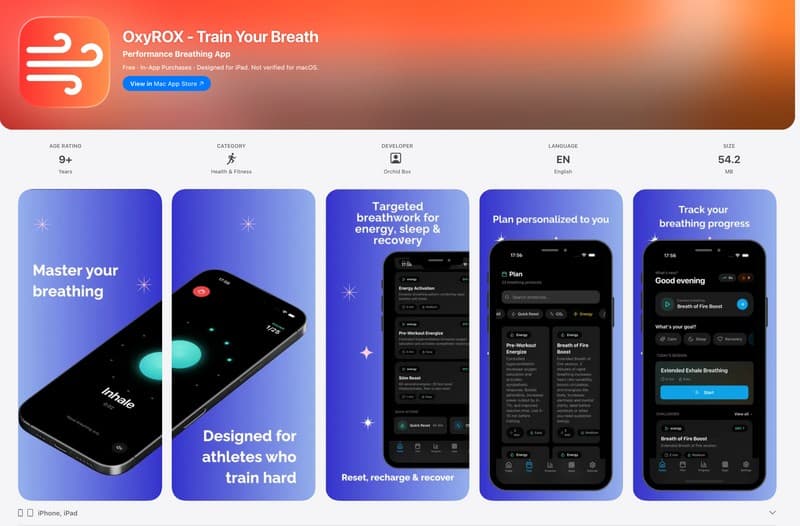
OxyROX is betting that athletes want more than a library of soothing audio. Launched May 20, the iOS app from Kettlebells Apps arrived on the Apple App Store with a 28-day free trial, a $3.99 monthly plan, and a Health & Fitness label for iPhone and iPad users running iOS 15.0 or later.
That setup matters because OxyROX does not open with a one-size-fits-all relaxation track. It starts with a breathing rhythm assessment and a breath-hold check, then matches sessions to a specific performance or recovery goal. The protocol library includes box breathing, physiological sighs, 4-7-8 breathing, CO2 tolerance training, extended exhale patterns for sleep, Breath of Fire for rapid energy, and longer post-training recovery sessions. Some sessions last just 60 seconds, built for the space between tasks or sets; others are designed to fit around hard workouts and packed training schedules.

Kettlebells Apps is pitching the app at HYROX competitors, endurance athletes, strength-and-conditioning practitioners, and busy professionals who still want practical recovery support. The company says that is the difference between OxyROX and a typical wellness app: instead of dropping techniques into a broad calm-down library, it adds progression and purpose. OxyROX also sits inside the company’s wider Rox ecosystem, which includes RoxSIM for HYROX race simulation. In the Swiss App Store, the developer is listed as Orchid Box, while the Mexico listing describes an OxyRox monthly subscription for unlimited breathing protocols geared toward HYROX and DEKA.
The science backdrop is moving in the same direction. A syndicated press release noted a growing body of research linking breathing exercises to stress reduction, sleep quality, cardiovascular recovery, and cognitive focus. In sport, a 2023 Frontiers editorial said breathing monitoring remains underappreciated, even as respiratory frequency is increasingly seen as sensitive to exercise tolerance. Earlier work has pointed to deeper physiological effects too: a 2010 review reported adaptations in elite breath-hold divers, including reduced blood acidosis, oxidative stress, and basal metabolic rate, along with increases in hematocrit, erythropoietin concentration, hemoglobin mass, and lung volumes.
The newer studies are still testing how far structured breathwork can go in training and recovery. A 2022 study of 12 student-athletes found that eight weeks of dry dynamic breath-hold training increased spleen volume from 109 ± 13 ml to 136 ± 13 ml, though hemoglobin did not change. A 2024 PLOS ONE study compared box breathing and 6 breaths-per-minute work after high-intensity interval training in 40 participants, underscoring that the evidence base is still developing even as consumer apps move toward more specific uses.
For readers deciding between a meditation app and a breathwork tool, OxyROX makes the split clear. Use a generic app for broad relaxation; use a structured breathing app when the goal is to reset between intervals, sharpen focus before a session, or build a recovery routine around training rather than around calm alone.
Know something we missed? Have a correction or additional information?
Submit a Tip