How Meditation Can Support Mental Health, Six Ways to Start
Calm’s latest guide turns meditation into a practical mental-health tool, with six simple ways to start and clear limits on what it can and cannot do.
Why this approach is landing now
Calm’s practical framing works because it answers the question people actually have when stress starts piling up: what can I do today that might help? Instead of treating meditation as a vague wellness ideal, the guide turns it into a usable habit for anxious, overwhelmed, emotionally drained, or scattered days. That matters in a moment when the need is obvious, with the Centers for Disease Control and Prevention reporting that 12.1% of U.S. adults had regular feelings of worry, nervousness, or anxiety, and the World Health Organization saying 970 million people worldwide were living with a mental disorder in 2019, most commonly anxiety and depression.
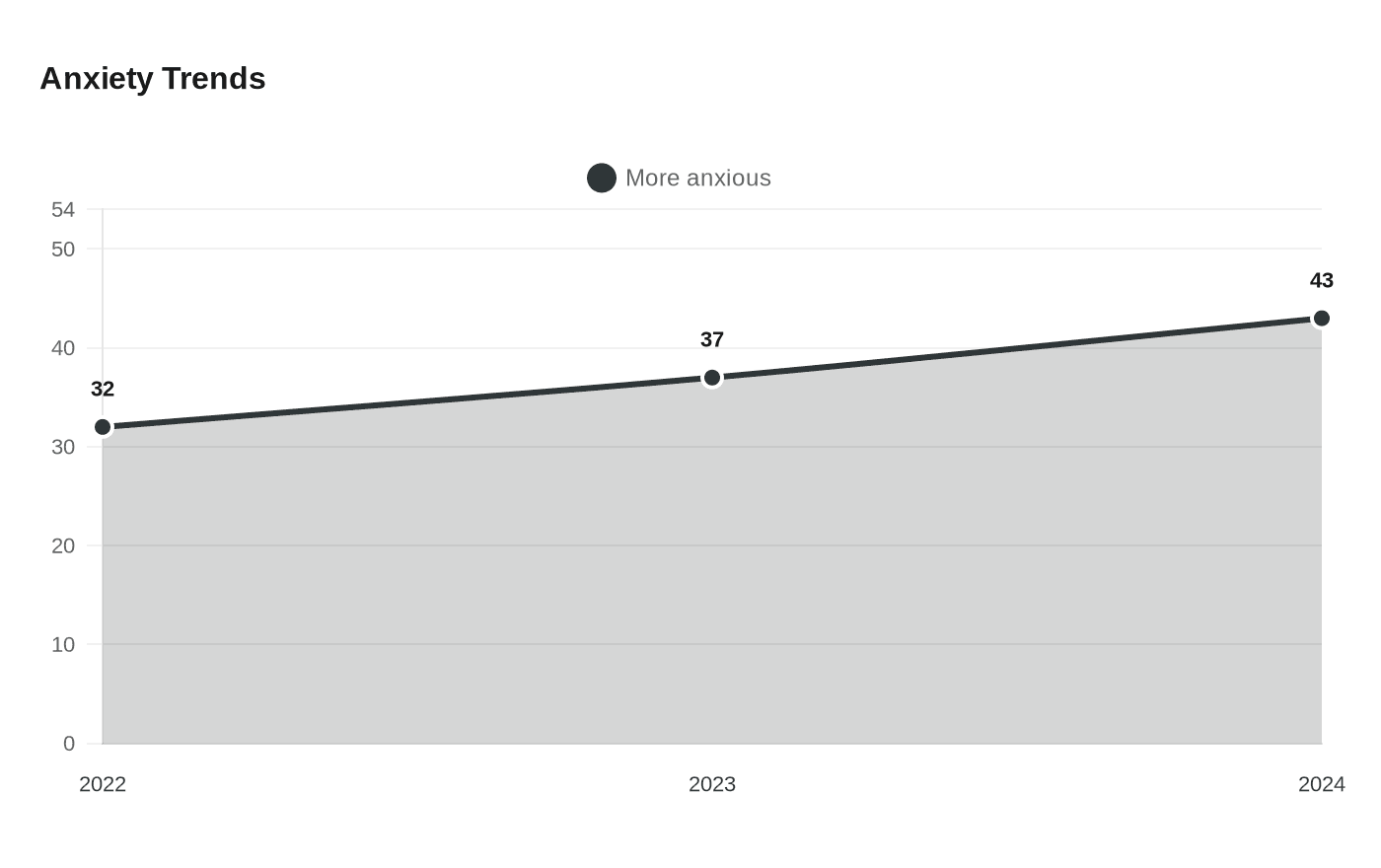
The pressure has not eased. In the American Psychiatric Association’s 2024 poll, 43% of U.S. adults said they felt more anxious than they did the previous year, up from 37% in 2023 and 32% in 2022. That kind of climb helps explain why short, concrete, self-directed tools keep resonating. Calm’s guide fits that need by translating meditation into a mental-health support habit that can live alongside the rest of a person’s care, not replace it.
What meditation can realistically do
The most useful part of the framing is its restraint. Meditation is not presented as a cure-all, and it is not a substitute for professional care. What it can do is create a little more space around difficult thoughts and feelings, support emotional regulation, and reduce stress reactivity, which is often where everyday spirals begin.
That is also where the evidence has been heading for years. The American Psychological Association notes that mindfulness meditation has been used for thousands of years and that research supports its value for stress management and well-being. The National Center for Complementary and Integrative Health says recent studies have looked at meditation and mindfulness for anxiety, stress, depression, pain, and withdrawal-related symptoms, which shows how broad the field has become.
The caution matters too. NCCIH says meditation is usually considered low-risk, but a 2020 review it cites examined 83 studies with 6,703 participants and found that 55 reported negative experiences related to meditation practices. That does not erase the benefits, but it does underline why a beginner-friendly, flexible approach is better than an all-or-nothing promise.
Six ways to start without overcomplicating it
The strength of Calm’s guide is that it breaks a broad practice into small entry points. That is the right move for anyone who wants help with stress, mood, or attention without needing to become a “meditation person” first.
1. Start with a short, repeatable sit
The easiest way in is to make the practice small enough that it feels possible on an ordinary day. A brief daily session does more for consistency than an ambitious routine that collapses after two attempts. The goal is not to master meditation immediately, but to build a simple reset you can return to when your mind feels overloaded.
2. Use the breath as your anchor
When stress spikes, the breath gives you something concrete to return to. That is one reason meditation can help with emotional regulation and stress reactivity: it offers a steady point of focus while thoughts, feelings, and tension move around it. If attention feels scattered, coming back to one breath is often enough to interrupt the auto-pilot loop.
3. Match the style to the problem
One of Calm’s most useful messages is that meditation is not just one thing. Different styles may help different people, which opens the door for anyone who has felt intimidated by the practice or who thinks they have already “tried meditation” and it did not stick. For some, a simple mindful-breath practice is enough; for others, a more structured format feels better.
4. Pair meditation with discussion or reflection
The NCCIH description of mindfulness-based stress reduction is especially helpful here. It combines mindful meditation with discussion sessions and other strategies for applying the practice to stressful experiences. That structure turns meditation from a moment of quiet into something more practical, because it helps you notice how the practice shows up in real life, not just on the cushion.
5. Treat it as a support tool, not a finish line
The best way to use meditation for mental health is to let it support the rest of your coping, not stand in for it. If you are dealing with persistent anxiety, depression, or another mental health condition, meditation can be part of a broader plan, but it should not be asked to do the job of clinical care on its own. The JAMA Internal Medicine review found small improvements in anxiety, depression, stress and distress, and mental health-related quality of life, which is promising, but still measured.
That review also found moderate evidence for anxiety and depression improvements, with effect sizes of 0.38 for anxiety at 8 weeks and 0.22 at 3 to 6 months, plus 0.30 for depression at 8 weeks and 0.23 at 3 to 6 months. Those are not dramatic claims, and that is exactly why they are useful. They suggest a realistic benefit: small, steady support that can matter in daily life.
6. Keep the routine low-friction
The longer the setup, the less likely the habit survives a hard week. Meditation works best when it is easy to begin, easy to repeat, and easy to adapt when your mood changes. That is where Calm’s beginner-friendly approach lands well: it treats meditation less like an identity and more like a habit you can actually use when you are tired, uneasy, or mentally crowded.
Where the field is heading
The science is also getting more precise. A 2023 individual-participant-data meta-analysis in Nature Mental Health, involving researchers including Matthew D. Sacchet, Matthew K. Nock, Julieta Galante, Tim Dalgleish, and Peter B. Jones, reflects a field that is moving beyond broad claims and into sharper questions about who benefits, when, and through which mechanisms. That shift makes practical guides more valuable, not less, because readers need usable steps even as the evidence grows more specific.
Meditation works best when it is treated as a modest, repeatable support, not a miracle. Used that way, it can give anxious or overwhelmed days a little more room to breathe, which is often the first step toward better mental balance.
This article was produced by Prism’s automated news system from verified source data, official records, and press releases, then run through automated quality and moderation checks before publishing. The system is built and supervised by the people who set the standards it runs under. Read our full AI policy.
Did this article answer your question?