Centre for Mindfulness Canada offers free sessions and training pathways
Free sessions, a 10-week teacher-training track, and a 7-day retreat show the Centre for Mindfulness Canada is building a real mindfulness ladder, not just a calendar.
A homepage with a clear point of view
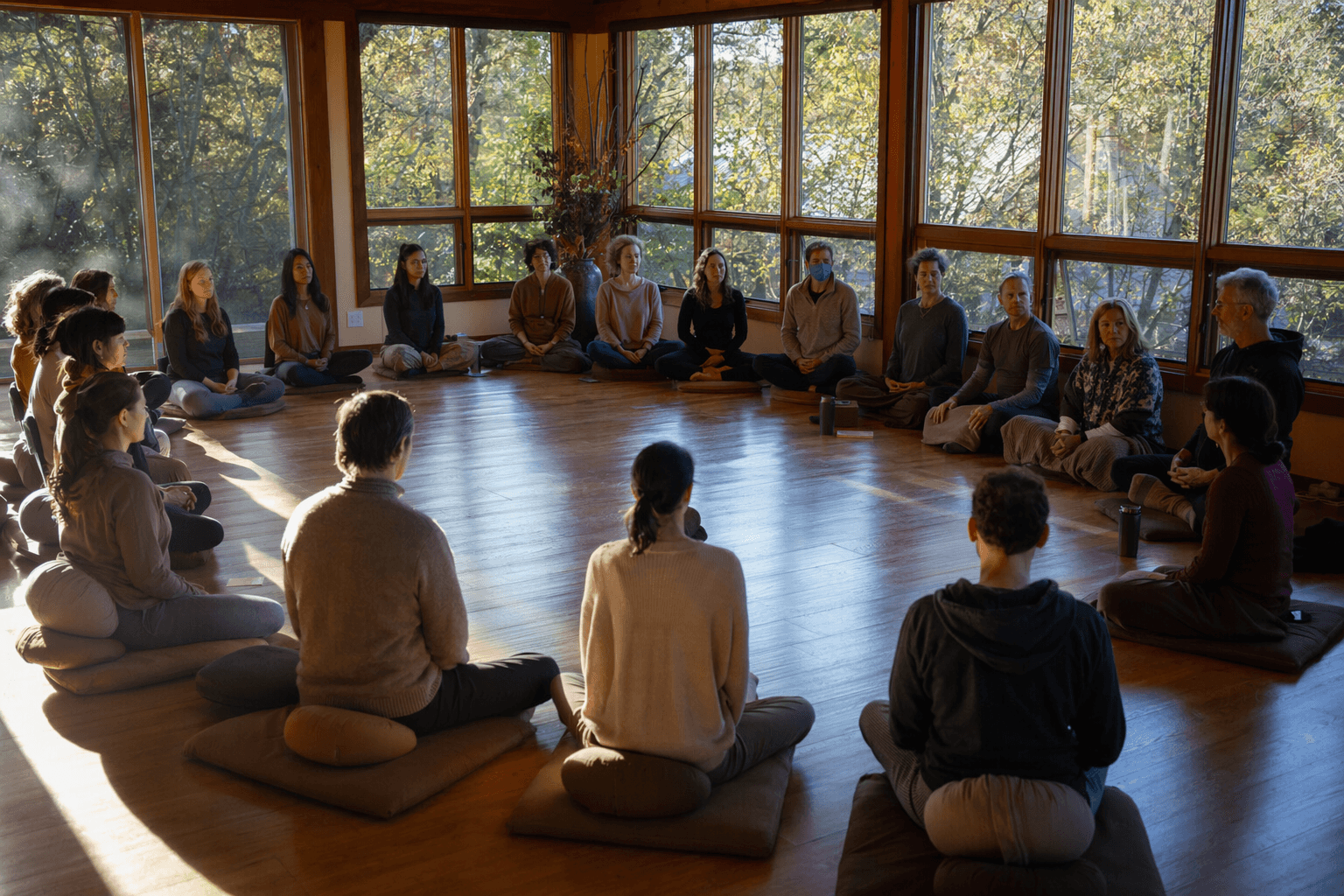
The Centre for Mindfulness Canada homepage does not sit there like a static brochure. It reads like a release sheet, with free entry points up front and more serious training paths right behind them. That matters, because the center is signaling exactly how it wants people to move through its offerings: try something low-commitment, join a structured MBSR class, then step into graduate practice, teacher training, or retreat work.
That ladder is the story. In one place, the site ties together free online laughter yoga, an MBSR drop-in for graduates, a free MBSR info session, an eight-week MBSR course, a 10-week teacher-training program, an online retreat, and even a certified laughter yoga leader training in Vancouver, British Columbia. This is not a single workshop dressed up as a program. It is a pipeline.
Who is behind it
The center is based in North Vancouver and says it was founded in 2015 by Dr. Kasim Al-Mashat. His background helps explain why the offerings feel so intentionally structured. He is described as a registered psychologist, public speaker, meditation and yoga teacher, and certified MBSR teacher and trainer, which gives the center a practitioner-led feel rather than the vibe of a generic wellness studio.
That credibility is reinforced by the center’s connection to the Global Mindfulness Collaborative. The collaborative says its member organizations share a training lineage with the Center for Mindfulness in Medicine, Health Care, and Society at UMass Medical School and the Mindfulness Center at Brown University. Brown describes its mindfulness center as a leading institution worldwide for research and teaching in the public health science of mindfulness, which helps place the Canada center inside a larger professional ecosystem rather than off on its own.
The free on-ramps are doing real work
The homepage’s most immediate draw is the cluster of free sessions. Free Online Laughter Yoga stands out because it lowers the barrier to entry in a way many mindfulness pages do not. It is not asking people to commit to an eight-week container on first contact. It is offering something lighter, more social, and easier to say yes to.
The same is true for the MBSR Drop-in for Graduates and the Free MBSR info session. Those two entries tell you the center understands different audiences. One is for people who already know the MBSR format and want a place to keep practicing. The other is for newcomers who want to understand what MBSR is before paying for a course. That mix is smart, and it is probably where the strongest demand is headed: fewer vague wellness experiences, more clear entry points and next steps.
The main course path: eight weeks, then deeper
The core offering on the homepage is the 8-week MBSR Program, running from May 6 to June 24, 2026. That is the center’s standard educational spine, the place where a curious newcomer can move from interest to practice with a defined start and finish. In a crowded mindfulness market, that kind of time box matters. People know what they are signing up for, and they know when they will be done.
The site then extends that structure with MBSR 2: Deeper Mindfulness. The course page says it is an eight-week program developed by Mark Williams and colleagues from Oxford and Cambridge for people who have already completed MBSR or MBCT. That detail is important because it shows the center is not only teaching first-step mindfulness. It is serving experienced practitioners who want a second-stage course built for people who already speak the language.
Teacher training is where the center gets serious
The biggest commitment on the homepage is the online 10-Week MBSR Essentials Teacher Training, running from April 30 to July 2, 2026. The teacher-training page adds the kind of detail that serious prospective students look for: the program totals 63.5 hours over 10 weeks, not counting the info session or orientation.
That is a substantial load, and it tells you this is not a casual credential. The center is building teachers, not just gathering participants. The presence of Florence Meleo-Meyer from the Mindfulness Center at Brown University in the program’s interview material also strengthens that impression, because it places the training in the same broader lineage that serious MBSR practitioners already recognize.
For anyone deciding whether mindfulness training is worth the time, that combination of hours, named faculty, and institutional lineage is the real signal. It says the center wants its training to carry weight beyond a local workshop calendar.
Summer retreat and later-year training expand the pipeline
The homepage does not stop at classes. It also lists a 7-day online meditation retreat, Insight Inside Us, running from July 31 to August 7, 2026, with an early-bird deadline of July 3, 2026. That retreat slot is revealing. It gives the center a deeper container for people who want to step out of ordinary weekly practice and into something more immersive without traveling.
The site also lists a Certified Laughter Yoga Leader Training in Vancouver, British Columbia, for November 14-15, 2026. Put next to the free laughter yoga session, that training makes the pattern obvious. The center is using the same practice area in two modes: a low-risk public introduction and a professional-level pathway for people who want to lead others.
What the schedule says about the market
Taken together, the spring and summer lineup points to where mindfulness education is heading. People want structure, but they also want options. They want something free enough to test without friction, but substantial enough to feel credible if they decide to go further. The Centre for Mindfulness Canada is meeting that demand with a ladder that starts with a free session and rises all the way to teacher training and retreat practice.
That is why the homepage works so well as a guide. It is not selling mindfulness as a vague lifestyle idea. It is presenting named programs, fixed dates, and a clear sequence of engagement. For anyone trying to decide where to begin, the message is simple: start with a free session, move into the eight-week MBSR format, and then decide whether teacher training, deeper mindfulness, or a seven-day retreat is the next right step.
This article was produced by Prism’s automated news system from verified source data, official records, and press releases, then run through automated quality and moderation checks before publishing. The system is built and supervised by the people who set the standards it runs under. Read our full AI policy.
Did this article answer your question?