Johns Hopkins Explains Why Mindfulness Is Spreading in Health Care
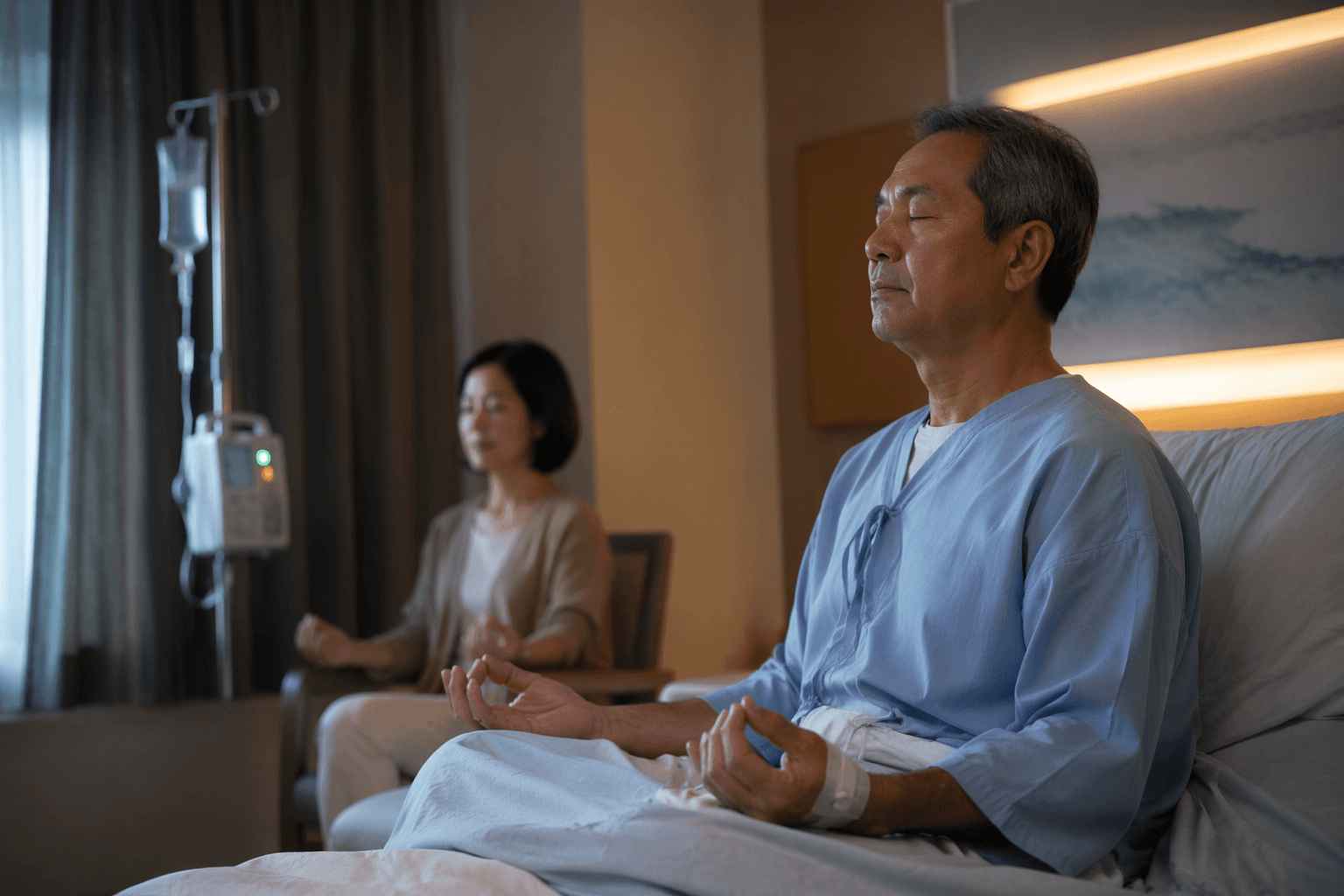
Mindfulness is moving from the cushion into clinics because Johns Hopkins sees it as a practical bridge between stress, pain, and brain-based care.

Mindfulness is no longer a niche wellness habit tucked into the corners of the internet. U.S. adult meditation use climbed from 7.5% in 2002 to 17.3% in 2022, and Johns Hopkins says its own faculty and staff classes are such a hit that demand is clearly coming from people who already understand health care from the inside.
Why health care keeps reaching for mindfulness
The Johns Hopkins framing is useful because it treats mindfulness less like a vague mood booster and more like a clinical language for a very modern problem: attention pulled in every direction except the present moment. Neda Gould, the founding director of the Johns Hopkins Mindfulness Program and a psychologist in the Office of Clinician and Faculty Care, connects that scattered attention to the stress load that shows up in anxiety, depression, trauma, attention problems, cardiovascular disease, autoimmune conditions, tick-borne illnesses, and acute or chronic pain.
That range matters. Health systems are not adopting mindfulness because it promises to solve everything. They are adopting it because clinicians keep seeing the same pattern: stress and pain feed each other, and a practice that changes how attention is handled may help interrupt that loop. Johns Hopkins is making the case that this is a real care issue, not a lifestyle flourish.
Gould also gives the practice a credibility boost by naming the mechanism in plain terms: “A consistent mindfulness practice can lead to actual changes in the brain.” She links that claim to functional MRI and EEG findings, which is exactly the kind of explanation that moves mindfulness out of the realm of aspiration and into the realm of physiology.
What mindfulness actually means in the clinic
In Johns Hopkins’ hands, mindfulness is not presented as an abstract philosophy. It is present-moment awareness, and the program emphasizes that many exercises are meant to fit into daily life rather than require a retreat or an empty schedule. That is one reason the practice translates so well into health care: it can be taught in short, repeatable forms that people can use between appointments, before a difficult conversation, or during a pain flare.
The Johns Hopkins Mindfulness Program offers courses for patients, faculty, and staff, taught both virtually and in person. That mix is telling. It suggests mindfulness is being treated as something for real schedules, real fatigue, and real institutional life, not just for people with time to sit on a cushion for an hour.
Some of the most practical entry points are almost disarmingly simple:
- a three-breath break
- mindful eating
- sensing exercises that bring attention back to the body
- noticing when the mind is building “story” beyond the facts
That last idea is one of the quietest but most important clinical moves in mindfulness. It gives people a way to distinguish raw sensation from the commentary that piles on top of it, which is especially relevant when stress and pain are already amplifying each other.
The tradition behind the clinical version
Johns Hopkins also helps readers understand how mindfulness crossed into mainstream medicine without losing its roots. Gould describes Mindfulness-Based Stress Reduction, or MBSR, as a secular version of Buddhist mindfulness and meditation concepts that Jon Kabat-Zinn brought into the Western world. That history matters because it explains why the health care version feels both familiar and adapted: it keeps the core training in awareness, but it packages that training for clinics, classes, and daily routines.
NCCIH adds an important clinical definition. It describes mindfulness as present-moment awareness without judgment, and it notes that MBSR combines mindful meditation with discussion and other strategies for applying the practice to stressful experiences. In other words, the practice is not only about sitting still. It is about learning how to carry attention differently into ordinary pressure.
Where the evidence is strongest, and where it is still mixed
The strongest case for mindfulness in health care is not that it cures disease. It is that it can improve coping, reduce distress, and in some settings improve pain-related function. That is why the evidence looks most persuasive in stress-linked conditions and certain chronic pain settings, while remaining more uneven in others.
Fibromyalgia is a good example of that mixed picture. NCCIH says the EULAR fibromyalgia recommendations gave mindfulness-based stress reduction only a weak recommendation, and a 2015 Cochrane review of 61 trials involving 4,234 mostly female participants found the effectiveness of mindfulness and related approaches remained unclear because the evidence quality was low or very low. That is not a failure of the whole field, but it is a reminder that enthusiasm has often run ahead of proof.
At the same time, newer findings are more encouraging. NCCIH highlighted an August 2024 study in veterans with chronic pain showing that 8-week virtual or self-paced mindfulness interventions improved pain-related function more than usual care. It also highlighted a September 2024 study finding that mindfulness meditation reduced pain using different neural patterns than placebo. That is the kind of detail health care systems notice, because it suggests mindfulness may be doing something measurable rather than merely producing a comforting narrative.
What the numbers say about popularity and risk
The spread of mindfulness also reflects demand. If meditation use among U.S. adults more than doubled over two decades, that is not a fringe trend anymore. NCCIH says meditation was the most popular of seven complementary health approaches measured in the 2022 National Health Interview Survey, which helps explain why hospitals, clinics, and faculty wellness programs keep making room for it.
But the safety picture is more nuanced than the cheerier marketing suggests. NCCIH says meditation and mindfulness are usually considered low-risk, yet it also cites a 2020 review of 83 studies with 6,703 participants in which 55 studies reported negative experiences. About 8% of participants reported a negative effect from meditation practice, including anxiety and depression in some users.
That matters for realistic expectations. Mindfulness is not a magic override for distress, and for a minority of people it can surface discomfort rather than smooth it away. The clinical conversation is healthier when it acknowledges that up front.
What a regular meditator should expect
If you already practice mindfulness, the Johns Hopkins story is less about discovering a new technique and more about seeing your practice translated into a clinical setting. The realistic payoff is usually not instant relief, but a better ability to notice stress, stay with sensation without immediately spiraling, and respond more skillfully when pain or anxiety shows up.
That is why mindfulness keeps gaining ground in health care. It fits what clinicians actually need: something simple enough to teach, grounded enough to study, and flexible enough to be used by patients, faculty, and staff alike. Johns Hopkins is not selling a cure. It is showing why a practice built on attention keeps finding new work in modern medicine.
This article was produced by Prism’s automated news system from verified source data, official records, and press releases, then run through automated quality and moderation checks before publishing. The system is built and supervised by the people who set the standards it runs under. Read our full AI policy.
Did this article answer your question?