MBSR Reduces Fatigue, Anxiety, and Depression in Lung Cancer Patients
Fatigue from lung cancer chemotherapy reversed at three months in patients who completed an 8-week MBSR program; controls stayed elevated.
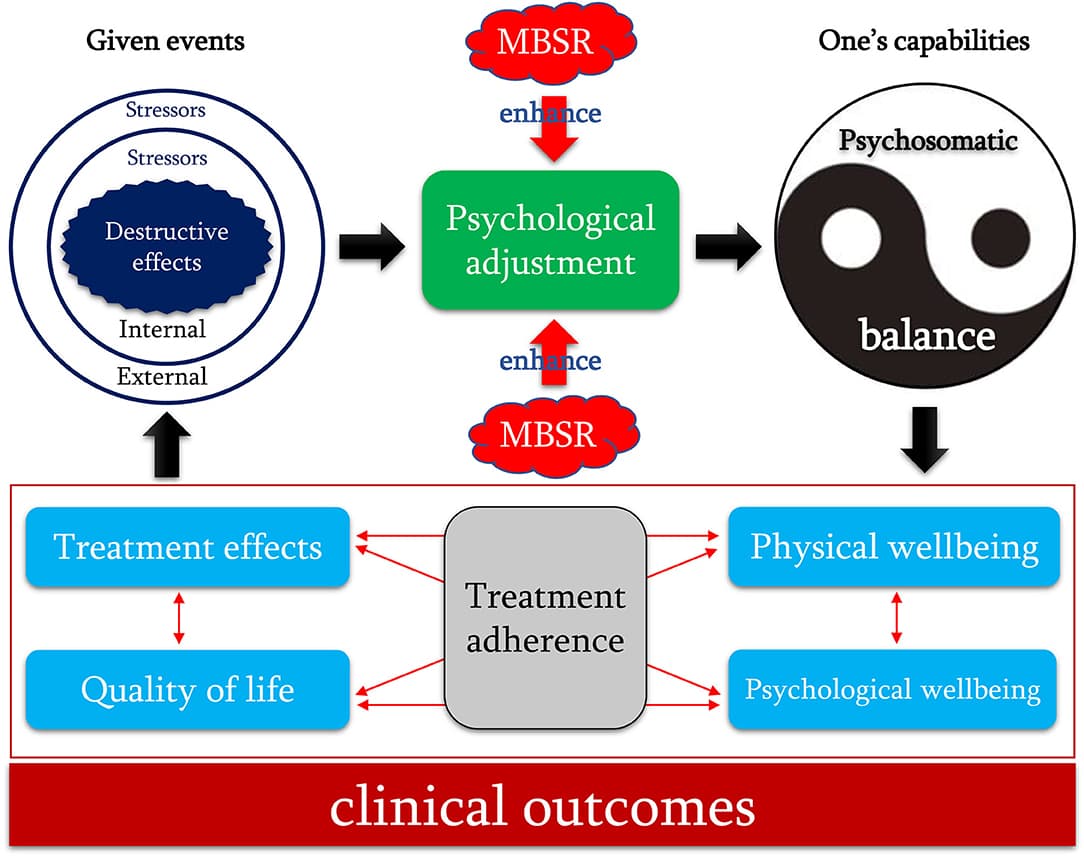
Fatigue in NSCLC patients undergoing surgery and chemotherapy almost never gets better on its own mid-treatment. A new randomized controlled trial found it did, and the mechanism was eight weeks of mindfulness practice.
The study, published April 3 in Medicine (Baltimore) under DOI 10.1097/MD.0000000000048134, enrolled 80 patients with non-small cell lung cancer scheduled for surgery and adjuvant chemotherapy. Xiaoqian Liu and six coauthors, including Hui Chen, Yuna Cheng, Xinyi Xu, Haobo Shixing, Miao He and Yiqing Luo, randomized patients equally: 40 to an 8-week MBSR program, 40 to standard perioperative and oncology care with no structured mindfulness component.
MBSR in this context follows the familiar protocol: weekly group sessions led by a trained instructor, paired with daily home practice using guided recordings. Participants work through body scan, sitting meditation and mindful movement, building a self-directed practice intended to outlast the clinical setting. The control group received standard care only, making the comparison clean and the effect attributable specifically to the MBSR intervention.
Researchers measured outcomes at four time points: baseline before surgery, week 4 before the start of chemotherapy, then at 1 and 3 months post-intervention, using five validated scales. The Piper Fatigue Scale tracked physical and cognitive fatigue; the Self-Rating Anxiety Scale and Self-Rating Depression Scale captured emotional distress; the General Self-Efficacy Scale and Mindful Attention Awareness Scale measured psychological capacity and trait mindfulness, respectively.
The fatigue finding is the most clinically striking. MBSR participants did see fatigue peak at the week-4 mark, which aligns with the combined stress of surgical recovery and early chemotherapy. But by the 3-month post-intervention follow-up, their scores had returned near baseline. Control patients showed no equivalent recovery, maintaining elevated fatigue throughout. Anxiety and depression scores in the MBSR arm dropped significantly by week 4 and kept improving. Self-efficacy and mindfulness scores rose steadily, with statistically significant group differences confirmed at both the 1-month and 3-month assessments.

For anyone in an NSCLC treatment pathway, or a caregiver navigating it alongside someone, these findings translate into a practical checklist before enrolling in any hospital or clinic MBSR program. Ask whether the program runs the complete 8-week protocol rather than an abbreviated version. Confirm that home practice recordings are provided, since daily between-session practice is not optional in standard MBSR delivery. Ask whether the instructor holds certification from a recognized training body and whether the program has prior experience serving patients in active oncology treatment, not just healthy adult populations. Some programs are not designed around the immunocompromised precautions or energy limitations common in perioperative care.
The study's 80-patient, single-site design leaves real questions open: durability past three months, effects on chemotherapy adherence, sleep quality and inflammation markers. Multi-site replication with larger samples is the necessary next step.
What this trial adds, through a rigorous randomized design and five independently validated outcome measures, is clear evidence that structured mindfulness practice can shift the symptom trajectory during one of oncology's most grueling stretches. The 3-month fatigue reversal alone is the kind of outcome worth raising with an oncology team before the first chemotherapy infusion.
This article was produced by Prism’s automated news system from verified source data, official records, and press releases, then run through automated quality and moderation checks before publishing. The system is built and supervised by the people who set the standards it runs under. Read our full AI policy.
Did this article answer your question?