Meditation and exercise may work together to ease depression, anxiety
Meditation looks most useful as a companion habit here, not a replacement: the strongest signal came when it was stacked with physical activity, while meditation alone tracked differently.
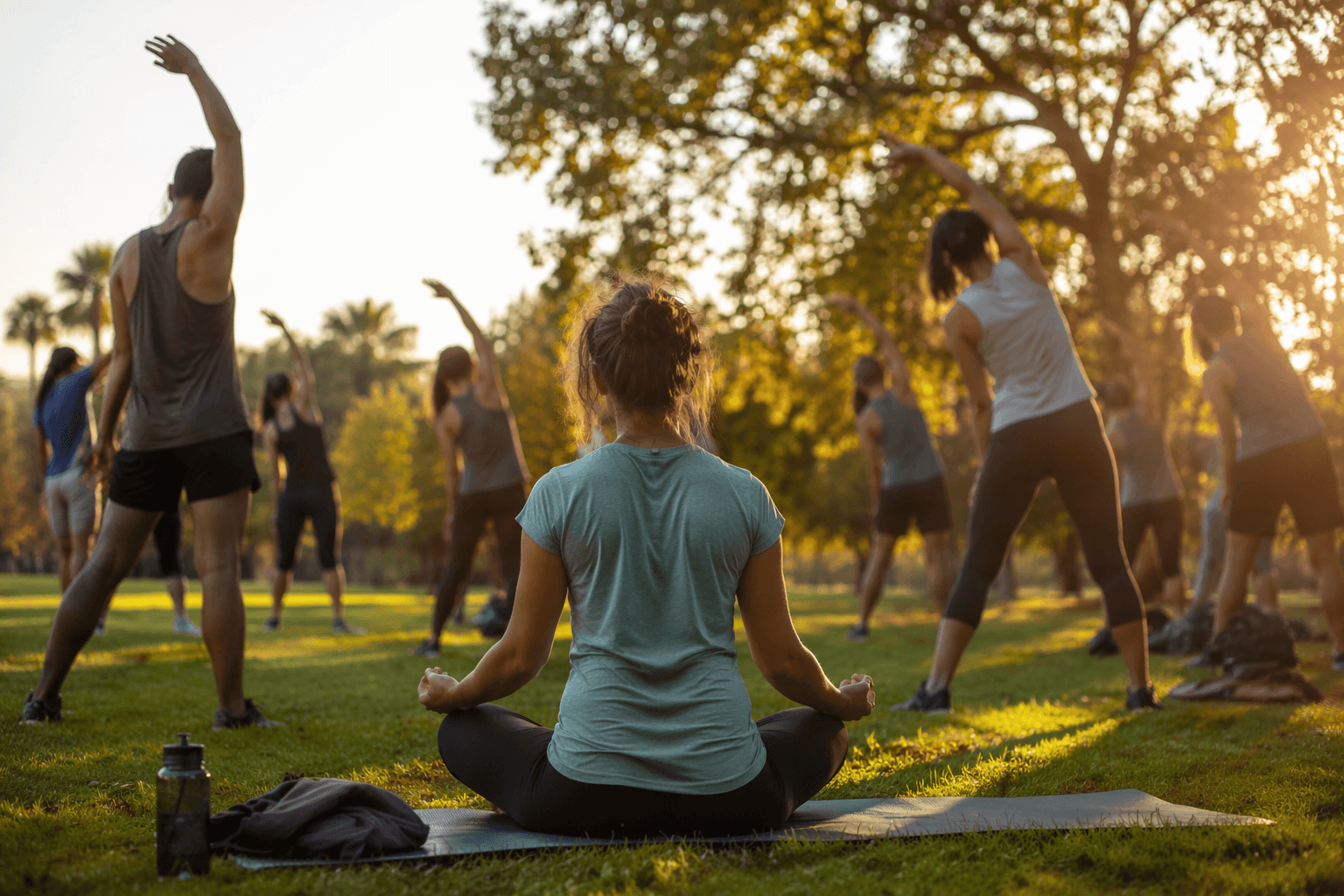
Meditation may not be the better solo bet if the goal is easing depression and anxiety symptoms. In a large U.S. survey analysis, the clearest pattern was not “mindfulness versus movement,” but the combination of both habits, with physical activity carrying the stronger link to better mental-health symptoms and meditation making the most sense as a companion practice.
What this study actually tested
The analysis used the 2022 National Health Interview Survey Sample Adult file, a nationally representative slice of the civilian, non-institutionalized U.S. population that the Centers for Disease Control and Prevention field annually. The dataset is built for secondary analysis, which makes it especially useful for asking public-health questions about ordinary adults outside a clinic, not just people already enrolled in a treatment program.
The sample was large, 24,927 adults, and the question was simple but practical: how do any past-year meditation and meeting physical activity guidelines relate to depression and anxiety symptoms? That design does not test a new intervention, and it does not prove one behavior causes better mental health. What it does do is map where these habits show up in real life, and whether they appear redundant or complementary.
Why the comparison matters
That distinction matters because meditation and exercise often get bundled together in wellness culture as if they are interchangeable routes to the same destination. The new analysis treats them more carefully. Meditation is often discussed in terms of attention, emotional awareness, and reduced rumination, while physical activity is more closely tied to stress reactivity, sleep, and mood regulation. Those are overlapping pathways, but not identical ones.
The survey results suggest that difference is not just theoretical. Meeting physical activity guidelines was associated with lower depression and anxiety. By contrast, reporting any past-year meditation without sufficient physical activity was associated with higher prevalence, a pattern the authors interpret as likely reflecting indication or help-seeking, not harm from meditation itself. Adults who reported both behaviors had a more favorable symptom profile than those in the meditation-only group, but the contrast is cross-sectional and should not be read as causal proof.
How to read the meditation signal without overreading it
For mindfulness readers, the tricky part is resisting the reflex to turn meditation into a universal answer. This study does not do that. Instead, it places meditation in the same frame as a low-cost movement habit and shows that the context matters. A person who turns to meditation while already struggling may show up in survey data very differently from someone who practices it as a maintenance habit alongside exercise.
That is why the authors’ warning about causality is so important. Survey associations can tell you who is doing what, and what symptoms cluster with those behaviors, but they cannot untangle whether meditation reduces distress, whether distressed people are more likely to meditate, or whether both are true in different subgroups. The most defensible reading is practical: meditation may still help, but it does not look like a substitute for movement in population data.
The bigger public-health backdrop
This finding lands in a meditation landscape that has changed fast. National Center for Complementary and Integrative Health data show U.S. adult meditation use rose from 7.5 percent in 2002 to 17.3 percent in 2022. In the 2022 National Health Interview Survey, meditation was the most popular of the seven complementary health approaches tracked, ahead of yoga, chiropractic care, massage therapy, guided imagery or progressive muscle relaxation, acupuncture, and naturopathy.
That growth helps explain why this study feels timely. Meditation is no longer a niche practice on the edges of wellness culture, and that makes its real-world patterning more important. It also makes it more important to keep the evidence sober: NCCIH notes that reviews of meditation have reported negative effects such as anxiety and depression, a reminder that popularity should never be mistaken for proof of a simple mental-health payoff.
What the exercise evidence adds
Physical activity has a much deeper evidence base in this conversation. A 2023 umbrella review in the British Journal of Sports Medicine synthesized 97 reviews, 1,039 trials, and 128,119 participants, and found physical activity is highly beneficial for symptoms of depression, anxiety, and distress across adult populations. That does not turn exercise into a cure-all, but it does make the movement side of the equation look unusually sturdy.
Placed next to that body of evidence, the new survey analysis reads less like a challenge to meditation and more like a recalibration of expectations. Exercise appears to be the more consistently favorable correlate in population data, while meditation may add something useful, especially when it is not the only tool in the mix. For people making choices under real-world limits of time, money, and energy, that is the actionable part of the story.
What to do with the finding right now
A practical reading of the data looks like this:
- If you already meditate, do not treat that as a reason to skip movement.
- If you already exercise, meditation may still be worth adding as a second layer.
- If you are starting from zero, the strongest population-level signal is with meeting physical activity guidelines first.
- If meditation is the only habit that feels possible right now, it may still belong in a broader plan, but it should not be mistaken for a complete substitute.
The opening question was whether meditation works best on its own or alongside physical activity. This survey points to the second answer. In the real world of depression and anxiety symptoms, the more useful frame is not choosing one habit over the other, but building a stack that includes movement first and meditation as a meaningful add-on.
This article was produced by Prism’s automated news system from verified source data, official records, and press releases, then run through automated quality and moderation checks before publishing. The system is built and supervised by the people who set the standards it runs under. Read our full AI policy.
Did this article answer your question?