Mindfulness Combined With VR Shows Promise for Treating Depression, Review Finds
69% of studies found VR-enhanced mindfulness beat conventional comparators for depression symptoms, but a 37-study review says the field isn't ready for clinical rollout yet.
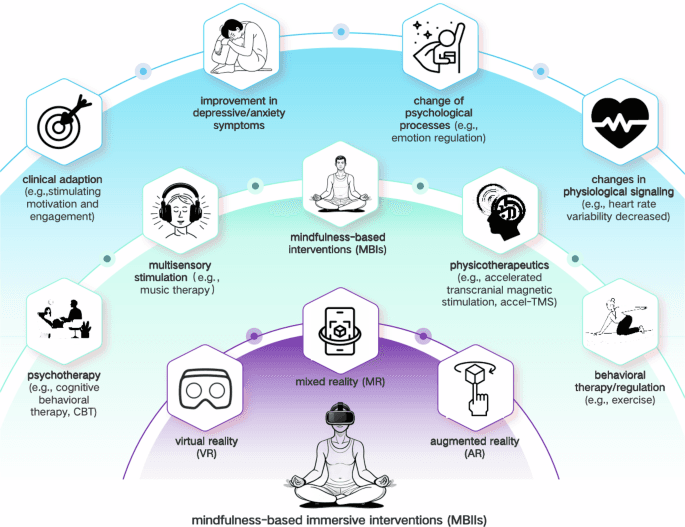
The numbers coming out of a new systematic review are hard to ignore. Across 37 eligible studies, 69% reported greater improvements in depressive and anxiety symptoms when mindfulness was delivered through immersive technology rather than conventional comparators, and 78% showed gains on psychological process measures like attention and rumination. Most studies also logged improvements on physiological markers, including heart-rate variability. Those figures, published April 2 in npj Mental Health Research, come from a PRISMA-guided review led by Peng Tan and colleagues that screened 670 records before narrowing to studies pairing established mindfulness-based approaches with virtual reality, multi-sensory environments, and related immersive platforms.
The framework Tan's team uses is "mindfulness-based immersive interventions," or MBIIs, a category that bundles VR headsets, ambient multi-sensory rooms, and interactive digital environments under one clinical umbrella. The logic connecting these technologies to depression treatment is specific: low motivation and ruminative thinking are among the core mechanisms that cause people with depressive disorders to disengage from mindfulness-based interventions before they get a therapeutic dose. Embedding the practice inside a multisensory, interactive environment is designed to close that adherence gap, making it harder for the mind to wander back into its default loop.
The review does not, however, make a clean case for clinical deployment. Tan and colleagues are pointed about what the existing literature cannot yet support. Session lengths, VR hardware configurations, software environments, and sensory setups vary so widely across studies that aggregate comparisons carry real methodological weight. Most trials relied on passive or no-treatment controls rather than active comparators, follow-up windows were short, and cost-effectiveness data were essentially absent. Questions of equity, specifically who has access to consumer-grade VR hardware and sufficient digital literacy to use it, are flagged as urgent priorities that the field has so far left unaddressed.
The authors' prescription is concrete: preregistered mechanistic randomized controlled trials with active controls, neurocognitive or physiological endpoints built into the design, longer follow-up periods, and economic analyses. Until that infrastructure exists, MBIIs belong in the category of promising experimental adjuncts, not substitutes for the evidence-backed MBIs, such as MBSR and MBCT, that already have decades of trial data behind them.
For practitioners who follow the mindfulness research closely, the review reads as a calibrated signal at an inflection point. The technology is getting tractable enough to study seriously, the early outcome signals are encouraging, and the methodological critique is precise enough to act on. What the field needs now are trials designed to answer mechanism questions, not just to demonstrate feasibility.
This article was produced by Prism’s automated news system from verified source data, official records, and press releases, then run through automated quality and moderation checks before publishing. The system is built and supervised by the people who set the standards it runs under. Read our full AI policy.
Did this article answer your question?