Mindfulness in Law Society Offers Deep Rest for Busy Legal Minds
Lawyers were taught to rest on purpose in a Yoga Nidra session built for minds that never fully clock out.
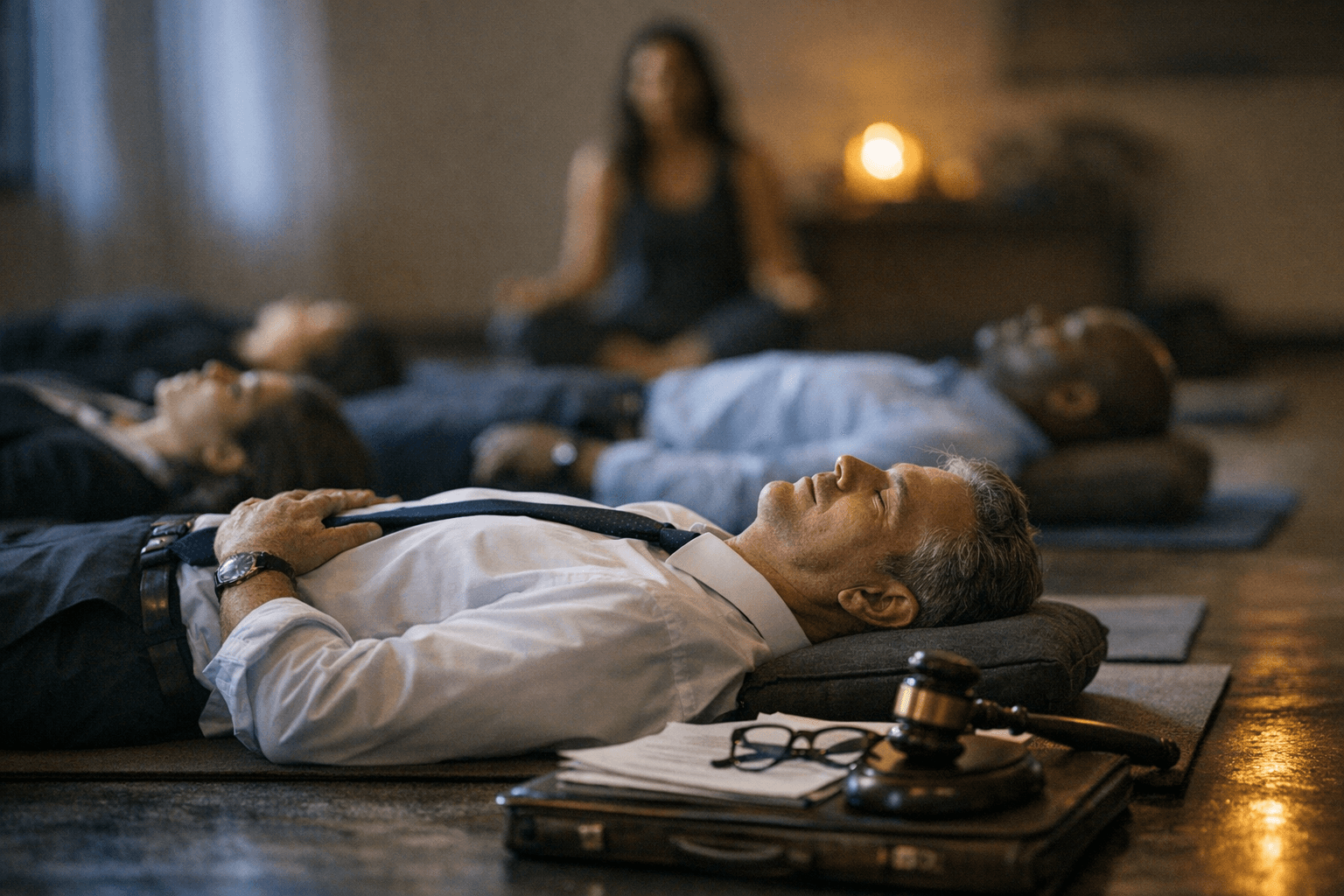
Lawyers are trained to stay sharp under pressure, not to stop on purpose, which is exactly why the Mindfulness in Law Society framed its April Community Connections session around deep rest for legal minds that are always on. Deep Rest for Busy Legal Minds was held April 14 at 12 pm ET, 11 am CT and 9 am PT, and it treated rest as a workday tool for a profession known for long hours, constant judgment and chronic mental load.
The session was led by Kara McCarthy Perry, whose legal and contemplative background made her a natural fit for the topic. Perry has been described as a former corporate lawyer, founder of Just Brilliant LLC, adjunct professor at Quinnipiac University School of Law and Seton Hall University School of Law, chair of the Institute for Well-Being in Law’s Law School Committee, and chair of the New Jersey/New York chapter of the Mindfulness in Law Society. That chapter was formed in March 2023 and is led by Perry and Joseph Gerstel, giving the event a local base inside a broader legal mindfulness network.
The format was intentionally simple. The session drew from Yoga Nidra, sometimes called Non-Sleep Deep Rest, and from scientific ideas about recovery. Participants were promised a short, fully guided practice that required no prior meditation experience, which matters in a profession where many people will try mindfulness only if it feels accessible and not like another skill to master. The pitch was practical rather than mystical: a mental reset that felt less like a formal sitting practice and more like closing a browser full of open tabs after a punishing day.
That approach fits the larger argument for mindfulness in law. The Mindfulness in Law Society is a 501(c)(3) nonprofit that says it promotes well-being in the legal profession through mindfulness meditation, yoga and other contemplative practices. Its work lands in a field where the American Bar Association’s National Task Force on Lawyer Well-Being warned in 2017 that too many lawyers and law students experience chronic stress and high rates of depression and substance use. The ABA also says those rates are consistently higher in the legal profession than in the general population.
The research base backs up that concern. PubMed-indexed studies have examined online mindfulness interventions for legal professionals and a 13-week tailored course for law students, both pointing to mindfulness as a feasible response to lawyer strain. The message from this session was more specific than generic wellness talk: in law, rest is not a luxury add-on. It is part of staying in the profession without burning out.
This article was produced by Prism’s automated news system from verified source data, official records, and press releases, then run through automated quality and moderation checks before publishing. The system is built and supervised by the people who set the standards it runs under. Read our full AI policy.
Did this article answer your question?