Mindfulness, Jeremy David Engels Says Democracy Depends on It
Jeremy David Engels argues mindfulness is civic training: it helps people listen across disagreement, slow reactive outrage, and handle complexity.
Mindfulness as civic training
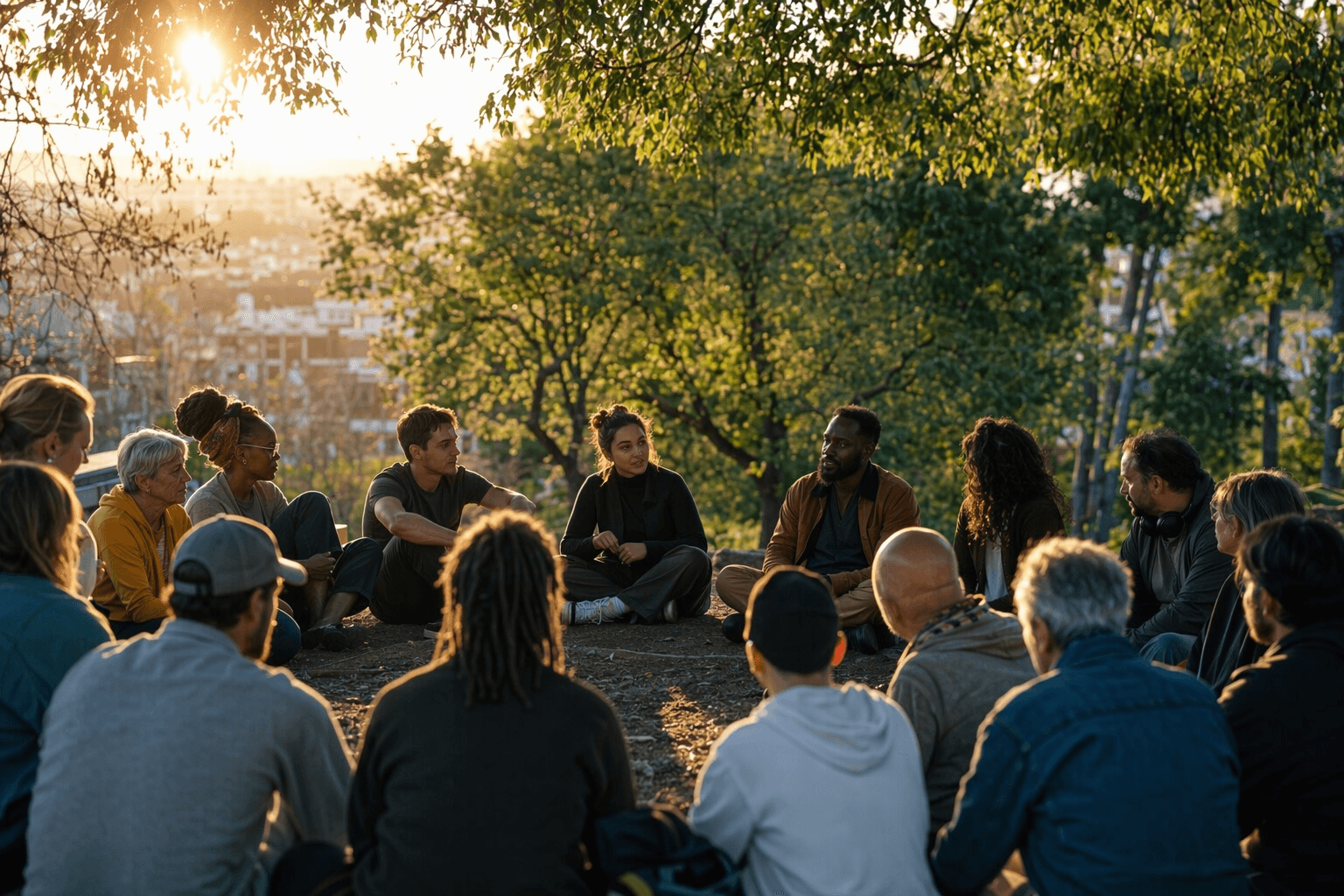
Jeremy David Engels makes a concrete claim that cuts through a lot of vague wellness talk: if democracy is going to work, people need the habits of mindfulness. In his framing, the democratic skills that matter most are listening across disagreement, slowing reactive outrage, and tolerating complexity, because public life falls apart when attention is scattered and every disagreement turns into a fight.
That argument gives mindfulness a public job. It is not just about feeling calmer on a cushion or getting through a stressful day. Engels treats it as practice for shared life, a way to help people pay attention, pause judgment, sit with strong emotions, and make room for other viewpoints before reacting.
What Engels means by democracy
Engels draws a sharp line between democracy as an ideal and democracy as it often looks in campaign season. He rejects the idea that democracy is only an election-day performance or a political war between teams. In his view, real democracy is the ongoing work of people cooperating across disagreement to care for one another and the world they share.
That shift matters because it changes what success looks like. A healthy democracy, in Engels’ telling, is not measured only by votes or slogans, but by whether people can self-govern together without collapsing into outrage and distrust. Penn State has summarized his view this way: democracy is a system of self-governance that everyone shares and has a stake in preserving.
Why attention is the starting point
The essay published by Mindful on April 24, 2026, links that civic ideal to the modern attention economy. Engels argues that many people are struggling to hold focus in a world of social media and nonstop stimulation, and that mindfulness can help recover agency by making deliberate, considered choice possible again. That is a practical claim, not an abstract one: if attention gets captured by reflex and noise, then democratic judgment gets weaker too.
He uses the image of a windy lake to describe how distraction distorts perception. When the surface is churned up, the deeper shape of the water is hard to see. Once the mind settles, clarity becomes possible. In Engels’ argument, that same shift from agitation to steadiness is what lets people see political reality more accurately and respond with more care.
The habits that matter in public life
Engels’ case for mindfulness is built from familiar practice skills, but he places them in a civic setting. Paying attention becomes a democratic act because it helps people hear what others are actually saying. Slowing down becomes essential because it interrupts the reflex to attack first and understand later. Looking deeply and pausing judgment create room for complexity, which is exactly what polarized public life tends to flatten.
He also emphasizes sitting with strong emotions rather than immediately acting them out. That matters in a culture where anger spreads quickly and outrage often gets rewarded. If people can notice emotional heat without being ruled by it, then disagreement becomes more survivable, and community life becomes less brittle.
The book behind the essay
The Mindful essay is part of a broader project tied to Engels’ book, *On Mindful Democracy: A Declaration of Interdependence to Mend a Fractured World*. Google Books lists the book as 192 pages and dated February 3, 2026, and Parallax Press describes it as taking inspiration from Timothy Snyder’s *On Tyranny* while using 27 short chapters to help readers show up for democracy with compassion, clarity, and courage.
That structure tells you a lot about Engels’ method. He is not writing a sweeping theory text for specialists alone. He is building a compact, practice-oriented book meant to translate democratic concern into daily habits, the same way many mindfulness teachers turn large ideas into repeatable forms of attention.
Who Engels is, and why that matters
Engels’ credentials give weight to the argument because they bridge communication studies, contemplative practice, and public teaching. Penn State identifies him as the Liberal Arts Endowed Professor of Communication Arts and Sciences at Penn State University and the author of six books. He is also described as a longtime mindfulness and yoga teacher, a longtime student of Thích Nht Hnh, and a co-founder of Yoga Lab.
That background matters because it shows this is not a one-off political opinion from outside the mindfulness world. Engels is speaking from inside a practice lineage and from inside academic work on communication, which helps explain why he keeps returning to attention, listening, and shared responsibility rather than abstract ideology alone.
A continuing editorial thread
Mindful has touched this territory before. In 2019, the publication ran “Can Mindfulness Save Democracy?”, an earlier essay that argued mindfulness could interrupt cycles of outrage, hatred, and violence and bring mutual respect and compassion back into public discourse. Engels’ 2026 piece extends that conversation, but with a firmer edge and a more direct civic frame.
Penn State also pushed the conversation forward with a Q&A on February 13, 2026, about how to practice mindful democracy. Taken together, those pieces show a sustained effort to move mindfulness out of the narrow category of self-help and into the larger question of how people live together.
Why this lands now
The force of Engels’ argument is that it meets a daily problem with a daily practice. If people are being trained by their devices, their feeds, and their habits of outrage, then mindfulness becomes a counter-training for civic life. It helps people listen longer, react less, and stay with complexity without reaching for the easiest answer.
That is why his case feels so grounded. He is not promising that mindfulness will fix politics by itself. He is saying that democracy cannot survive without the capacities mindfulness strengthens, and that those capacities, from attention to patience to emotional steadiness, are part of how people learn to live together at all.
This article was produced by Prism’s automated news system from verified source data, official records, and press releases, then run through automated quality and moderation checks before publishing. The system is built and supervised by the people who set the standards it runs under. Read our full AI policy.
Did this article answer your question?