Online mindfulness program cuts stress for advertising workers, study finds
Busy ad workers who finished an 8-week online mindfulness program saw lower cognitive irritation and stress, while interviews showed why people stayed or drifted off.
The real test in advertising was never whether mindfulness sounded nice. It was whether exhausted people would keep opening the program after a client fire, a deadline crunch, and a full day of screen time.
That is where the new paper lands hard. In a German advertising agency, 38 participants were split between an intervention group and a control group, and the intervention group completed an eight-week online mindfulness-based program. By the end, the numbers moved in the right direction: cognitive irritation fell, perceived stress dropped, and self-reported mindfulness increased. None of those changes showed up in the control group.
That result matters because advertising is exactly the sort of workplace where a digital program can sink or swim on friction alone. If a mindfulness app cannot survive a culture built around constant responsiveness, it is not much use to anyone else in a high-pressure job. This study suggests the format can work, but only if the setup is realistic enough for people who are already running hot.
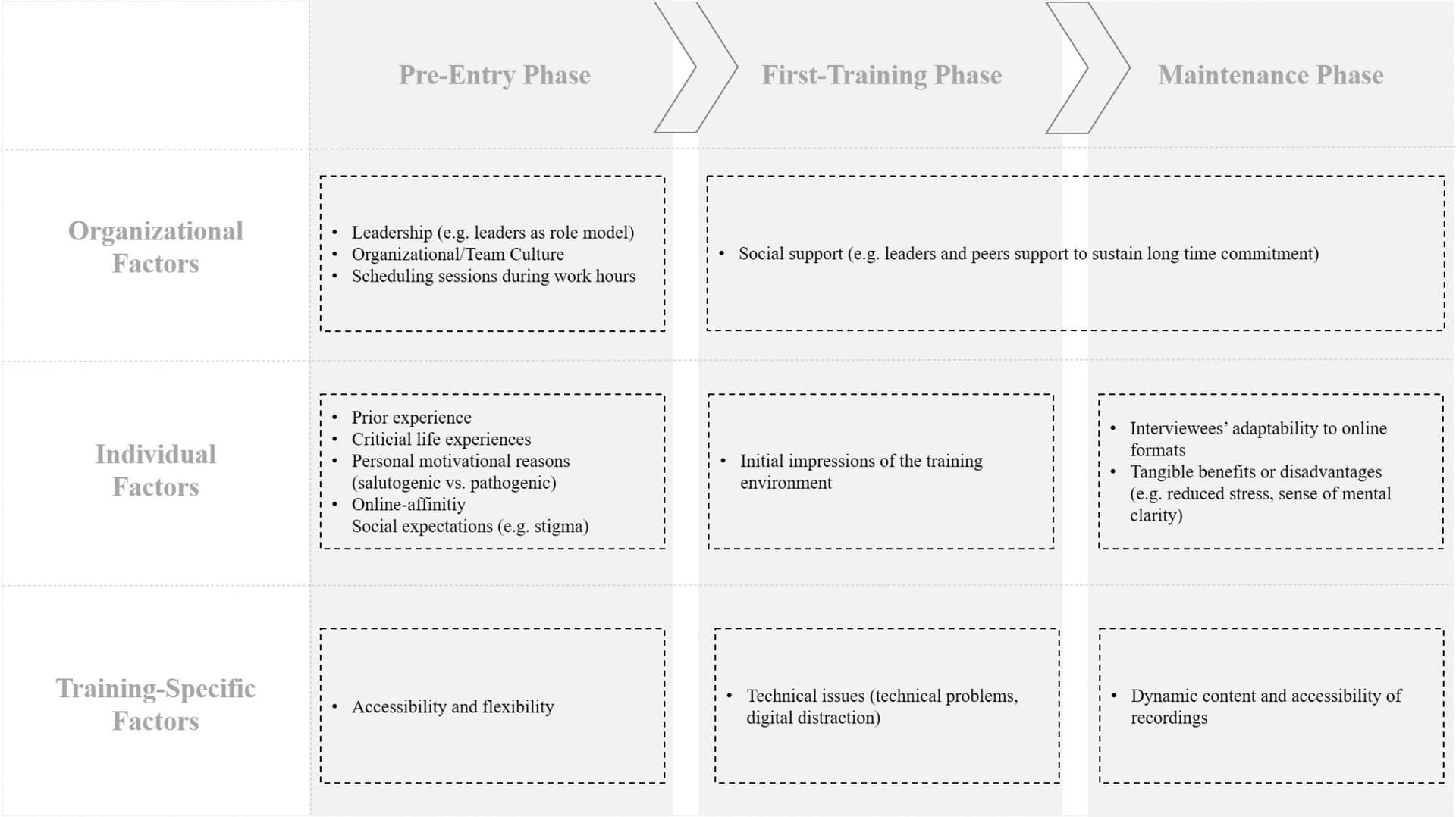
The strongest part of the paper may be the second half, which asked a better question than most workplace wellness studies: why do people actually stick with an online mindfulness program, or quit it? Through semi-structured interviews, the authors built what they call the OMBI Adherence Matrix, a framework that breaks adherence into three phases, pre-entry, first-training and maintenance. It also sorts the forces that shape engagement into three buckets: individual factors, organizational factors and training-specific factors.

That breakdown is useful because it moves the conversation away from vague encouragement and toward design. Someone may be willing to try mindfulness, but still bail if the timing clashes with workload, if the company culture treats the practice like a side project, or if the training itself feels awkward to enter and hard to sustain. In other words, the meditation content is only half the product. The other half is whether the program fits inside the real machine people work in.
The study points to a practical conclusion for employers and program designers in advertising and beyond: online mindfulness can reduce stress, but uptake and follow-through depend on implementation details. Easy entry, a workable first week and a format that respects burnout-prone schedules may matter as much as the exercises themselves.
This article was produced by Prism’s automated news system from verified source data, official records, and press releases, then run through automated quality and moderation checks before publishing. The system is built and supervised by the people who set the standards it runs under. Read our full AI policy.
Did this article answer your question?