Sravasti Abbey Newsletter Connects Meditation, Peace Teachings, and Community Updates
Sravasti Abbey’s May update shows how a newsletter can hold a sangha together, pairing daily meditation guidance with peace teaching and a Europe tour map.
A newsletter that behaves like a practice room
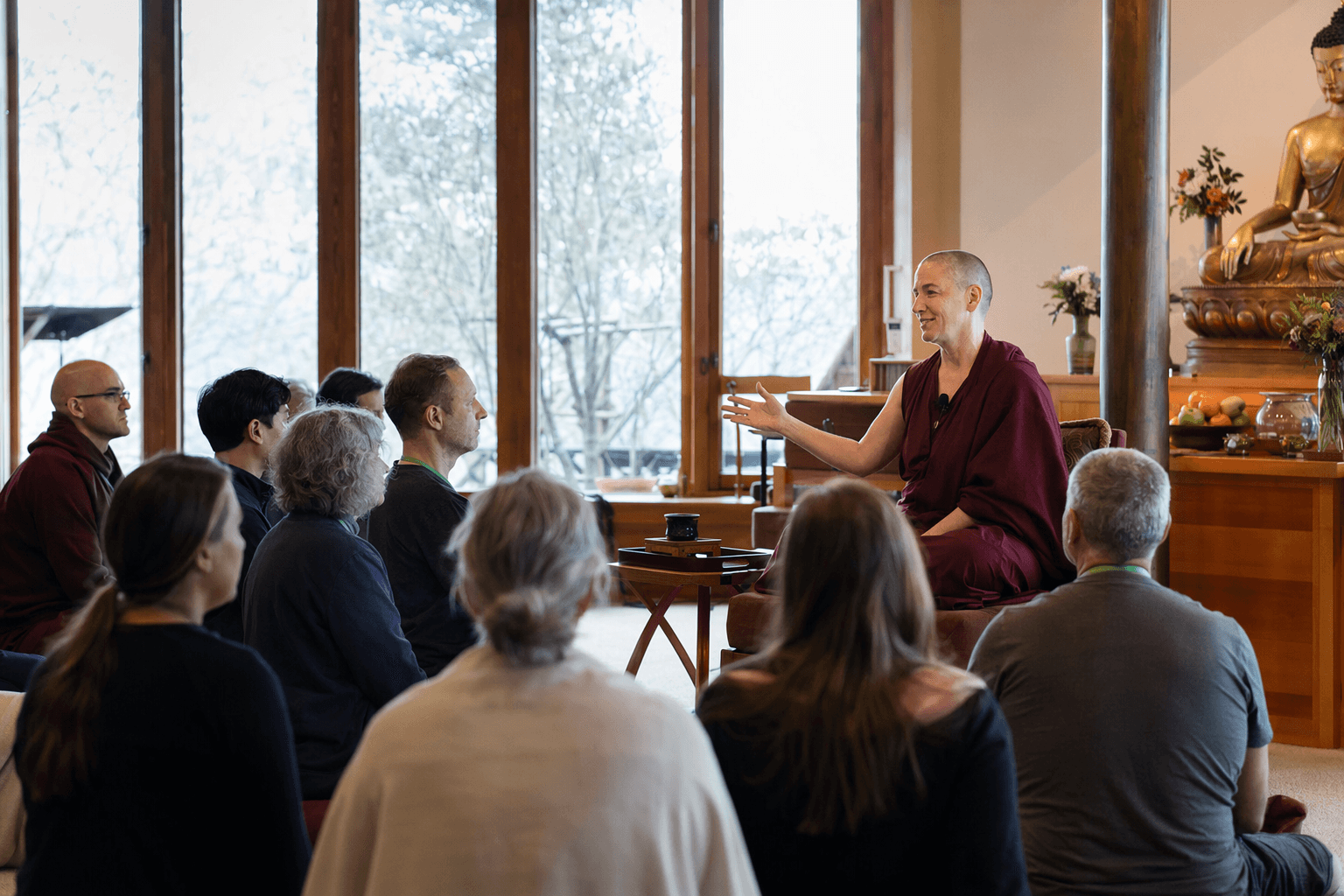
Sravasti Abbey’s May update does more than report news. It gathers a dispersed meditation community into one rhythm, tying spring imagery, peace teaching, retreat guidance, and travel reports into a single monthly touchpoint. The effect is practical as much as spiritual: readers get a reminder that practice is not just something that happens on a cushion, but something held together by cadence, continuity, and shared attention.
A monastery, a mission, and a living community
The Abbey describes itself as an American Buddhist monastic community founded in 2003 by Ven. Thubten Chodron, and it places that identity at the center of its public work. Its resident community includes 17 nuns and 4 monks, along with trainees and visitors, which gives the newsletter a distinctly communal texture. This is not a detached meditation brand; it is a working monastery in the Tibetan Buddhist tradition of the Dalai Lama, carrying both discipline and outreach at the same time.
That monastic frame matters because the Abbey also says its bhikshuni community observes the Buddhist rites of posadha, varsa, and pravarana. In other words, the polished public-facing newsletter sits on top of a classical religious structure. For meditation readers, that combination is the story: a traditional monastic rhythm translated into a modern communication format that keeps far-flung practitioners connected.
Peace teaching sets the tone
The May 2 update opens with spring in the gardens, a mix of sun and rain that turns into a broader reflection on peace. The message is simple but not soft-focused: peace is possible, and it begins within our own hearts. That framing makes the rest of the newsletter feel coherent rather than assorted, because every event and travel note sits inside a larger spiritual purpose.
The Abbey also points readers to His Holiness the 14th Dalai Lama’s March 31 peace message, which calls for conflicts to be resolved through dialogue, diplomacy, and mutual respect, and urges an end to violence. The message names the Middle East and Ukraine, giving the newsletter a wider ethical horizon than a local retreat calendar. For a meditation community, that matters because it links inner training to public conscience, showing how a monastery keeps practice grounded in the realities of the world.
Daily meditation practice, made concrete
One of the strongest practice takeaways in the update is the California teaching tour by Ven. Sangye Khadro. On April 1, 2026, she led a session at Ocean of Compassion Buddhist Center near San Jose titled “Cultivating a Daily Meditation Practice for Emotional Balance,” and the event was offered both in person and on Zoom. That format tells you a lot about how the Abbey understands accessibility: practice guidance should be specific, repeatable, and available beyond the monastery walls.
The teaching itself focuses on a question many meditators know intimately, how consistency affects the nervous system of daily life. The Abbey’s description connects regular meditation with emotional steadiness, reduced reactivity, and deeper well-being, which makes the session feel less like an abstract lecture and more like a usable container for practice. Ven. Sangye Khadro’s background reinforces that authority: she ordained as a Buddhist nun at Kopan Monastery in Nepal in 1974, took full bhikshuni ordination in 1988, and began teaching in 1979 after studying with Lama Zopa Rinpoche, Lama Yeshe, His Holiness the Dalai Lama, Geshe Ngawang Dhargyey, and Khensur Jampa Tegchok.
Retreat teaching for beginners and longtime practitioners
The newsletter also highlights a weekend retreat at Land of Medicine Buddha in Soquel titled “How to Meditate.” That title sounds simple, but the content goes straight to the essentials: the basics of meditation, the difference between stabilizing and analytical meditation, and how to work with obstacles when they arise. For mindfulness communities, that mix is worth noticing because it refuses the false split between beginner-friendly instruction and serious practice.
The Abbey’s broader retreat offering makes the point even more clearly. It says it provides one-day events, weekend courses, longer residential retreats, and online teachings, welcoming both beginners and long-time practitioners. That range is part of the community blueprint here: people can enter through a single Saturday, deepen through a weekend, or stay long enough to encounter the full arc of monastery life.
The update also notes the Abbey community members collaborated on the first retreat of the year, “Practicing Buddhism.” That detail gives the newsletter a useful operational shape. It is not simply announcing spiritual ideals; it is documenting the actual work of creating spaces where practice can be taught, repeated, and sustained.
Europe as a distributed classroom
Ven. Thubten Chodron’s 2026 Europe teaching tour shows how the Abbey extends its reach without losing its center. The schedule ran from April 2 to April 30 and moved through Italy, Switzerland, and Germany, with talks and retreats at several named centers. The route included Pomaia, Zurich, Bern, Hamburg, Schneverdingen, and Berlin, turning the month into a moving classroom rather than a single event series.
The topics were just as specific as the locations: great compassion, the eight worldly concerns, the death process, the foundation of the Buddhist path, realizing the profound view, and karma and rebirth. That variety matters because it shows how the Abbey packages teaching for different levels of depth while keeping the doctrinal thread intact. Ven. Jampa served as attendant and Ven. Konchog as audio technician during the trip, a small but revealing reminder that modern dharma travel depends on support roles as much as on the teacher at the microphone.
Here is what makes the model work so well:
- One named monthly update gives the community a shared reference point.
- One clear practice teaching, such as daily meditation for emotional balance, gives readers something to do.
- One retreat report explains how concepts like stabilizing and analytical meditation are taught in real time.
- One travel itinerary shows that the same teaching can travel across countries, while still feeling connected to the home monastery.
- One institutional description, including the community size and monastic rites, keeps the reader oriented to the Abbey’s actual life.
For mindfulness meditators trying to build continuity, that is the lesson hidden inside the newsletter. A practice community stays alive when it reports on what happened, names who taught, shows where people gathered, and makes the next step visible. Sravasti Abbey’s May update does exactly that, turning a monthly email into a working bridge between monastery, retreat center, and the wider world.
This article was produced by Prism’s automated news system from verified source data, official records, and press releases, then run through automated quality and moderation checks before publishing. The system is built and supervised by the people who set the standards it runs under. Read our full AI policy.
Did this article answer your question?