Stoicism and mindfulness overlap, study finds across two samples
A two-sample study finds Stoic attention training overlaps with mindfulness more than hype suggests, but it is not the same thing.
Mindfulness gets packaged as if it came with only one accent, but that is not how people actually meet the practice. A new open-access study asks a sharper question: if Buddhist mindfulness is the standard reference point, does Stoicism offer a similar training in attention without the religious packaging? The answer, based on two samples from New Zealand and Australia, is yes and no. The overlap is real, but it is not a carbon copy.
Two traditions, one skill set?
The paper, *Seneca Meets the Buddha: The Relationship Between Buddhist and Stoic Mindfulness*, was published in *Mindfulness* on June 3, 2026 by Johannes A. Karl, Ronald Fischer, and Tim LeBon. The version of record lists funding from Victoria University of Wellington, and the manuscript moved quickly through the pipeline, received on November 19, 2025, accepted on May 12, 2026, and first published online on June 3. That fits a journal that explicitly frames itself around the latest research findings and best practices in mindfulness across cultures.
The basic idea is straightforward and useful: Buddhist-derived mindfulness dominates psychological research, but other wisdom traditions may contain comparable contemplative pieces. Here, the focus is Stoicism, especially its practice of prosochē, or attention. The authors are not claiming that Marcus Aurelius secretly taught MBSR. They are testing whether Stoic discipline, as a philosophical method for noticing and governing experience, lines up with the attention-based features modern mindfulness measures are built to capture.
What the two samples actually measured
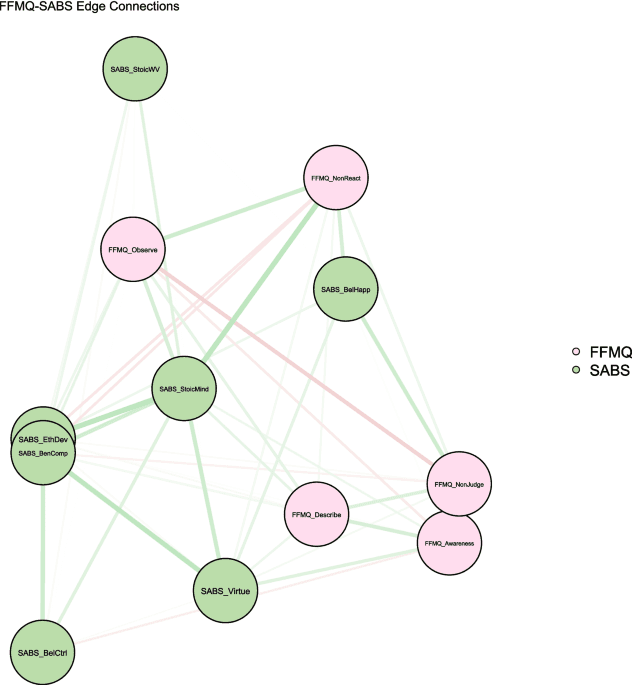
The first study looked at 1,781 New Zealand undergraduate students. It paired the Five Facet Mindfulness Questionnaire with the Stoic Attitudes and Behaviors Scale, a setup meant to see whether Stoic scores track with established mindfulness dimensions. The second study repeated the basic logic in 287 Australian adults, but with a different mindfulness instrument, the Comprehensive Inventory of Mindfulness Experiences, while keeping the same Stoic scale. That second sample matters because it checks whether the relationship survives a different measurement framework instead of living on one questionnaire alone.
That design gives the paper its strength. If Stoicism only looked related to mindfulness when one specific scale was used, the comparison would be mostly branding. By testing two samples and two mindfulness measures, the authors make the overlap harder to dismiss. The result is not a claim that the two traditions are identical, but that they share enough structure to be measured side by side.
Where the overlap is real
The most obvious meeting point is attention. Stoic prosochē is not passive observation, and it is not self-help fluff. It is a deliberate cognitive and behavioral stance, one that aims to keep the mind trained on what is happening and how one responds. That is close enough to modern therapeutic mindfulness that the comparison stops being rhetorical and starts looking substantive.
This is also why the paper lands well for mindfulness readers who are curious about philosophy. Buddhist mindfulness often emphasizes present-moment awareness, nonreactivity, and clear seeing. Stoicism brings a more explicitly philosophical vocabulary, but it still works on similar terrain: attention, judgment, and disciplined response. If Buddhist language feels culturally distant, Stoic language can sound more secular and more familiar, especially in settings where people want the practice without the religious frame.

Where the overlap stops
The same paper also makes room for the mismatch, and that part matters just as much. Stoicism is often read, especially in popular culture, as emotional suppression. A 2025 paper on the Stoic Attitudes and Behaviours Scale argues that older Stoicism measures often captured that colloquial version rather than philosophical Stoicism, which is why the newer scale was built with philosophy and psychotherapy experts and validated on more than 8,000 participants across 116 countries.
That distinction is the whole ball game. Mindfulness is not simply keeping a lid on feeling. It includes noticing experience, naming it, and meeting it without reflexive judgment. A separate cross-cultural study in New Zealand and Norway found that stoic ideology and alexithymia were both negatively related to mindfulness, especially on the facets of describing, non-judging, and acting with awareness. In plain terms, Stoic-like traits can overlap with mindfulness, but they do not automatically produce the same attentional clarity or emotional vocabulary.
Why the Buddhist anchor still matters
Comparisons with Stoicism are interesting precisely because mindfulness has such a strong Buddhist anchor. The Satipahāna Sutta is generally regarded as the canonical Buddhist text with the fullest instructions on mindfulness training, which is why Buddhist history still shapes how researchers define the field. Modern clinical mindfulness also has a clear secular lineage, with Mindfulness-Based Stress Reduction developed by Jon Kabat-Zinn in the late 1970s from meditation, yoga, and body-awareness practices.
That background helps explain the current research turn. Scholars are no longer satisfied with asking whether mindfulness is “really Buddhist” or “really secular.” They are looking more closely at which ingredients travel across traditions, and which do not. Attention, emotional regulation, nonreactivity, and self-control are now being treated as portable components that may show up in different philosophical or contemplative systems without collapsing into one another.
What to do with this if you practice or teach mindfulness
If Buddhist terminology has always felt like a barrier, Stoicism can function as a cleaner on-ramp. It offers a philosophy-driven way to talk about attention training, response, and judgment without asking you to adopt a religious vocabulary first. But the newer research also says not to confuse that with emotional shutdown. The useful overlap is in disciplined awareness, not in pretending feelings do not exist.
A practical way to test the difference this week is simple: spend two minutes watching one situation in real time and separate three things, what happened, what you told yourself about it, and how your body responded. If your language is more Stoic, call it attention and judgment. If your language is more Buddhist, call it awareness and nonreactivity. The point is the same: train the mind to see before it snaps to habit, and let the comparison stay honest enough to be useful.
This article was produced by Prism’s automated news system from verified source data, official records, and press releases, then run through automated quality and moderation checks before publishing. The system is built and supervised by the people who set the standards it runs under. Read our full AI policy.
Know something we missed? Have a correction or additional information?
Submit a Tip