Study finds advanced meditation improves well-being and emotional regulation
A review of 52 studies found advanced meditators showed stronger emotional regulation, deeper relational attunement and higher well-being than basic practice.
The biggest payoff from advanced meditation may not be a quieter mind, but a different way of showing up with other people. In a new systematic review, Matthew Sacchet, an associate professor and director of the Meditation Research Program at Harvard Medical School and Massachusetts General Hospital, found evidence that long-term and advanced meditators report higher quality of life, equanimity, self-compassion, better emotion regulation and deeper relational attunement.
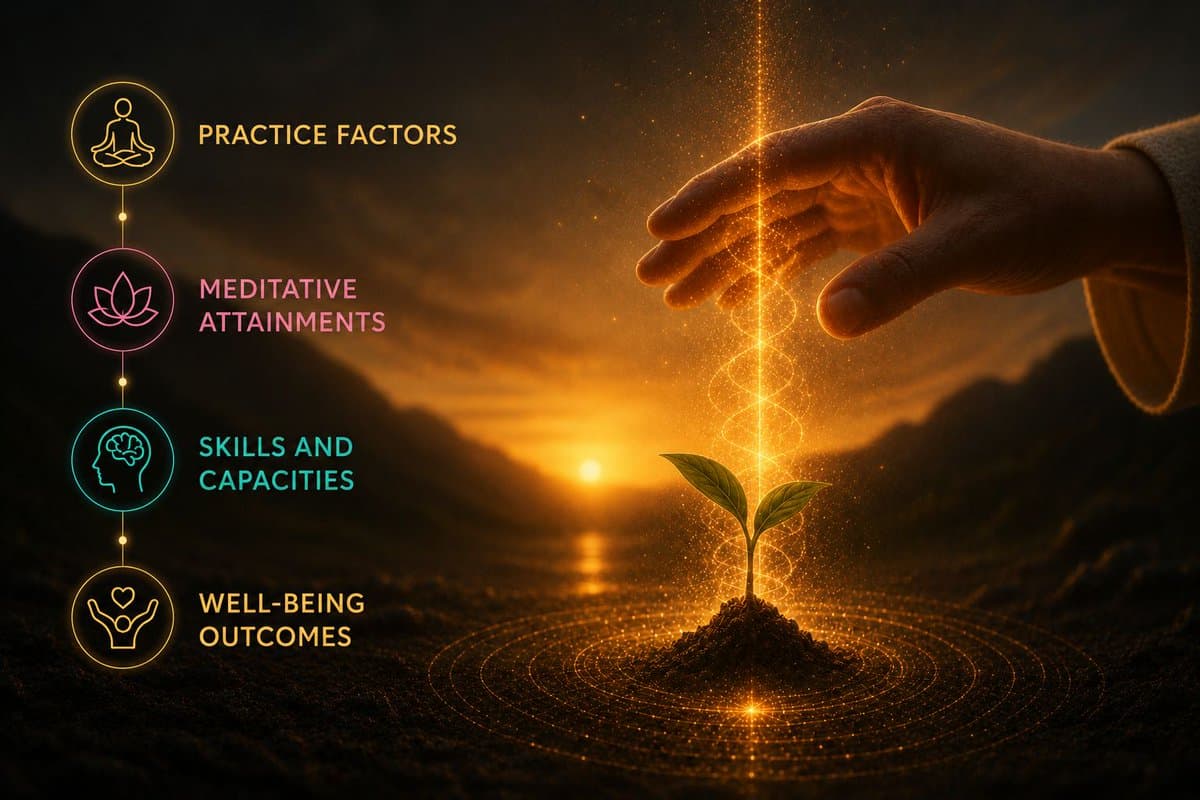
The review, titled A Systematic Review of the Effects of Long-Term and Advanced Meditation on Well-Being, Emotion Regulation, and Interpersonal Relationships, followed PRISMA guidelines and screened 1,229 articles before narrowing the field to 52 studies. The search covered PubMed, MEDLINE, PsycINFO and Embase on April 5, 2026. Rather than treating meditation as a simple matter of clocking hours on the cushion, the authors argued that skill, stages and attainments may matter more than time practiced alone.

That distinction is the heart of the paper. The Harvard team describes advanced meditation as deeper engagement with practice, the kind that can produce refined states of mind and awareness, bliss states, insights into the mind, altruistic or compassionate mindsets and, in some cases, enduring transformation. In other words, the review is not just asking whether meditation helps. It is asking what changes when practice moves from basic training to more developed attainment.
The timing matters because meditation has gone mainstream. Harvard reported in 2025 that the National Institutes of Health found 17.3 percent of U.S. adults meditated in 2022, up from 7.5 percent two decades earlier. Harvard’s January 2026 coverage also noted that the top 10 smartphone meditation apps had reached roughly 300 million cumulative downloads worldwide. What was once a niche discipline has become a mass habit, and the evidence base is now trying to catch up with the range of practice people are actually pursuing.
Sacchet has also been careful not to oversell the upside. Harvard reported in July 2025 that a 2024 study found 45 percent of participants had experienced meditation-related altered states at least once, and 13 percent reported moderate or greater suffering afterward. That is a useful reality check for a field that still leans heavily on stress relief as its public face. The new review points in a sharper direction: the real story is not just whether meditation feels calming in the moment, but whether long-term practice changes emotional range, self-regulation and the quality of relationships over time.
This article was produced by Prism’s automated news system from verified source data, official records, and press releases, then run through automated quality and moderation checks before publishing. The system is built and supervised by the people who set the standards it runs under. Read our full AI policy.
Did this article answer your question?