Study Finds Different Meditation Styles Produce Distinct Brain Signatures
Same brain rhythms did not mean the same thing across meditation styles, and the clearest signal showed up in eyes-open open monitoring.
The surprising part of this new meditation paper is not just that the brain changed during practice. It is that the same EEG signal pointed to mindfulness in different ways depending on whether people were doing focused attention or open monitoring, two styles often lumped together as if they were interchangeable.
Springer published the study, titled Meditation-Specific Neural Predictors of State Mindfulness During Eyes Open Meditation, on May 11, 2026. In a fully within-subject design, participants completed audio-guided focused attention, open monitoring, and an active control condition while continuous EEG was recorded. After each induction, they rated how mindful they felt in the moment.
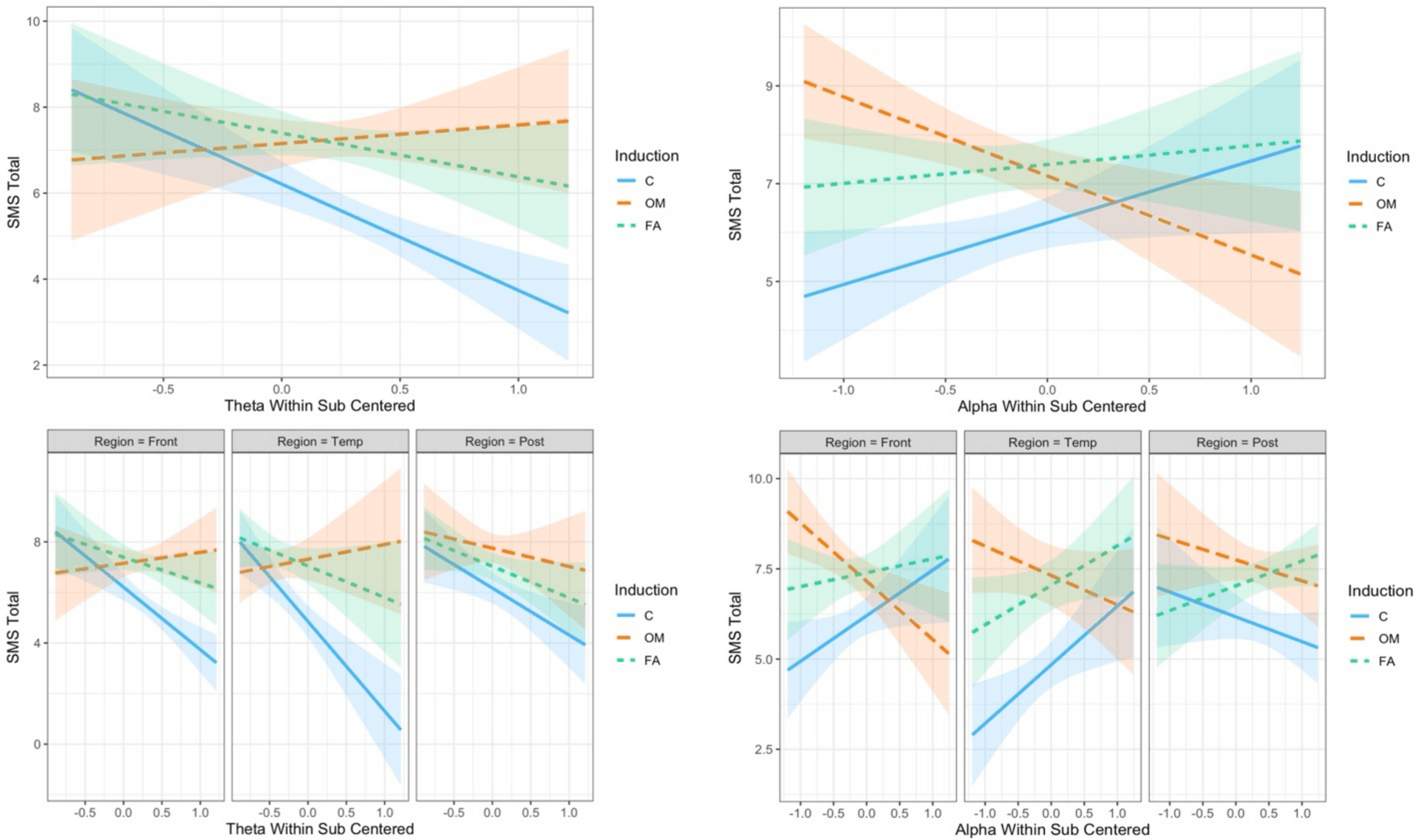
The headline result is simple enough for real-world practice: both meditation styles beat the control condition on state mindfulness. Theta power, a slower brain rhythm often tracked in meditation research, dropped relative to control during both focused attention and open monitoring. Alpha behaved differently. Reduced alpha showed up in open monitoring compared with focused attention, which suggests the two practices were not producing the same internal state even when both were unmistakably meditation.
The strongest clue came from the link between the brain and the self-report ratings. Higher theta power was associated with higher state mindfulness in both practices, but the relationship was stronger in open monitoring. Reduced alpha was linked to higher state mindfulness only in open monitoring. In plain English, the paper argues against treating EEG as a universal meditation meter. A theta bump may mean one thing in one practice and something a little different in another, while alpha reduction appears more specific to open monitoring.
That distinction matters for anyone choosing a technique for a work break, a train ride, or a quiet minute in public. Focused attention may still be the cleaner fit when you want a single anchor, such as the breath. Open monitoring looks more like a broader receptive stance, and this study suggests it carries a more distinct neural signature, especially in eyes-open practice. For app designers, teachers, and researchers, the practical message is that meditation coaching and measurement may need to be practice-specific rather than one-size-fits-all.
The paper fits a larger shift in the field. A 2024 within-subject study by Yanli Lin, Marne L. White, Natee Viravan, and Todd S. Braver found that open monitoring selectively produced a more cautious response style, with higher accuracy, slower reaction times, and reduced P3 amplitude. A 2021 review by Ruchika Shaurya Prakash traced modern mindfulness science back to Jon Kabat-Zinn’s 1990 definition and the 8-week mindfulness-based stress reduction program from the 1980s, then pushed for better brain-based signatures. This new study is one more step toward separating meditation styles by what they do, not just by the label on the app.
This article was produced by Prism’s automated news system from verified source data, official records, and press releases, then run through automated quality and moderation checks before publishing. The system is built and supervised by the people who set the standards it runs under. Read our full AI policy.
Did this article answer your question?