Mindfulness App at Bedtime Shows Promise for Insomnia Relief
Ten insomnia patients used a bedtime mindfulness app for four weeks, and 91% stayed with it. The harder test is whether that holds in a real trial.
When sleep will not come, the hardest part is not finding a meditation app. It is getting people to use it at the exact moment their minds are racing. A new insomnia-focused study suggests that bedtime mindfulness may clear that bar more often than skeptics expect, with 10 participants using a commercial smartphone app for four weeks and more than 90% completing the program.
The pilot, led by researchers including Yan Ma, Peter M. Wayne, Janet M. Mullington, Suzanne Bertisch, Gloria Y. Yeh, Jennifer L. Huberty, Jeni Green, Megan E. Puzia, Linda Larkey, Breanne Laird, Ana-Maria Vranceanu, Robert Vlisides-Henry, Michael R. Irwin, Amaryllis Mavragani, and Shahrad Taheri, did not stop at a simple questionnaire. It paired bedtime app use with in-lab polysomnography, plus actigraphy, heart-rate monitoring, questionnaires, and sleep diaries at home. That matters because insomnia is not a niche complaint. A major evidence review puts the rate at about 10% of adults with insomnia disorder and another 20% with occasional symptoms, while a 2026 Nature Reviews Disease Primers article places adult prevalence roughly between 10% and 16%.
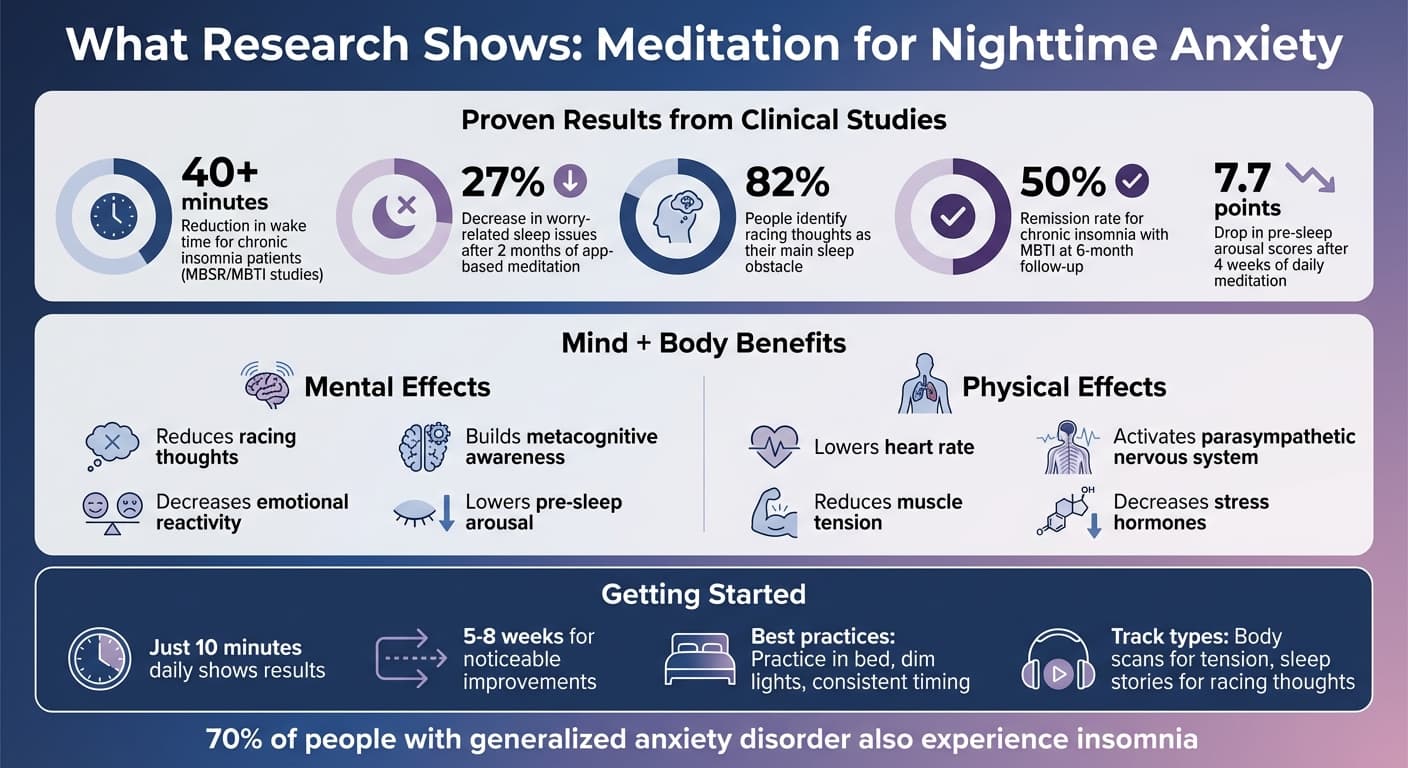
The results from the feasibility phase were encouraging. The study reported 95% completion of in-lab studies, 100% completion of questionnaires, and 91% adherence to the intervention. Participants said sleep quality, insomnia severity, and pre-sleep arousal moved in the right direction. The qualitative feedback was just as useful as the numbers: people described less catastrophizing, more acceptance and non-reactivity, greater body awareness, more self-kindness, better sleep-hygiene awareness, and calmer daytime functioning. For a bedtime practice, that is the real test, whether the app is still usable when the lights are off and the brain is not cooperating.
The second phase pushed on the practical question that often sinks wellness tools. Researchers brought in 16 chronic-insomnia patients and eight experienced instructors to ask what would make bedtime mindfulness actually fit into a nightly routine. The answers were plainspoken: set expectations clearly, explain repetition and novel content, weave in sleep-hygiene advice, and avoid adding friction or confusion at the bedside. That is why the study reads less like a product pitch and more like a service design exercise for people who are tired, frustrated, and low on patience.
The next step is already underway. A registered three-arm pilot trial at Brigham and Women's Hospital, NCT06972303, will compare instructed bedtime mindfulness, uninstructed mindfulness, and sleep-hygiene education in 30 patients, with primary completion estimated for July 31, 2028 and full completion for December 29, 2028. The broader signal is clear: app-guided mindfulness at bedtime looks feasible enough to test seriously, but the field still has to prove it is more than a promising idea that only works on paper.
This article was produced by Prism’s automated news system from verified source data, official records, and press releases, then run through automated quality and moderation checks before publishing. The system is built and supervised by the people who set the standards it runs under. Read our full AI policy.
Did this article answer your question?