Army Painter paint sets link hobbyists to iconic miniature worlds
Army Painter’s boxed sets are easier to read when you tie them to the miniatures on the box. That turns a paint purchase into a project choice, whether you want speed, depth, or a showcase finish.

Box art is doing more work than you think
The smartest thing The Army Painter does with its boxed sets is not stuffing paints into a tray. It links those paints to real miniatures, real game worlds, and real sculpt styles, so you can see what the box is actually for before you spend a cent. That matters because a set built around a Goblin Warchief, a Dungeons & Lasers dragon, or a Gloomhaven mercenary does not push you toward the same kind of project.
The company says its boxed sets are curated hobby kits meant to get you started or keep a project moving with less friction. That is the right way to think about them. You are not just buying color names; you are buying a shortcut to a specific outcome, whether that is a quick tabletop-ready army, a display piece with more depth, or a pile of tools that saves you from piecing together a shopping cart one bottle at a time.
The set tells you the kind of miniature it wants to paint
Once you start reading the box through the miniatures, the range gets a lot clearer. The Army Painter’s own showcase pieces include a Goblin Warchief from Eldfall Chronicles, Durkar from Archon Studio’s Dungeons & Lasers, Lokomotiv Zwingli from Daybreak Miniatures, a stylized warrior from Bite the Bullet, a Rescale Miniatures armored figure, a Gloomhaven mini from Cephalofair Games, and a large Archvillain Games sculpt used to show off Speedpaint.
That mix is useful because each sculpt pushes paint differently. The armored figure and Durkar are the kind of models that reward metallics, edge definition, and patience with larger surfaces. The stylized warrior and the Goblin Warchief are better reads for contrast, character color, and expressive tabletop finishes. The big Archvillain sculpt is the sort of thing that makes Speedpaint’s behavior obvious on broad forms, while the Gloomhaven figure points toward recognizable, story-driven hero models that people want to finish cleanly and put on the table fast.
Speedpaint sets are for speed, but not all speed projects are the same
The Speedpaint line is where The Army Painter makes its strongest case for project matching. The company says Speedpaint is a shortcut for painting miniatures quickly, and the packaging reflects that. The Speedpaint Complete Set 2.0 includes every Speedpaint color in existence, with 90 colors, brushes, and medium. That is the box you reach for when you want maximum range and do not want to stop and think about missing coverage later.
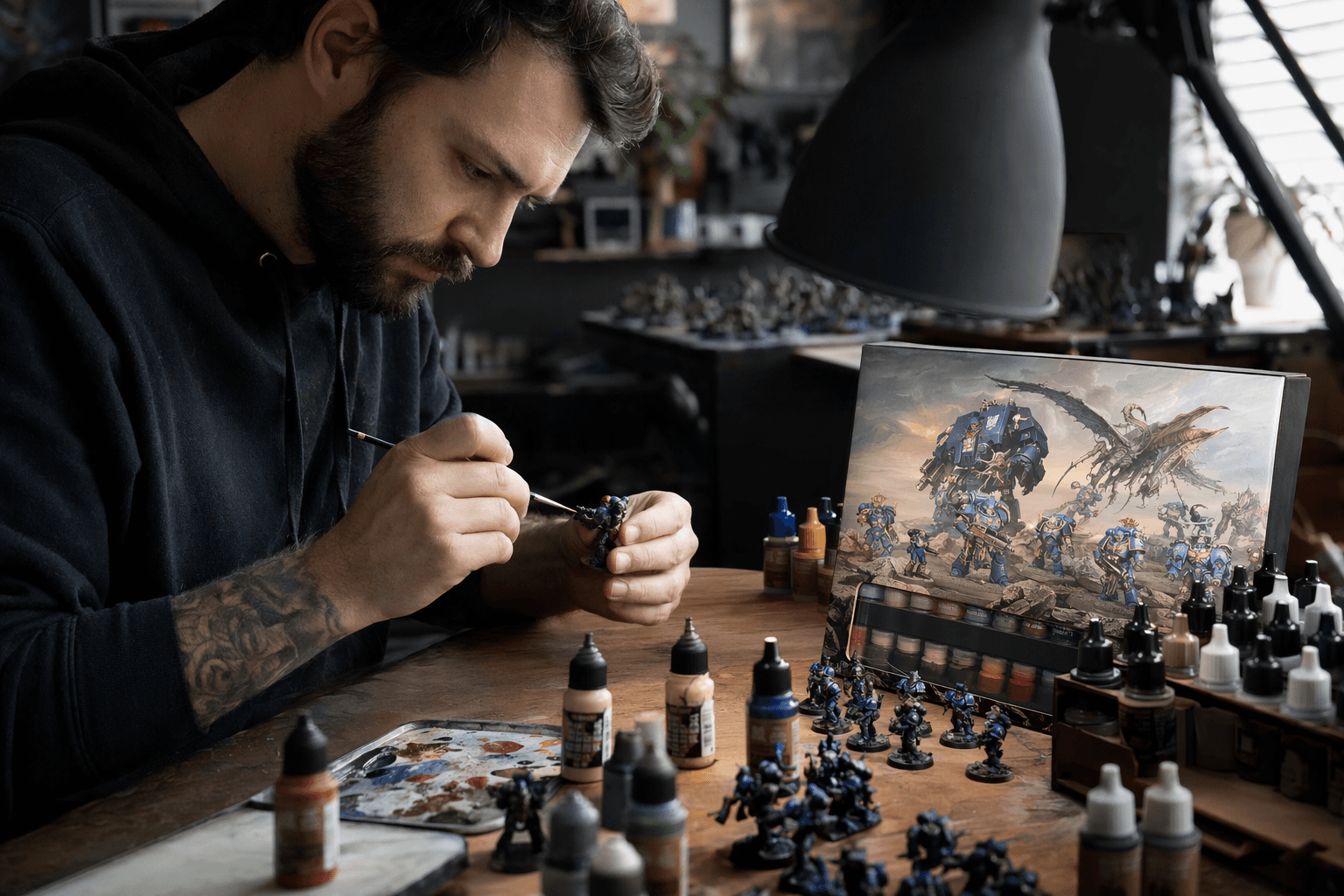
The Speedpaint Most Wanted Set 2.0 is a different kind of decision. It includes 24 Speedpaints, 13 new colors, 2 metallics, medium, and a basecoating brush. That is a tighter, more focused buy, and it makes sense if you are testing the method, finishing a smaller force, or looking for the most versatile starting kit without going all-in on the full wall of bottles. If you paint infantry in batches, the smaller set feels like the practical option. If you jump between factions or want every color on hand, the Complete Set 2.0 is the obvious one.
Warpaints Fanatic is the better fit when you want control, not just speed
Warpaints Fanatic sits on the other side of the decision tree. The Army Painter says the range launched with 216 paints and a flexible triad system, and that it was developed over years with feedback from award-winning painters, hobbyists, and gamers. That tells you exactly what the line is for: broader control, smoother color planning, and a more deliberate way to build a paint library.
If Speedpaint is about getting a model to the table quickly, Fanatic is about giving you enough structure to push further once you slow down. The triad system matters because it makes matching shadows, mids, and highlights less guessy, which is why it suits painters who want cleaner transitions on infantry, heroes, and display-oriented pieces. It is also the line that makes the company’s curated approach feel most mature, because the paints are not presented as isolated colors but as a system built for miniature work.
The Goblin Warchief shows why a boxed set can be more than a paint bundle
The strongest example in the whole story is the Goblin Warchief miniature included in the Fanatic Most Wanted Paint Set. The Army Painter says that model was designed specifically for the set from the ground up by Freecompany, the team behind Eldfall Chronicles, and Freecompany is based in Ljubljana, Slovenia. Eldfall Chronicles describes the Goblin Warchief as a hardened hobgoblin battle leader who strengthens nearby goblins, which gives the sculpt a very specific identity instead of generic fantasy filler.
That kind of origin story changes how you read the box. You are not looking at a random bonus miniature tossed in to pad value. You are looking at a sculpt built to demonstrate the set, and that makes it a much better buying signal. If the figure on the box already looks like the kind of commander, villain, or centerpiece you want to paint, the rest of the bundle starts to make sense very quickly.
Some miniatures are meant to push technique, not just color choice
Durkar is a perfect example of a model that tells you what kind of painter the set is talking to. Archon Studio says Durkar is the Sovereign Serpent in the Dungeons & Lasers universe, stands 6.5 inches tall, comes on a 50 mm scenic base, and is supplied unpainted and unassembled. That is not a casual weekend goblin. It is a large, scenic project that gives you room to use smooth coverage, layered shading, and metallic accents without fighting tiny detail work the whole time.
Cephalofair’s newer Gloomhaven mercenary packs and bundle include updated miniatures and new artwork, which helps explain why a recognizable Gloomhaven figure works so well in a paint-set showcase. Gloomhaven has always been about memorable characters, so a boxed paint set that leans on that universe is really saying: this is the kind of mini where people care about the final result, not just the fact that it is done.
The bigger reason this approach works is that The Army Painter knows the hobby from the inside
The company’s history explains the logic. The Army Painter says its original Quickshade Dip was the first speed painting solution brought to market, and that the brand grew out of Bo Penstoft and Jonas Færing’s work in the wargaming and hobby industry. It is based in Skanderborg, Denmark, and continues building out its US team and event presence with public debuts and hobby seminars.
That background matters because it shows why the brand keeps tying paint sets to actual miniatures instead of abstract color charts. The pitch is not that every box is the same. The pitch is that each box is a different answer to a different painting problem. If you want a quick army start, Speedpaint and a curated set built around an easy read on the table make sense. If you want a display project, larger sculpts like Durkar or an Archvillain centerpiece are better cues. If you want a fast tabletop upgrade, Fanatic gives you the range and structure to keep the whole force coherent.
The best boxed paint set is the one that points you toward the right miniature before you even open it. That is the real value here: fewer bad purchases, better matches between paint and model, and a lot less time spent buying bottles that never quite fit the army you actually meant to paint.
This article was produced by Prism’s automated news system from verified source data, official records, and press releases, then run through automated quality and moderation checks before publishing. The system is built and supervised by the people who set the standards it runs under. Read our full AI policy.
Did this article answer your question?