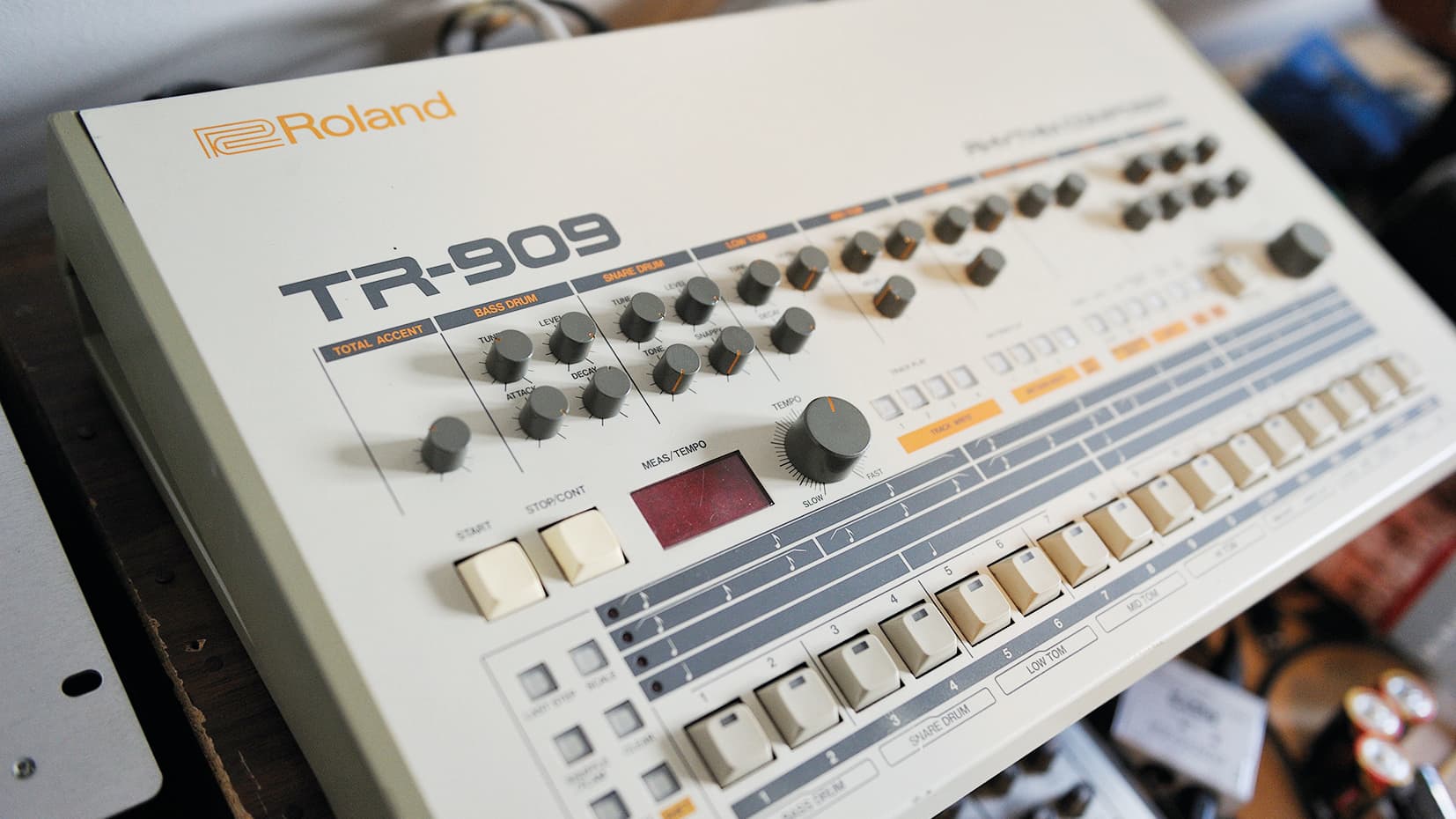
Robert Hood explains how minimal techno stripped sound to its core
Hood’s minimal techno was never empty. His Detroit discipline turned a few locked parts into pressure, and that blueprint still shapes the genre’s best records and sets.

Robert Hood did not strip techno down to make it smaller. He stripped it down to make it hit harder, and that distinction still separates the records that carry his name from the ones that merely borrow the label minimal. Across Detroit, Berlin, Cologne, and the clubs that absorbed his influence later, Hood’s method keeps showing up in the same shape: tight drums, a repeating bass idea, and just enough synth detail to keep the floor leaning forward.
The Detroit cut that became a blueprint
Hood emerged from the same Detroit ecosystem that produced classic techno, but his role in it is distinct. Red Bull Music Academy identifies him as one of the founding members of Underground Resistance, alongside “Mad” Mike Banks and Jeff Mills, placing him inside a collective known since 1990 for Detroit techno and for a militant political, anti-corporate ethos. That context matters because Hood’s reduction never reads like a studio trick. It reads like a position, a way of refusing excess and making the kick, the pulse, and the pressure do the work.
His most important statement arrived with *Minimal Nation*, the 1994 LP that Red Bull Music Academy says pioneered the minimal techno sound. Resident Advisor later called it “ground zero for minimal techno,” a phrase that makes sense because the record does not just fit the genre, it helps define its grammar. Nearly a decade later, when minimal became a widely marketed electronic-music buzzword, Hood had already been there, breaking techno and house back to core elements and proving the form could stay intense without piling on parts.
What Hood kept in the room
The Hood template is easy to describe and harder to execute. A locked drum pattern carries the track, a repeating bass motif supplies the hook, and sharply focused synth punctuation cuts through the space instead of filling it. The power comes from subtraction, not from leaving the music unfinished.
That is why his work still reads as a guide for minimal productions and DJ sets. When the arrangement is disciplined, each sound has to justify its presence, and the payoff is concrete: the groove feels heavier, the tension builds longer, and the release lands because there was room for it to land. In the best Hood records, repetition is not static. It is the engine.
**Why *Minimal Nation* still sounds current**
The 2019 Red Bull Music Academy feature on *Minimal Nation* marked the album’s 25th anniversary, but the anniversary angle only underlines how durable the record is. It is not revisited because it sits safely in history. It is revisited because producers and DJs still hear the same core logic inside it, a logic that separates minimal techno from simple sparseness.
That feature also places the album in a useful timeline, noting that minimal’s later popularity came nearly a decade after Detroit producers had already been reducing techno and house to their core elements. Hood was not chasing a scene trend. He was building the vocabulary that later scenes would adopt, name, and market. That is why *Minimal Nation* still functions as a reference point for anyone trying to hear where the genre’s center of gravity actually sits.
The lineage beyond one record
Hood’s career only makes sense if you follow what happened after 1994. Red Bull Music Academy’s lecture page says he set up the Hardwax label and operates M-Plant, where he has released dozens of records under his own name and as Floorplan. That detail matters because it shows the minimal principle did not freeze into a single album. It became an ongoing method, one that could survive across aliases, labels, and changing club tempos.
The same page highlights Floorplan’s 2013 album *Paradise*, and a 2017 Red Bull Music Academy interview notes Hood had recently released *Paradygm Shift* on Dekmantel. Those releases are important not because they soften the early minimal statement, but because they show he kept testing it. Hood’s later work keeps the pressure and function intact while moving the sound into different rooms, which is exactly how a living lineage behaves.
From Robert Noise to Robert Hood
Gray Area notes that Hood first performed as Robert Noise and, before becoming a techno icon, was a hip hop star. That history gives his minimalism a different edge. It suggests he came to techno with a sense of rhythm and phrasing already shaped outside the genre’s standard mythology, then refined that instinct into a more stripped, more architectural form.
That background helps explain why Hood’s minimal techno never feels decorative. The tracks have purpose. They do not simply remove elements to appear austere; they reduce to reveal function. In that sense, the move from hip hop to techno, and from Robert Noise to Robert Hood, looks less like a career detour than a tightening of focus.

How to hear Hood in today’s minimal sets
You can still hear Hood’s influence whenever a track trusts the floor instead of trying to impress it. The tells are familiar:
- a drum loop that is locked tight enough to feel inevitable
- a bass figure that repeats until it turns into pressure
- very few layers, each one carrying real weight
- synth hits used as punctuation, not decoration
- momentum built by subtraction, not by constant change
That vocabulary traveled far from Detroit. The research around Hood’s legacy connects his sound to later scenes in Berlin and Cologne, and to microhouse and rominimal, where the same discipline often survives in smaller, more fragile forms. Some contemporary productions have drifted toward a smoother, more polished minimal aesthetic, but the Hood line is still audible whenever a DJ set feels like it is making room for the kick, not crowding it.
What remains of the core
Hood’s lasting lesson is not that minimal techno should sound sparse for its own sake. It is that reduction can be a form of control, and control can produce deeper tension than density ever could. That is the Detroit line running through *Minimal Nation*, through M-Plant, through Floorplan, and through the records that still quote the same spare logic without needing to say his name.
If minimal techno still feels alive when the groove is bare, the reason is Robert Hood. He stripped the music to its core and left behind a shape that later scenes could copy, stretch, or misread, but never fully escape.
This article was produced by Prism’s automated news system from verified source data, official records, and press releases, then run through automated quality and moderation checks before publishing. The system is built and supervised by the people who set the standards it runs under. Read our full AI policy.
Did this article answer your question?