GDC 2026 Highlights AI Tools, Neural Graphics, and Mobile Hiring Challenges
52% of game developers say AI is hurting the industry, yet 36% are already using it daily — GDC 2026's sharpest contradiction came straight from the survey data.
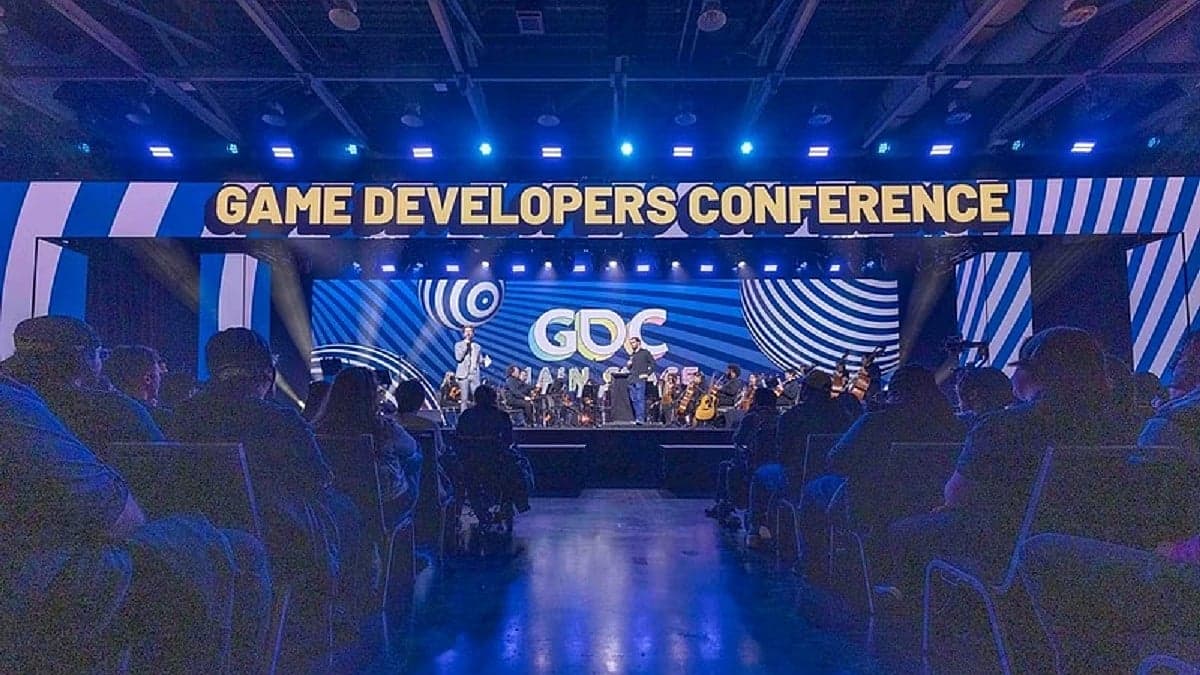
The split inside the industry right now is genuinely strange: 52% of game professionals say generative AI is negatively impacting the field, yet 36% are already using AI tools in their daily work. That tension sat at the center of everything at the Game Developers Conference in San Francisco, which ran March 9–13 at the Moscone Center, and it shaped every conversation worth having about mobile gaming's near-term future.
Bloomberg called AI "the single hottest buzzword at the conference," with vendors, studios, and platform holders racing to show tools promising to automate or accelerate key parts of development. Nvidia, Epic Games, and a growing ecosystem of AI startups were demonstrating pipelines that could, by their own claims, compress months of production work into days. Those claims haven't been independently verified, but the demo floor pressure was real enough to move hiring decisions.
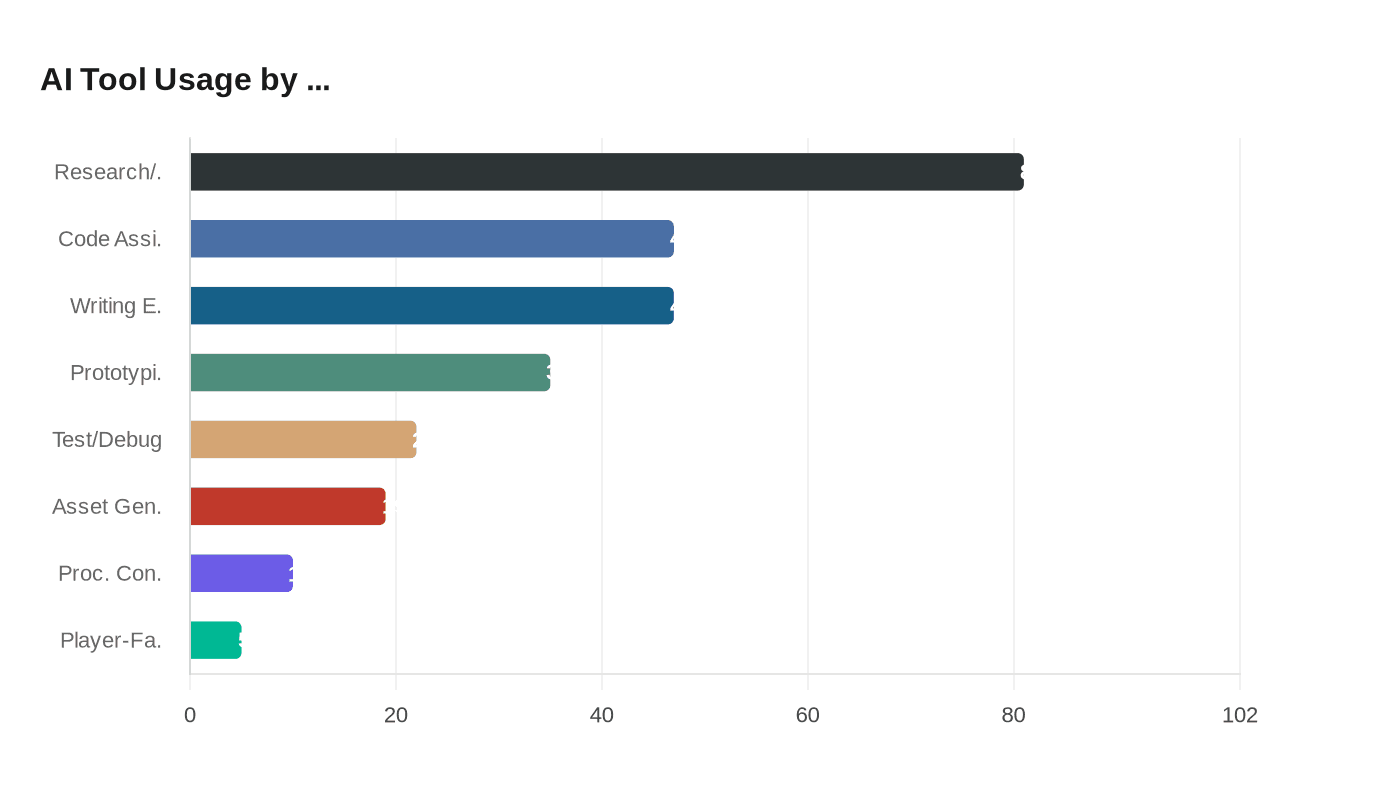
Where AI is actually being used tells a more grounded story than the keynote hype. According to GDC 2026 survey data, 81% of professionals using AI tools apply them to research and brainstorming. Code assistance and writing emails each clock in at 47%, prototyping at 35%, and testing and debugging at 22%. The genuinely creative outputs remain mostly untouched: asset generation sits at 19%, procedural content generation at 10%, and player-facing features at just 5%. Generative AI in game development is functioning as a productivity layer, not a creative engine.
The role breakdown matters for mobile studios specifically. Only 30% of respondents working directly at game studios reported using AI tools, compared to 58% at publishing companies, support teams, and marketing and PR firms. For the teams actually building games, adoption is lagging behind the noise considerably. Among those who do use large language models, ChatGPT dominates at 74% usage, followed by Google Gemini at 37% and Microsoft Copilot at 22%.

On the hardware side, Arm used its developer summit at GDC to push a message that mobile studios probably needed to hear: foundational optimizations still deliver some of the biggest wins. The warning embedded in that framing is that as device capabilities improve, studios design for richer effects and denser scenes, and visual expectations are rising faster than efficiency gains. Power and thermal constraints still define what's possible on mobile, and those constraints are easy to miss until a performance problem surfaces on an actual device. Arm announced the Mali G1-Ultra GPU, which the company says delivers desktop-quality ray tracing and AI performance on mobile, and highlighted Arm Accuracy Super Resolution in the context of a Fortnite mobile performance boost. Arm's Performance Studio was also pushed as a practical tool for developers to profile and optimize on-device behavior.
Neural graphics were the forward-looking thread tying Arm's messaging together. "Neural graphics techniques are moving from research into real workflows, AI is becoming easier to integrate directly into gameplay systems, and developers now have more powerful tools to understand and optimize how their games run on mobile hardware," Arm stated at its summit. The company's call to action was blunt: "Start experimenting with neural graphics today."
The hiring pressure is where the abstract conference talk meets immediate consequences for developers. "Adaptability to AI tools is becoming a hiring prerequisite," according to Metaintro's GDC analysis, which noted that job listings in 2026 are far more likely to mention AI proficiency than they were even a year ago. Studios want developers who can prototype faster with generative tools, automate testing pipelines, and accelerate asset creation. The practical cost of avoiding AI entirely is showing up in the job market.
Funding conditions added another layer of stress to the conference's atmosphere. According to Gianty's State of the Game Industry 2026 report, 35% of studios are now relying primarily on self-funding, which means decisions about which AI tools to adopt are happening inside tighter budget constraints than studios faced two or three years ago. Unreal Engine leads adoption across the industry, while Steam Deck and handheld PCs are extending the PC gaming ecosystem in ways that also affect mobile development priorities.
The Gamemakers analysis from the conference pointed to something that cuts underneath the tool debate: information advantage. The argument is that knowing which AI workflows actually work in production, from someone like Travis Oatman who has been building production AI tooling at Carbonated for three years, is worth more than any amount of generalized AI content. "When anyone can generate a 2,000-word industry analysis in 30 seconds, the analysis itself loses value," Gamemakers noted. "What gains value is the curation layer." That's the competitive pressure mobile studios are really operating under right now, less about whether to adopt AI and more about whether they're learning from the right sources fast enough to matter.
This article was produced by Prism’s automated news system from verified source data, official records, and press releases, then run through automated quality and moderation checks before publishing. The system is built and supervised by the people who set the standards it runs under. Read our full AI policy.
Did this article answer your question?


