Brennan’s Model Railroading adds realistic sand scenery for model layouts
Brennan’s sand line gives compact layouts a better answer than generic turf: the right grain, color, and texture for roads, yards, and industrial edges.
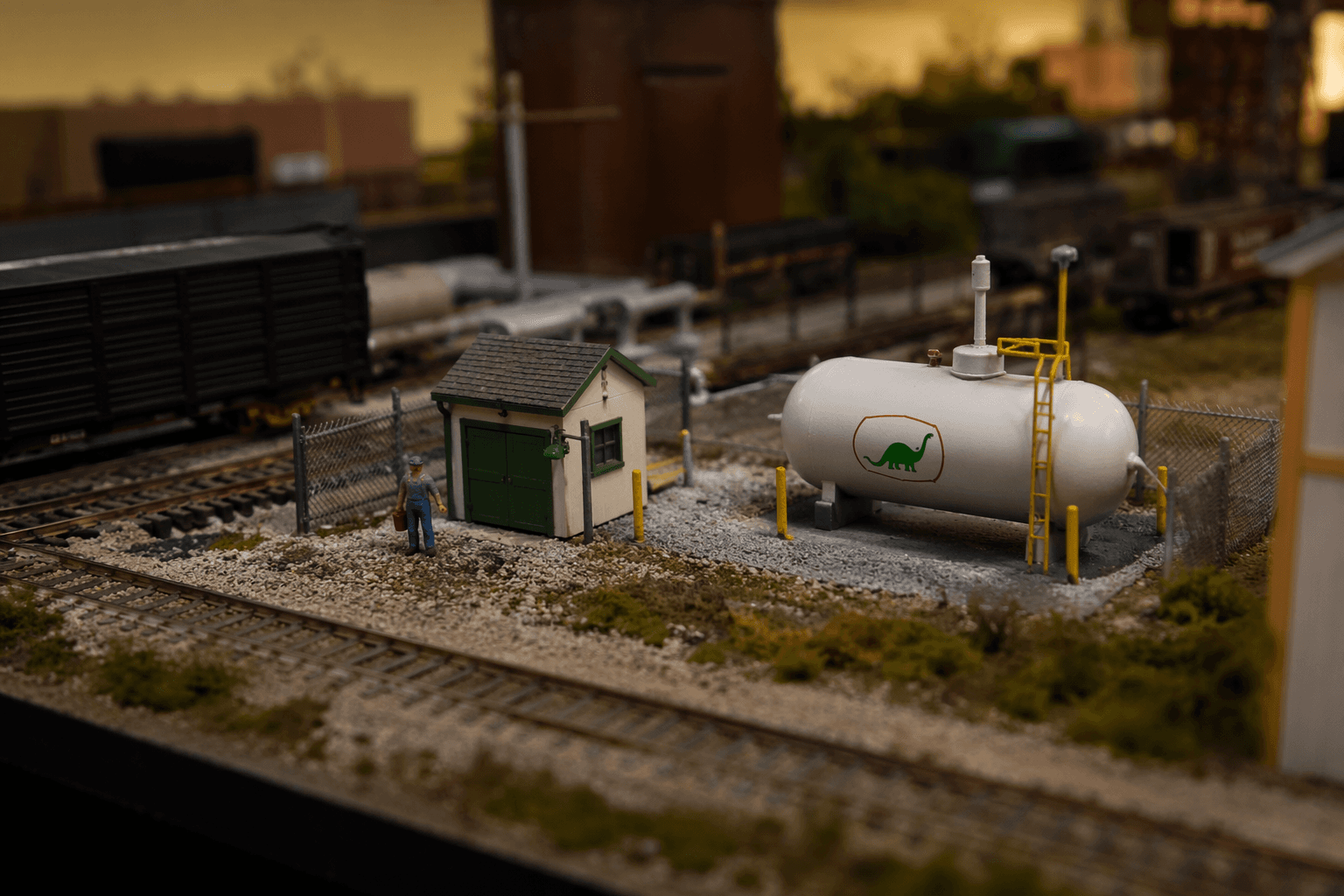
Brennan’s Model Railroading is making a strong case for the small scenery details that stop a layout from looking toy-like. Its Natural Ground Cover sand line is aimed at the awkward in-between spaces, the roads, shoulders, fill, and light industrial ground cover that too often get flattened by generic turf or overscaled ballast.
A practical answer to the messy parts of a layout
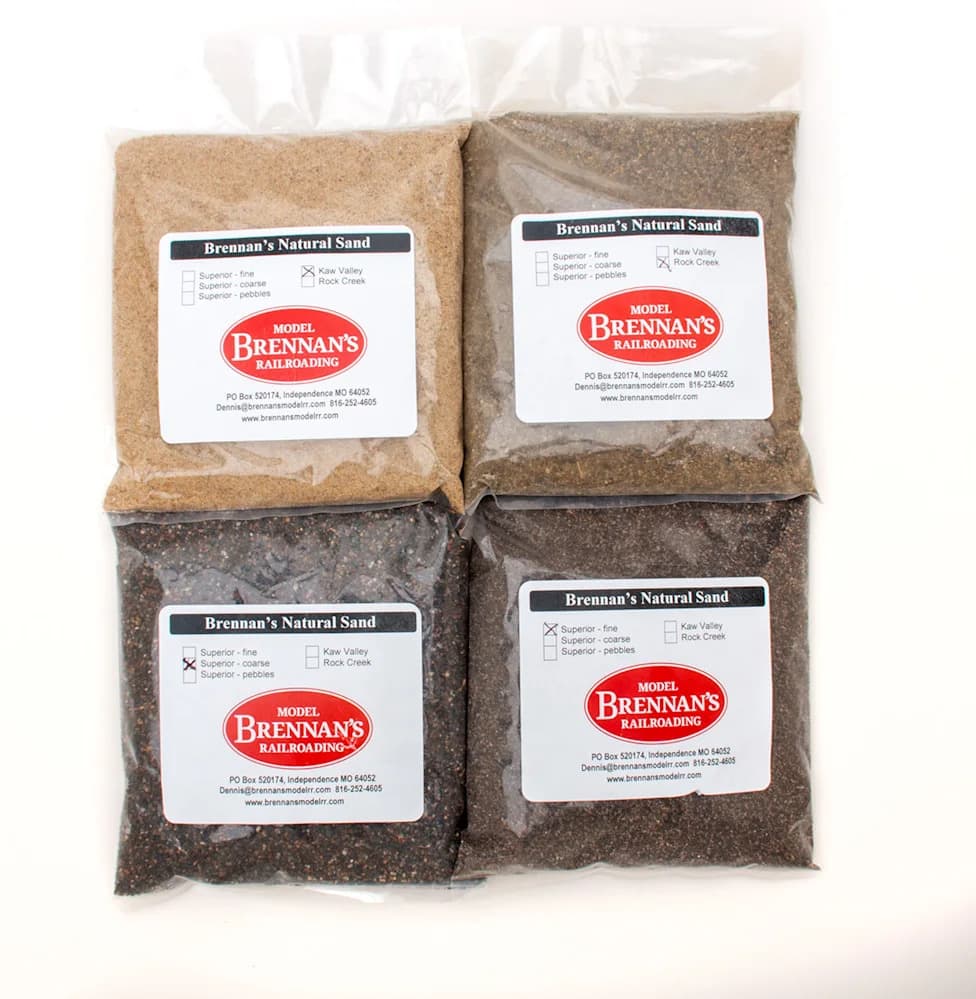
A July 1, 2026 review of Brennan’s sand products focused on four samples the company sent to CTT, and the point was clear from the start: these are not just decorative materials, they are scene builders. Each product comes in a 24-ounce bag priced at $9.95, which puts the line squarely in the range of hobby materials meant to be used, not hoarded.
That matters because the most convincing layouts usually fail in the same places. A road shoulder is too smooth, a warehouse edge is too uniform, or a service yard looks like a sheet of painted plywood. Sand texture solves those problems better than a one-note ground cover because it gives you a surface that can read as dirt, cinder, worn pavement, or industrial runoff without needing a full rework of the scene.
Three textures, three different jobs
The strongest part of Brennan’s lineup is how clearly each sand is tied to a visual task. Rock Creek Sand is the lighter, more flexible option, described as a fine-textured, medium-colored grayish-brown blend that adds another tone and texture to a scenery base. On the layout, that makes it the kind of material you reach for when you need deserts, beaches, or simply a lighter sandy surface that breaks up a field of green and brown.
Kaw Valley Sand is the utility player in the group. Brennan’s describes it as a light-colored, fine-grain sand for sand houses, yards, sand-and-gravel facilities, and other places where locomotives or work equipment would plausibly be moving gritty material around. It is the sort of ground cover that makes an engine-service area look like it has a job to do instead of just sitting there as a scenic afterthought.
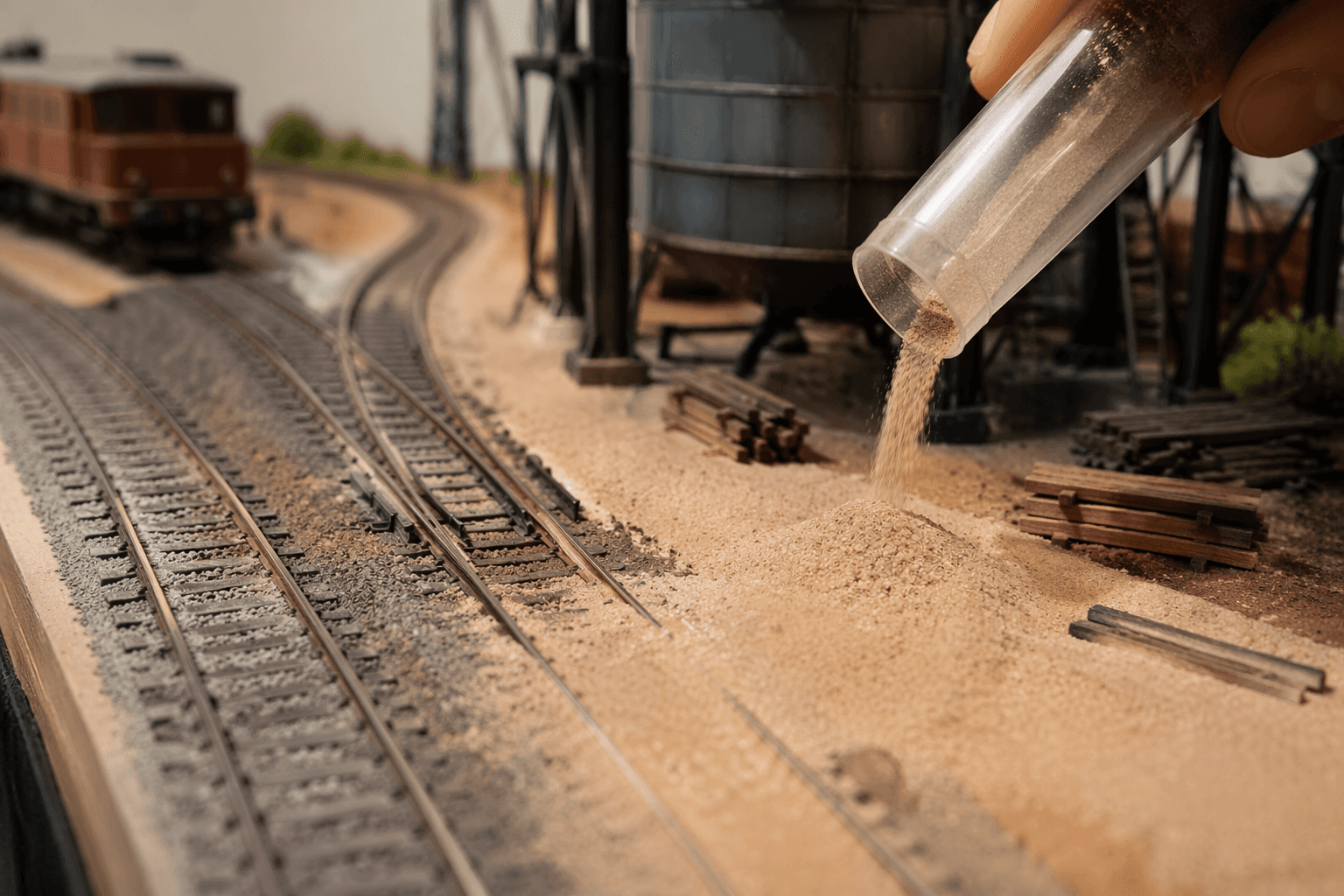
Superior Sand is the most industrial of the three, and it is the one that best shows why texture matters as much as color. Brennan’s describes it as a dark, grainy sand direct from the shores of Lake Superior, suited to industrialized areas, warehouses, factories, streets, and transition zones along the right of way. That darker tone helps it sit where hard-surfaced spaces need a little roughness, not a big dramatic pile of ballast.
Why Superior Sand works so well on realistic scenes
The review puts particular weight on the Superior Sand samples, which came in coarse and fine textures, while the product line also includes a pebbles version. That spread gives a modeler more control over how the surface reads at viewing distance. Fine material can suggest packed dirt or old cinders, while coarse material adds the broken-up look that makes an industrial block or alley feel used.
Brennan’s own product page goes one step further and recommends mixing fine and coarse sand together over natural earth to avoid uniformity and add depth around factories and warehouses. That is the kind of advice that separates a useful scenery product from a simple bag of colored grit. The texture blend is doing the work here, especially in areas where the prototype ground is rarely consistent from one square foot to the next.
A simple way to build a better ground scene
The easiest way to use these materials is to think in layers instead of dumping them down as a final surface. Start by deciding what the space actually is, then match the sand to that job, then vary the texture so the area does not look factory-new.
1. Use Rock Creek Sand where the scene needs a lighter, more natural base, especially along sandy edges, dry open ground, or places where a grayish-brown tone helps blend scenery elements together.
2. Put Kaw Valley Sand where the railroad would logically handle sand itself, such as a sand house, yard, or sand-and-gravel facility, where the lighter fine grain supports an active working scene.
3. Use Superior Sand in industrial districts, on streets, around warehouses, and in transition zones where darker, rougher ground makes the area feel lived in.
4. Blend fine and coarse Superior Sand in the same area when you want depth, not uniformity, especially around factory walls, loading areas, and rough service ground.
That approach is what makes sand more useful than a generic turf blanket. Turf can cover space, but sand can describe it, and on a compact layout that difference is huge. A few square inches of the right texture can turn a blank corner into a believable road shoulder, a service yard, or a strip of ground that actually belongs beside the track.
A company built around usable details
Brennan’s Model Railroading says the company was established in 1997 and is owned and operated by Dennis Brennan and his wife, Sandy, who joined the business in January 2019. The product line has grown over time, but the useful part for modelers is not the expansion story so much as the way the company packages the materials for actual layout work.
Each sand product includes printed modeling tips and application instructions, which helps push the material past the point where a newcomer might just scatter it on the baseboard and hope for the best. That kind of guidance is especially valuable with scenery products that depend on placement and blending. The right texture in the wrong location can look off immediately, while the right one in the right spot can finish a whole scene.
That is the real lesson in Brennan’s sand lineup. The products are not trying to be the flashiest thing on the bench, and they do not need to be. They are there to solve the exact problem that makes so many layouts feel incomplete: the ground between the rails and everything around them.
This article was produced by Prism’s automated news system from verified source data, official records, and press releases, then run through automated quality and moderation checks before publishing. The system is built and supervised by the people who set the standards it runs under. Read our full AI policy.
Did this article answer your question?