How to improve Hornby’s early Class 423 4-VEP EMUs
Early Hornby 4-VEPs are worth upgrading, not binning. Focus on the cab fronts and overall stance, and you can turn a flawed release into a far more convincing Southern EMU.

Why the early Hornby 4-VEP is worth keeping
If you already own an early Hornby Class 423 4-VEP, the smartest move is not to replace it. The first releases had visible anomalies, but they were still good enough to justify improvement, especially if you model the Southern Region and want a believable commuter unit rather than a shelf queen.
That matters because the 4-VEP is not just another multiple unit. It is one of the most recognisable faces of late BR and Network SouthEast suburban operation, and that makes even small visual corrections worthwhile. When the model gets the cab front, the stance and the obvious details right, it stops looking like a compromise and starts looking like a proper 4-VEP.
Know the prototype before you touch the model
The Class 423 fleet was built in some serious numbers, with 194 four-car EMUs produced between 1967 and 1974. The first 20 units had centre vehicles built at Derby Works, while the rest came from York Works. That spread alone tells you why the type has such a strong following: it served long enough to wear several identities, and it did a huge amount of work in front-line Southern Region service.
The story starts with the Bournemouth electrification programme. The first twenty units entered service in 1967 for the newly electrified Bournemouth line, and the type went on to become a familiar sight on Southern Region outer suburban duties, especially around Waterloo and the wider London commuter network. Later, some units were renumbered into the 30xx and 31xx series in the 1980s to comply with TOPS, which gives you even more room to choose an era that suits your layout.
That historical range is part of the appeal. A 4-VEP can sit naturally in late BR blue, original or revised Network SouthEast, and later South West Trains or Southern operation. Network SouthEast itself launched on 10 June 1986, so the same basic unit can legitimately anchor several very different periods without looking out of place.
What to improve first
The early Hornby model first appeared in 2012, and the criticism it drew was mainly about visible accuracy rather than the basic idea of the release. That is where your attention should go as well. The cab fronts are the first thing people see, and on a unit as familiar as a 4-VEP, any oddity there stands out immediately.
The most worthwhile upgrades are the ones that change the way the model reads at normal viewing distance:
- the cab front, because that is where prototype accuracy gets judged fastest
- the visible body details, because they shape the model’s overall character
- the stance, because a 4-VEP that sits badly looks wrong even if it runs well
That is the right order of priorities. If the model already runs smoothly, do not get distracted by chasing improvements that never show up on the layout. On a commuter EMU like this, the eye goes straight to the ends and the way the unit sits in the platform, so those are the places where a careful upgrade pays back the most.
How far to push the upgrade
This is where the early 4-VEP becomes a value-retention project rather than a replacement decision. If your aim is to make the model more convincing on the layout, a light upgrade is usually enough. If your aim is to match a specific prototype photo or to satisfy close Southern Region scrutiny, you will want to be more exacting about the front-end appearance and the overall finish.
That is also why the 4-VEP suits a broad range of modellers. Accuracy-focused Southern Region fans can use the platform to build a better likeness of a specific unit or era, while anyone who simply wants a more convincing train can improve the parts that dominate the view without overthinking the rest. The model is famous enough that people notice the details, but forgiving enough that sensible corrections still make a visible difference.
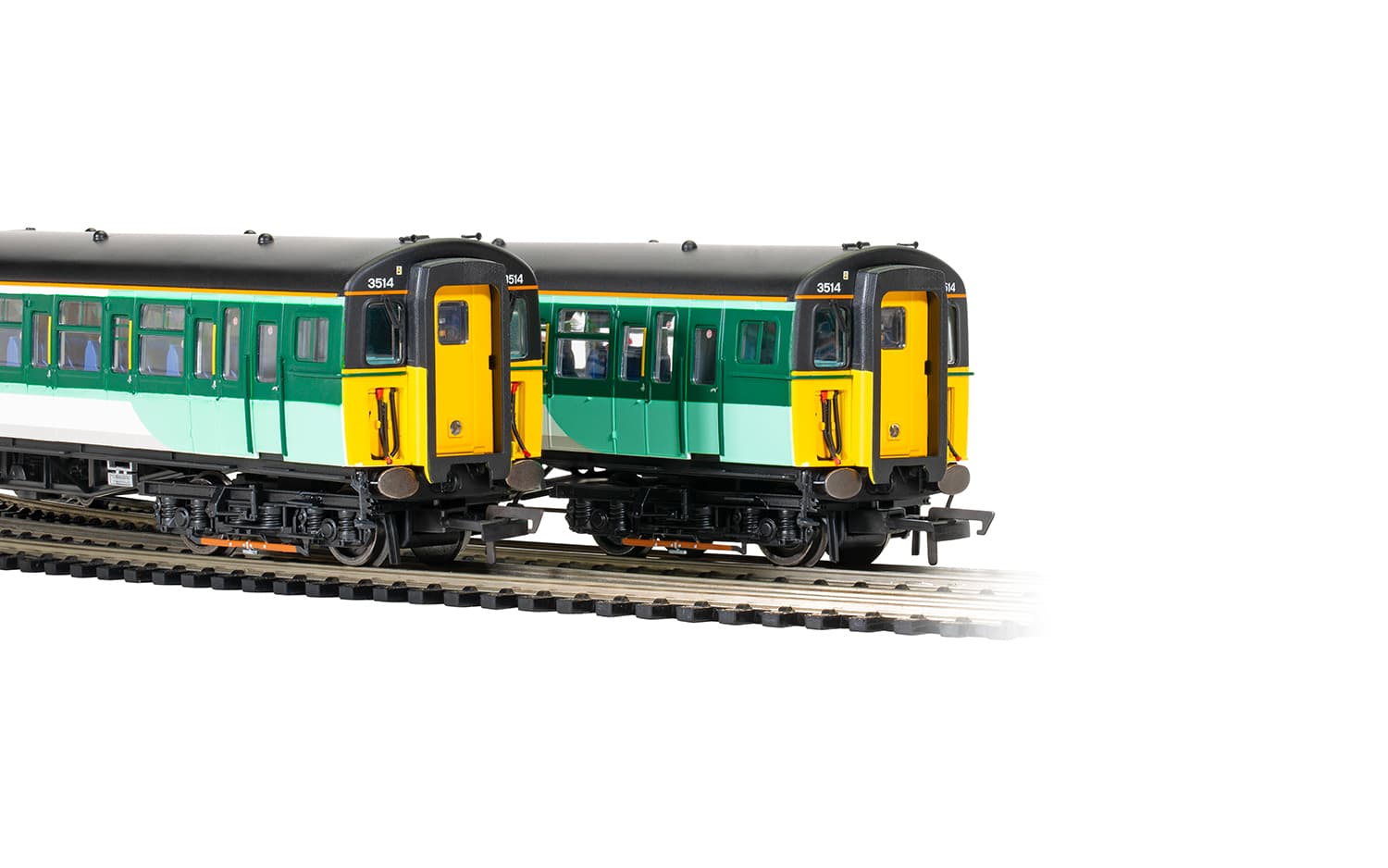
The key is to avoid throwing good money after bad. If you enjoy the early Hornby release and want to keep it in service, improve the areas that alter the silhouette and the first impression. If you want a model that arrives already closer to the prototype, then waiting for a newer release makes more sense than trying to force an old one into perfection.
Why the revised Hornby tooling changed the conversation
Hornby did not leave the matter there. The company later issued revised 4-VEP tooling, with publicly noted improvements, and the retooled model was checked against a real VEP photographed at Eastleigh Works. That comparison tells you everything about the audience this model now serves: this is a unit that attracts hard looks from people who know the prototype well.
The revised tooling also confirms that Hornby recognised the original release was not the final word. For owners of early examples, that is useful news rather than a reason to give up. It means the model is part of a continuing story, not a dead end, and the earlier release can still be brought closer to what you want with a focused set of improvements.
For Southern Region operators, especially if your layout lives in the 1980s or 1990s, the 4-VEP remains a very satisfying candidate for a careful upgrade. It is a celebrity among Southern electric enthusiasts for good reason, and it still earns its place because the prototype was so deeply woven into everyday service.
That is the real lesson of the early Hornby 4-VEP: do not treat it as a model to discard. Treat it as a solid starting point, improve the cab fronts and the stance first, and you end up with something that looks far more at home on a Bournemouth or Waterloo scene than the stock release ever did.
This article was produced by Prism’s automated news system from verified source data, official records, and press releases, then run through automated quality and moderation checks before publishing. The system is built and supervised by the people who set the standards it runs under. Read our full AI policy.
Did this article answer your question?