Rapido expands HO GP40 and GP30 runs with road-specific detail
Rapido is betting on road-specific HO diesels, sound-ready electronics, and prototype detail. The GP40 and GP30 runs show exactly what summer 2026 buyers want.
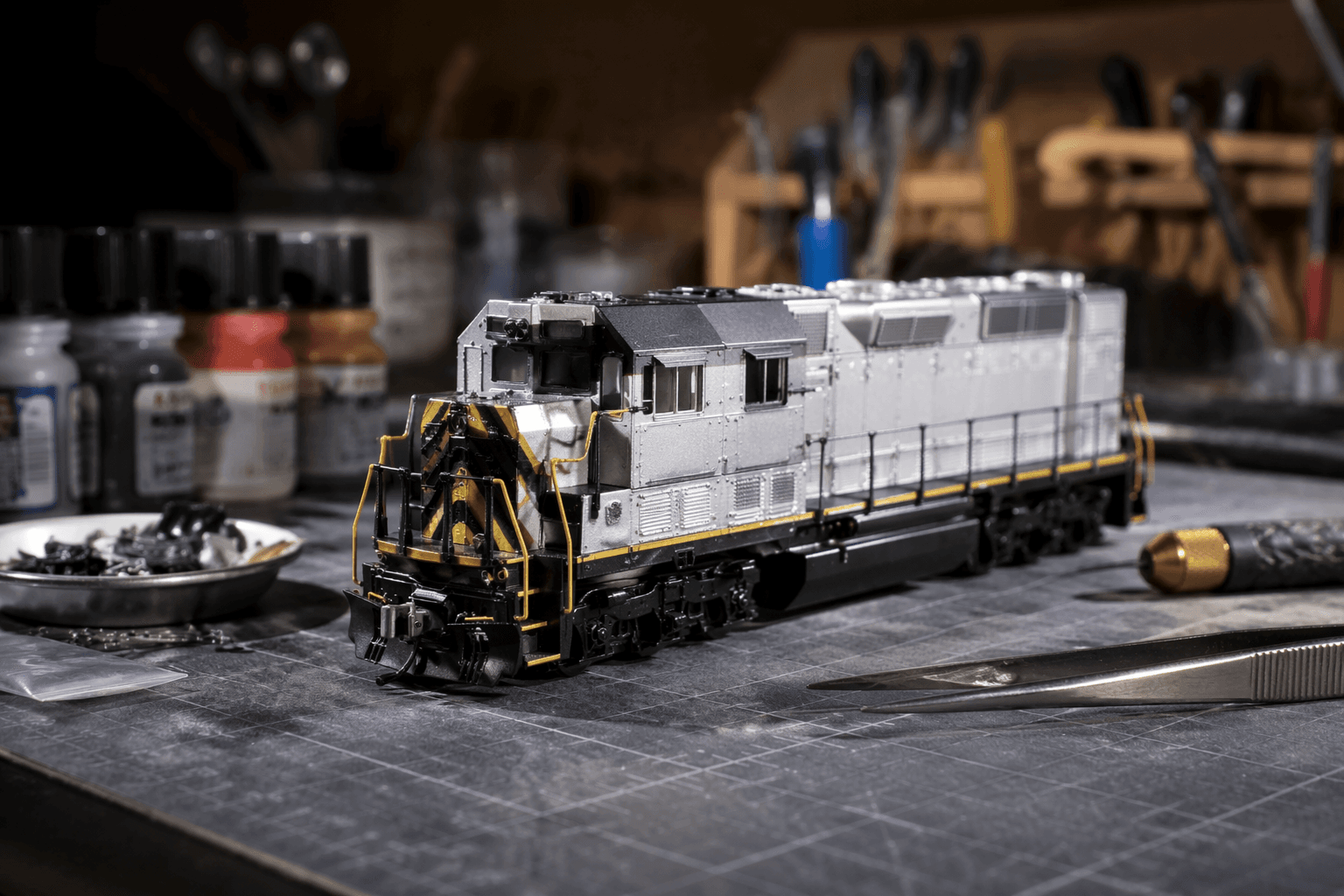
Rapido’s new HO GP40 and GP30 runs offer exact railroad paint schemes, specific lighting packages, and decoder options that fit particular layouts. The company is not chasing a generic four-axle diesel crowd here. It is leaning hard into prototype-specific detail, broad road-name coverage, and enough electronics options to satisfy both the plug-and-play modeler and the roster planner who wants full sound and uninterrupted running.
Road names are doing the heavy lifting
The GP40 lineup shows just how far manufacturers are willing to go to make one locomotive family feel railroad-specific. Rapido is offering the model in Dakota, Minnesota & Eastern; Conrail blue; CSX; Denver & Rio Grande Western; Guilford Rail System; Kansas City Southern’s Southern Belle; Milwaukee Road; Missouri-Kansas-Texas; New York Central; Rock Island; Soo Line; Wheeling & Lake Erie; and Western Maryland paint schemes. Each scheme comes with one to four road numbers, which is exactly the kind of flexibility that matters when you are trying to build a believable roster instead of just buying a nice-looking diesel.
The appeal is not only in getting a GP40, it is in getting a GP40 that fits a specific era, a specific railroad, and sometimes a specific paint story. For modelers building around a named road, that kind of range saves time and money because it reduces the need to compromise on road name or rebuild a fleet around whatever happens to be on the shelf.
The GP40 is aimed squarely at the premium buyer
Rapido treats the GP40 like a flagship four-axle locomotive, and the prototype story backs that up. The run pays tribute to more than 50 years of mainline freight service, beginning with the first GP40 order built in 1965 for New York Central. The prototype used a turbocharged 16-cylinder 645 prime mover rated at 3,000 horsepower, more than 1,000 GP40s were built for 30 North American railroads, and the final GP40 was built in 1971 for Chesapeake & Ohio no. 3794.
The model itself is loaded with the kind of road-specific hardware that serious HO buyers notice immediately. It has prototype-specific details, metal side handrails with plastic stanchions, Cannon & Company radiator and dynamic-brake fan parts, etched-metal steps, tri-color class lights where appropriate, ditch lights, beacons, multiple truck sideframes, multiple dynamic-brake hatches, and correct fuel tank sizes by road number. It is also offered with a MoPower capacitor system for smoother running through real layout trackwork.
The buying options are just as pointed. Rapido offers DC/Silent versions with 21-pin DCC-ready electronics and dual-mode DC/DCC/sound versions with ESU LokSound V5. The GP40 is listed at $249.95 for DC and $359.95 with sound, and the suggested 18-inch minimum radius keeps it usable on a lot of home layouts without forcing major trackage changes. In a prior Trains.com review, a sound-equipped sample carried a $349.95 price and was identified as Western Pacific no. 3511, built by EMD in April 1967.
Rapido also pushes beyond the usual repaint run with never-before-produced-in-plastic variations. The run includes nose and Gyra/Mars light versions, stepwell variations, Canadian versions, and slugs. The standout oddball is the Missouri-Kansas-Texas road slug no. 501, which started as a damaged GP40 and will be offered in both MKT and Union Pacific versions with a working motor.
Rapido ties the KCS version to Western Pacific units later sold to Gateway Western and then repainted into Kansas City Southern gray. It also lists an order deadline of November 15.
The GP30 keeps the same logic at a more accessible price
The GP30 follows the same road-specific playbook, but it is pitched to a slightly different buyer. Rapido is offering Burlington Northern, Chicago & Eastern Illinois, Family Lines System, Louisville & Nashville, Missouri Pacific, Norfolk Southern, Southern Pacific, and Union Pacific versions, with some schemes carrying multiple sub-eras and details such as high short hoods, patchouts, or beacon arrangements. That kind of variety matters because the GP30 is a locomotive people often buy in multiples, and the differences between roads and eras are what keep a consist from looking repetitive.
Mechanically, the GP30 is set up as a more operator-friendly purchase. It has all-wheel drive and electrical pickup, LED lighting, 21-pin DC-ready electronics, twin cube speakers, and a PowerPack using two super capacitors. The pricing lands at $204.99 for DC and $314.99 with sound, which makes it the easier entry point for modelers who want a reliable, modern-running diesel without jumping all the way to the GP40’s higher price bracket.
It places the model in the part of the market where a solid-running, well-detailed locomotive can pull double duty on a first serious layout or a growing roster. A 2024 Trains.com video review of a ScaleTrains HO GP30 highlighted railroad-specific detailing as one of the key selling points in this market, and that lines up neatly with what Rapido is offering here.
What manufacturers think will sell this summer
Rapido is betting that HO buyers will pay for prototype fidelity before they pay for sheer variety, but they still want plenty of variety. The market reward is in locomotives that look tied to a real railroad’s roster, run well enough for regular operating sessions, and come with decoder and sound choices that do not force a compromise.
This article was produced by Prism’s automated news system from verified source data, official records, and press releases, then run through automated quality and moderation checks before publishing. The system is built and supervised by the people who set the standards it runs under. Read our full AI policy.
Did this article answer your question?