Rapido Trains UK expands OO freight range with 1907 RCH wagons
Rapido Trains UK’s new 1907 RCH 7-plank OO wagons come in 18 decorated versions, giving pre-Grouping layouts a believable mix of coal, merchant and industrial traffic.
-Copy.jpg.d26e098978da72fb72ce8c7ab1065914.jpg&w=1920&q=75)
Rapido Trains UK widened its OO-gauge freight lineup with a run of Gloucester Inside Diagonal 1907 RCH 7-plank wagons, and the selling point is authenticity rather than novelty. The release, announced on June 26, 2026, gives pre-Grouping and early railway-era layouts a type of wagon that actually fits the traffic pattern, from colliery branches to exchange sidings and grimy goods yards.
Gaugemaster’s announcement says the range covers 18 individually decorated versions, each with its own running number and livery details drawn from collieries, merchants, ironworks and other industrial firms. That matters because a rake of generic open wagons can look right only for so long, while a mix of named private-owner vehicles immediately gives a train the patchwork look of real British mineral traffic. Rapido and Gaugemaster both frame the wagons as suitable for realistic mixed freight trains, with free-running performance and fine detail aimed at operators as much as collectors.
The prototype has the sort of hard use history model railways thrive on. Rapido says private owner wagons were a major part of Britain’s railway scene and that more than half a million of them were inherited by British Railways in 1948. The company also says the Railway Clearing House first set construction standards in 1887 after accidents involving non-standard wagons, and that it modeled these 5- and 7-plank types to the 1907 standards as the first ready-to-run offering of this kind in 4mm scale. The Science Museum Group dates a bound set of RCH private-owner wagon drawings and specifications to December 1907, while noting that such wagons were commonly used by mines, ironworks and factories with their own internal rail systems and sidings.
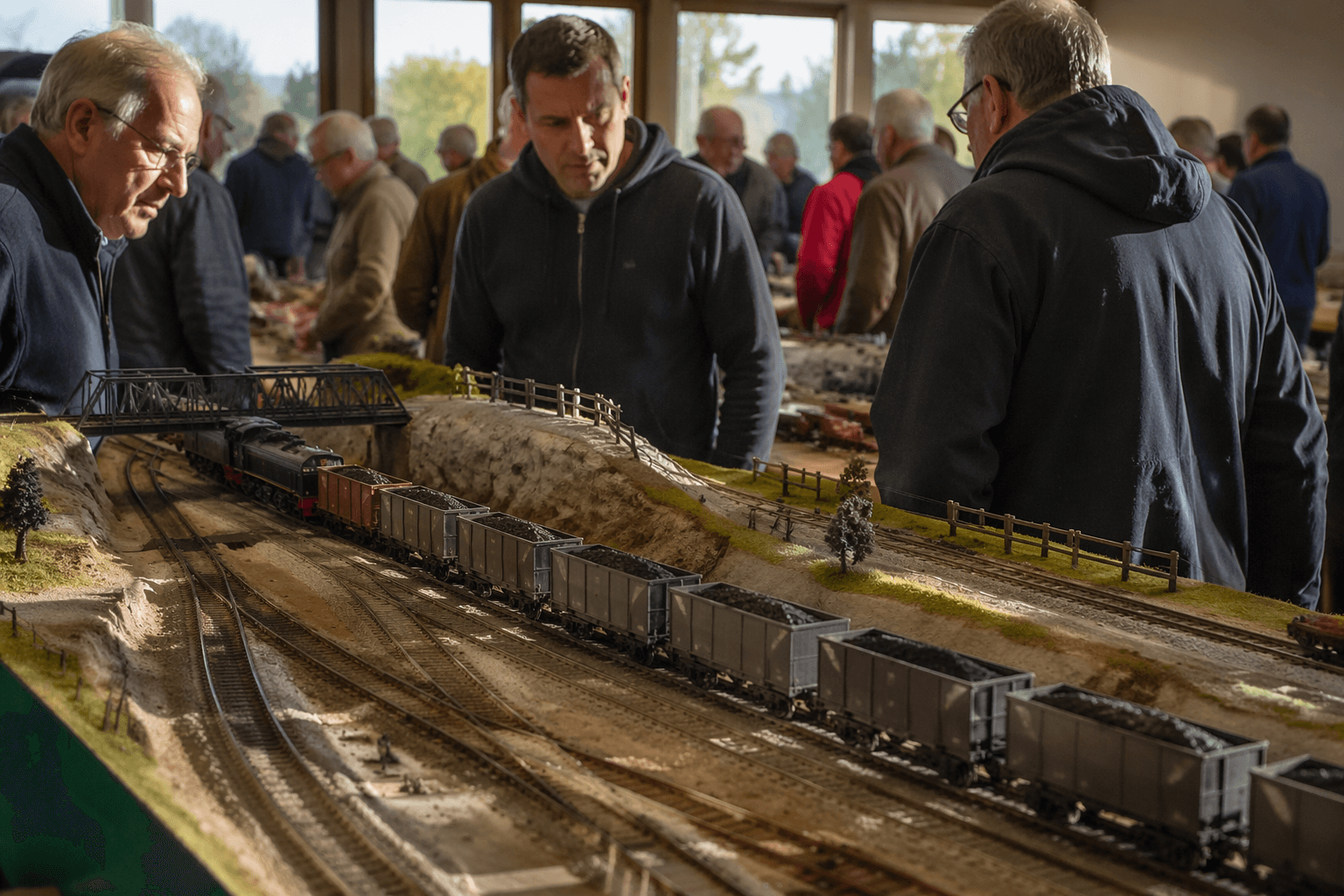
Rapido says many thousands of RCH-standard wagons lasted until British Railways began phasing out wooden-bodied stock in the 1960s, while industrial-service wagons carried on even longer. It also notes how widespread the private-owner pool could be, with some coal merchants owning one wagon and others several hundred, while collieries and coal factors could own thousands. Scottish colliery wagons turning up as far away as Kent is exactly the kind of detail that makes the new range useful beyond one region or one industry.
The Gloucester-built version adds its own appeal. Rapido says the 7-plank design was 15 feet long over the body, changed very little from the 1890s to the early 1920s, and existed with and without end doors. The company also points out that Gloucester’s hire fleet numbered 10,000 wagons after nationalisation, and that no examples of the 1890s 7-plank design survived into preservation. For a believable period freight scene, that is the difference between “a wagon” and the right wagon parked in the right yard.
This article was produced by Prism’s automated news system from verified source data, official records, and press releases, then run through automated quality and moderation checks before publishing. The system is built and supervised by the people who set the standards it runs under. Read our full AI policy.
Did this article answer your question?