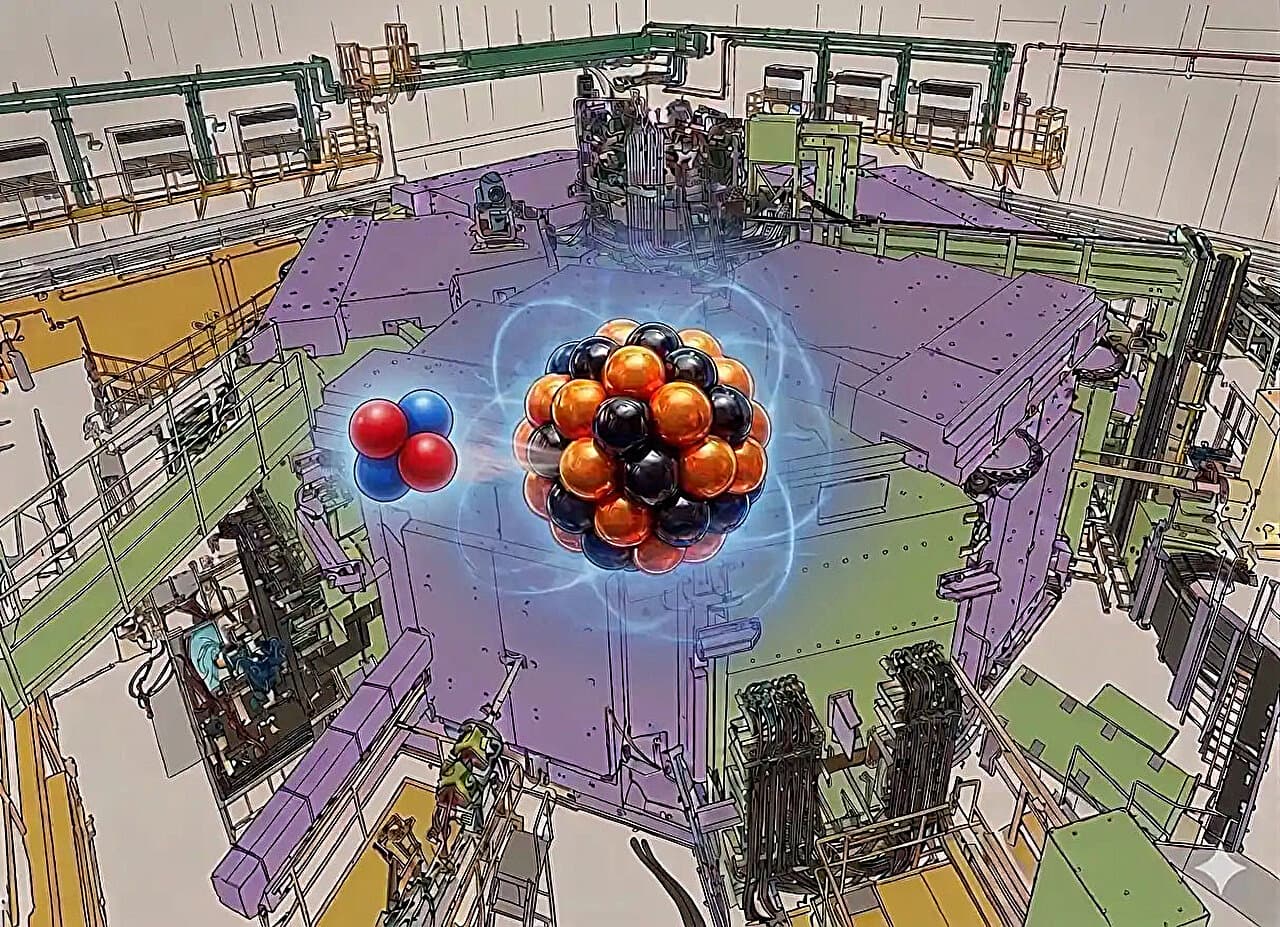
Alpha particles may help fusion reactors sustain burning plasmas
Alpha particles may be a confinement aid, not a bug. New simulations suggest they can tame turbulence, which could matter for burning-plasma reactors like ITER.

Alpha particles damped the tiny turbulent eddies that leak heat from a reactor core in simulations submitted to arXiv on May 11, 2026. The effect strengthened confinement instead of undermining it. The next questions are which reactor designs benefit most and what experiment will test it next.
Why alpha particles matter in a burning plasma
In a burning plasma, alpha particles are the helium nuclei born from fusion, and they are supposed to become the dominant heating source once a reactor is hot enough that external power is no longer doing most of the work. That is the whole logic behind ITER, the international reactor under construction in southern France, which is designed to produce 500 megawatts of fusion power from 50 megawatts of input heating power, a tenfold gain known as Q=10.
ITER’s mission is to demonstrate a burning plasma in which the energy carried by fusion-born alpha particles can keep the fuel hot with little or no outside help.
On June 9, 2026, the U.S. Department of Energy finalized its Fusion Science and Technology Roadmap, a plan built to speed commercialization and point the field toward pilot power plants in the mid-2030s.
What the new simulations actually found
In the simulations, alpha particles substantially improved confinement in burning plasmas. Energetic fusion products weakened small-scale turbulence, the tiny particle eddies that otherwise would have carried heat away from the center of the reactor and degraded performance.
The alpha particles weakly destabilize toroidal Alfvén eigenmodes, or TAEs, which then enhance zonal flows. Those flows shear apart ion-scale turbulence, cutting the transport that normally drains energy from the plasma core. The result is not just less loss, but a feedback loop: less turbulent heat transport leads to more alpha heating, which in turn reinforces the burning state. In the paper’s modeling, alpha heating rose by up to 25%.
For years, alpha particles were often discussed as a possible source of trouble because energetic fast ions can excite modes that threaten confinement. This analysis found a case in which alpha particles improved it.
Which machines stand to gain most
The strongest practical relevance is for reactors trying to cross into true burning-plasma territory. That includes ITER, where alpha heating is central to the design, and reactor concepts such as SPARC, where the goal is to prove that a compact machine can reach reactor-relevant conditions. The same logic also reaches ARC-class and other next-step designs that rely on fast ions shaping plasma behavior.
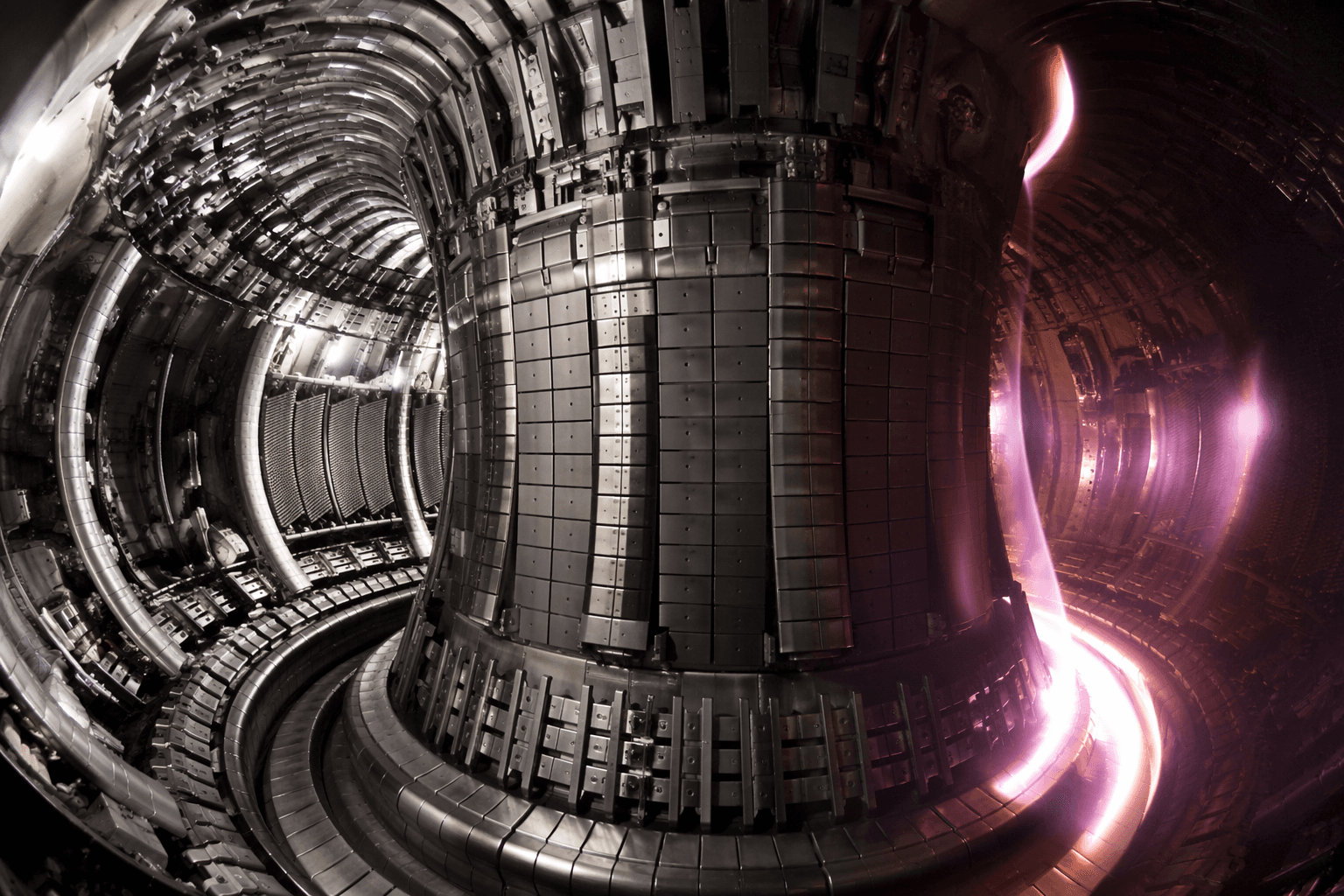
The result gives reactor designers another reason to pay close attention to fast-ion behavior, TAE activity, and zonal-flow control. It puts more weight on modeling how alpha production, transport, and wave interaction evolve together in a reactor core that is meant to self-heat.
Recent modeling work from MIT’s Plasma Science and Fusion Center has already been pushing in that direction, using high-resolution simulations and machine learning to predict behavior in ITER-like burning plasmas. The new result fits that larger shift toward modeling how alpha particles change confinement in burning plasmas.
The experimental proof point still ahead
The cleanest experimental anchor so far came in 2023, when Joint European Torus researchers reported the first direct evidence of electron heating by fusion-born alpha particles in deuterium-tritium plasmas using afterglow experiments.
The new simulations go further, but they also reach into territory that current experiments do not yet reproduce directly. The authors say the mechanism has no direct analogue in present-day devices, because external heating still dominates today’s plasmas. That means the next confirmation has to come in a reactor-relevant burning plasma, where alpha-born fast ions are strong enough to measurably reshape TAEs, zonal flows, and turbulent heat transport.
William Heidbrink of the University of California, Irvine, who was not involved in the work, said the idea that alpha particles could regulate turbulence and improve performance had long been imagined but lacked clear evidence. He described the mechanism as sounding “magical and fanciful,” then pointed out that it may in fact work positively. The result still needs experimental confirmation in a machine operating much closer to self-heating conditions.
What changes next for fusion engineering
The result puts alpha-particle transport on the list of tools that help a reactor burn, not just on the list of complications that engineers must suppress. That shifts emphasis toward controlling fast-ion interactions, understanding wave-driven transport, and making sure turbulence models capture the full chain from alpha birth to confinement gain.
Recent studies in 2025 and 2026 pointed to alpha-particle benefits in reactor concepts beyond ITER.
This article was produced by Prism’s automated news system from verified source data, official records, and press releases, then run through automated quality and moderation checks before publishing. The system is built and supervised by the people who set the standards it runs under. Read our full AI policy.
Know something we missed? Have a correction or additional information?
Submit a Tip_64496_89439.jpg&w=1920&q=75)