Argentina pivots nuclear policy toward exports and foreign investment
Argentina’s new nuclear doctrine puts exports first, opens the door to private capital, and leans on RA-10 and Atucha I to prove it can deliver.

Argentina has reordered its nuclear playbook. The sector’s new policy puts high-value-added exports ahead of energy security and treats nuclear power as an industrial business line, not just a source of electrons.
The shift was unveiled on 1 June 2026 at the 76th anniversary ceremony of the National Atomic Energy Commission, where the Nuclear Affairs Secretariat presented a 54-page policy document. Federico Ramos Nápoli delivered the plan, and the government framed it as an effort to turn Argentina’s long nuclear record into a larger revenue-generating industry. The document says Argentina has built world-class nuclear science and technology, but has not fully converted that capability into a sector of comparable scale.
The ranking inside the policy is the clearest sign of the pivot. The four objectives are, in order, high-value-added exports, energy security, preservation and development of national technological capabilities, and regional leadership and geopolitical positioning. The government says that when those goals clash, the higher-ranked one prevails. It also says Argentina belongs to a small group of roughly 15 countries with command of the full nuclear fuel cycle, a capability it now wants to use more aggressively in international supply chains. World Nuclear News reported that the update explicitly opens the door to private capital, with CNEA contributing research and skilled personnel while companies finance projects and take the risk.
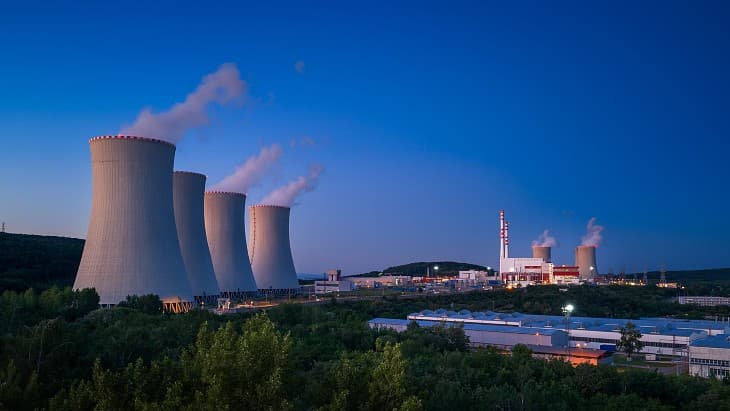
The next 18 months will be the test. The work plan keeps existing plants running, extends the life of Atucha I, brings the RA-10 multipurpose reactor online, modernises the regulatory framework and trains specialists. That is a practical bet on Argentina’s current fleet, which includes Atucha I, Atucha II and Embalse, with a combined 1,641 MW of output. Atucha I, in Lima, Zárate district, about 100 km from Buenos Aires, entered service in 1974 as the first nuclear power plant in Latin America. Its original design life of 32 equivalent full-power years was reached in 2018, and the regulator renewed its operating licence on 27 September 2024, saying it could keep running for 20 more years after a 30-month refurbishment outage and upgrades.

RA-10 shows what the export logic looks like in hardware. The reactor project began in 2010, reached 78% cumulative progress in the latest official update, and was expected to begin commissioning in October 2025 and finish in July 2026. In February 2024, the reflector tank was completed in Bariloche, and by April 2024 operators already had individual licences. Official materials say the reactor is meant to strengthen the domestic and regional supply of medical, industrial and agricultural radioisotopes.
Argentina’s nuclear sector was formalised by Decree No. 10,936 on 31 May 1950, and that legacy still matters. But the new policy is trying to re-rank an old industry, not reinvent it: preserve the fuel-cycle edge, find customers, bring in capital and keep the plants safe enough to make the export story believable.
This article was produced by Prism’s automated news system from verified source data, official records, and press releases, then run through automated quality and moderation checks before publishing. The system is built and supervised by the people who set the standards it runs under. Read our full AI policy.
Did this article answer your question?