Argonne supercomputer reveals sharper 3D image of the pion
Argonne’s Polaris supercomputer turned sparse pion data into high-resolution 3D images, showing how quarks move inside the particle that helps bind matter.
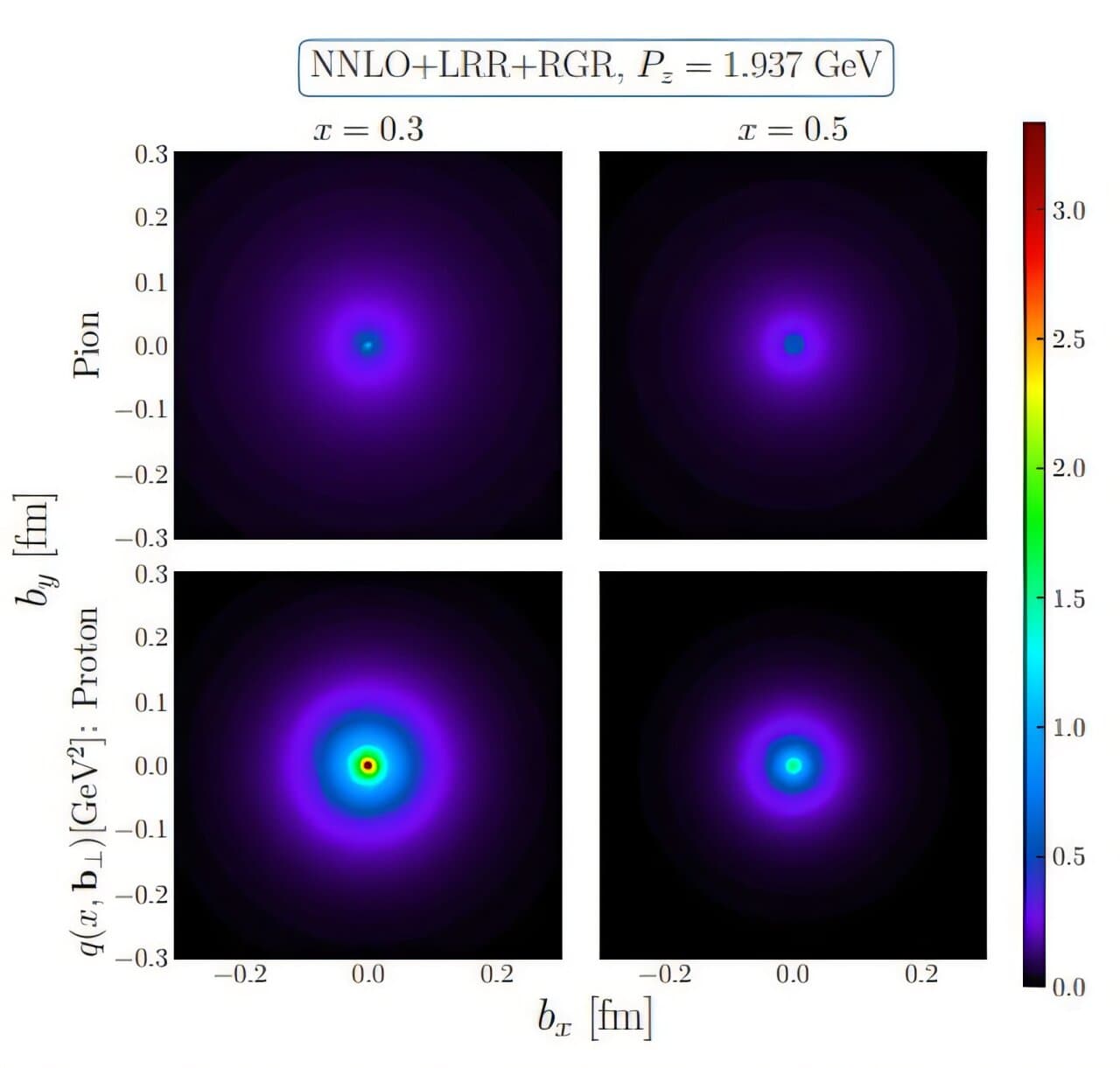
The pion is the strong force’s messenger inside nuclear matter, the lightest composite particle held together by the interaction that binds protons and neutrons. At Argonne National Laboratory, Yong Zhao and colleagues used the Polaris supercomputer to sharpen that picture into a high-resolution 3D view of how quarks are arranged and how they move inside a pion.
Zhao, the project’s principal investigator, said the pion mediates the strong force that binds nucleons, the protons and neutrons that make up most of an atom’s mass. That makes the particle a central test case for quantum chromodynamics, where the hard part is not just describing quarks and gluons, but explaining how they are confined into visible matter. The work was carried out with scientists from Brookhaven National Laboratory and used Polaris at the Argonne Leadership Computing Facility, a DOE Office of Science user facility.
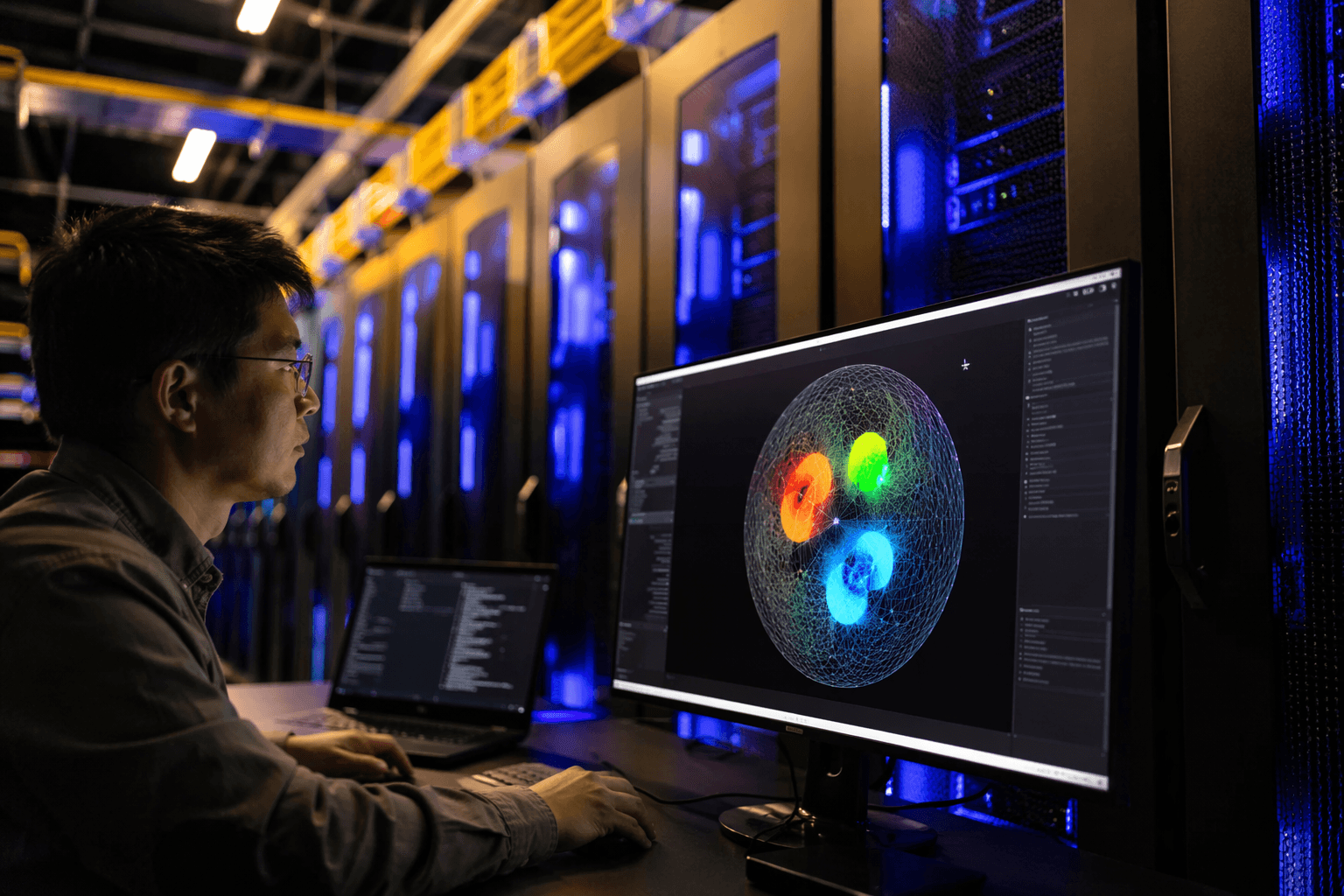
The computation relied on lattice QCD, with a lattice spacing of 0.04 fm and a pion valence mass tuned to 300 MeV, according to the journal abstract. The team calculated x-dependent valence pion generalized parton distributions at zero skewness, then used hundreds of snapshots of 4D spacetime on a lattice with millions of grid points to reconstruct the pion’s interior in unprecedented detail. That let the researchers simulate how quarks correlate both along and across the pion’s direction of motion.
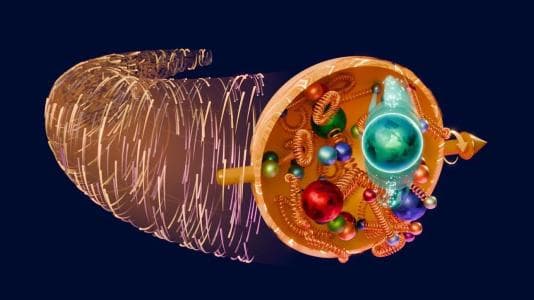
The result was more than a prettier image. The Argonne and ALCF reports describe high-resolution 3D images of a moving pion that reveal the transverse spatial distributions of quarks carrying different fractions of the pion’s momentum. Because experimental data on the pion remain sparse, the calculation gives the field a stronger handle on a system that cannot simply be photographed and is difficult to probe directly in the lab.
The study fits a broader turn in hadron physics toward large-scale computation as a primary tool, not a side aid. A 2024 supercomputer study of the sigma meson at Jefferson Lab and Oak Ridge National Laboratory, which probed pion-pion reactions, showed the same shift in approach. For nuclear reactions and the wider strong-force community, a clearer pion picture means a better baseline for understanding how matter is built, bound, and modeled in extreme environments.
This article was produced by Prism’s automated news system from verified source data, official records, and press releases, then run through automated quality and moderation checks before publishing. The system is built and supervised by the people who set the standards it runs under. Read our full AI policy.
Did this article answer your question?