Blykalla and Hitachi Energy team up on lead-cooled reactor deployment
Blykalla’s new Hitachi Energy pact is about more than optics: it targets grid connection, electrical systems and digital monitoring for SEALER, not a plant order.
Blykalla and Hitachi Energy signed a memorandum of understanding on 29 June 2026 to map out how a future lead-cooled reactor fleet would connect to the grid, run its electrical systems and use digital monitoring in day-to-day operation. The deal is a step into deployment plumbing, not a construction award. It moves the Swedish advanced reactor developer from core design work toward the infrastructure that will decide whether a compact SMR can actually fit into a modern power system.
The reactor at the center of the plan is SEALER, Blykalla’s Swedish Advanced Lead Reactor. Blykalla describes it as a passively safe, highly compact commercial unit that uses lead cooling to support a low-pressure system, since lead has a very high boiling point. SEALER-55 is the commercial model, rated at about 55 MWe, and Blykalla says its fuel is never replaced during operation. The company has said it is aiming for criticality for its first SEALER reactor by 2030 and serial production in the 2030s.

Hitachi Energy brings the part of the stack that often determines whether nuclear hardware can be integrated into a real network. The companies said the collaboration is meant to cover transmission-level connection, on-site electrical systems and software integration, with an eye toward standardized design that could support serial deployment. Hitachi Energy also tied the effort to rising electricity demand from energy-intensive industry, datacenters and the wider power system. That makes the memorandum useful, but still preparatory. It is a systems-integration move, not proof that a reactor site has been selected or that commercial delivery has begun.
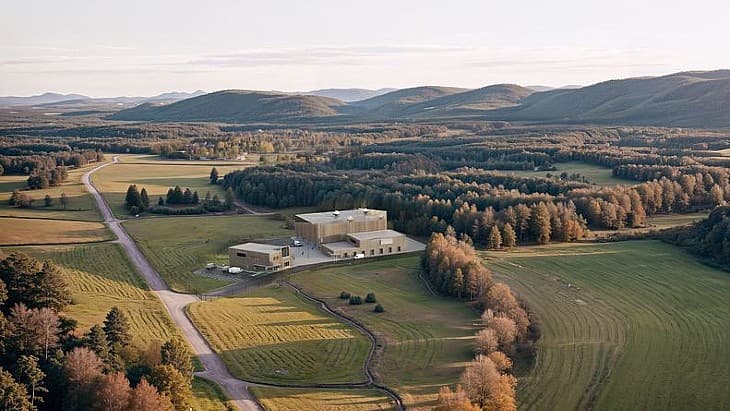
Blykalla has spent years building toward that point. Its technology roots go back to work at KTH Royal Institute of Technology in Stockholm, where lead-cooled reactor systems have been under development since 1996. The company was founded in 2013 under the name LeadCold, says commercialization began in 2022, and broke ground in 2025 on an advanced reactor testing site at the OKG nuclear power plant in Oskarshamn, Sweden. Blykalla says that facility is the first building constructed on a nuclear power site in Sweden in more than 40 years.
The company has also been lining up capital and partners. It disclosed an 80 mSEK funding round in April 2024 led by Norrsken Launcher and Nucleation Capital, followed by a $50 million round in 2025 with continued support from Norrsken Launcher and Armada Investment. In July 2025, Blykalla and the Swedish Energy Agency announced 37 MSEK for materials and fuel development. The Hitachi Energy agreement fits that pattern: SEALER is still on the proving-ground side of the ledger, but the grid, electrical and software pieces are now being assembled around it.
This article was produced by Prism’s automated news system from verified source data, official records, and press releases, then run through automated quality and moderation checks before publishing. The system is built and supervised by the people who set the standards it runs under. Read our full AI policy.
Did this article answer your question?