BREST-OD-300 turbine foundation concreting begins at Seversk plant
A 36-spring turbine base is going in at BREST-OD-300, a hard civil-work step that moves Rosatom’s fast-reactor demo closer to a real operating sequence.
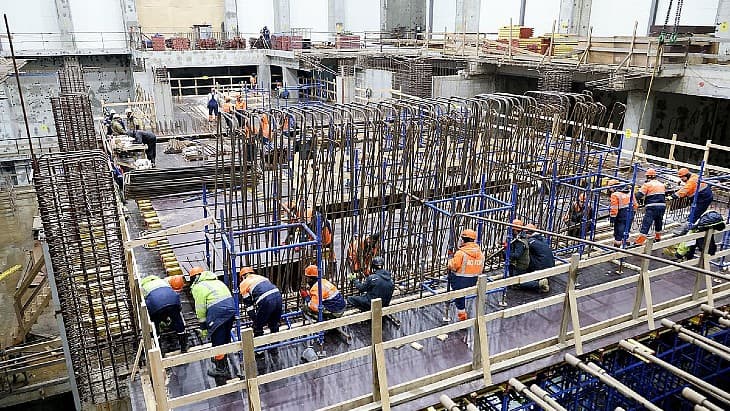
The latest concrete pour at BREST-OD-300 is more than a foundation job. It is the point where Rosatom’s lead-cooled fast reactor starts looking like a machine that will have to carry a 1,700-tonne turbine unit for decades, not a project still living on drawings and slogans.
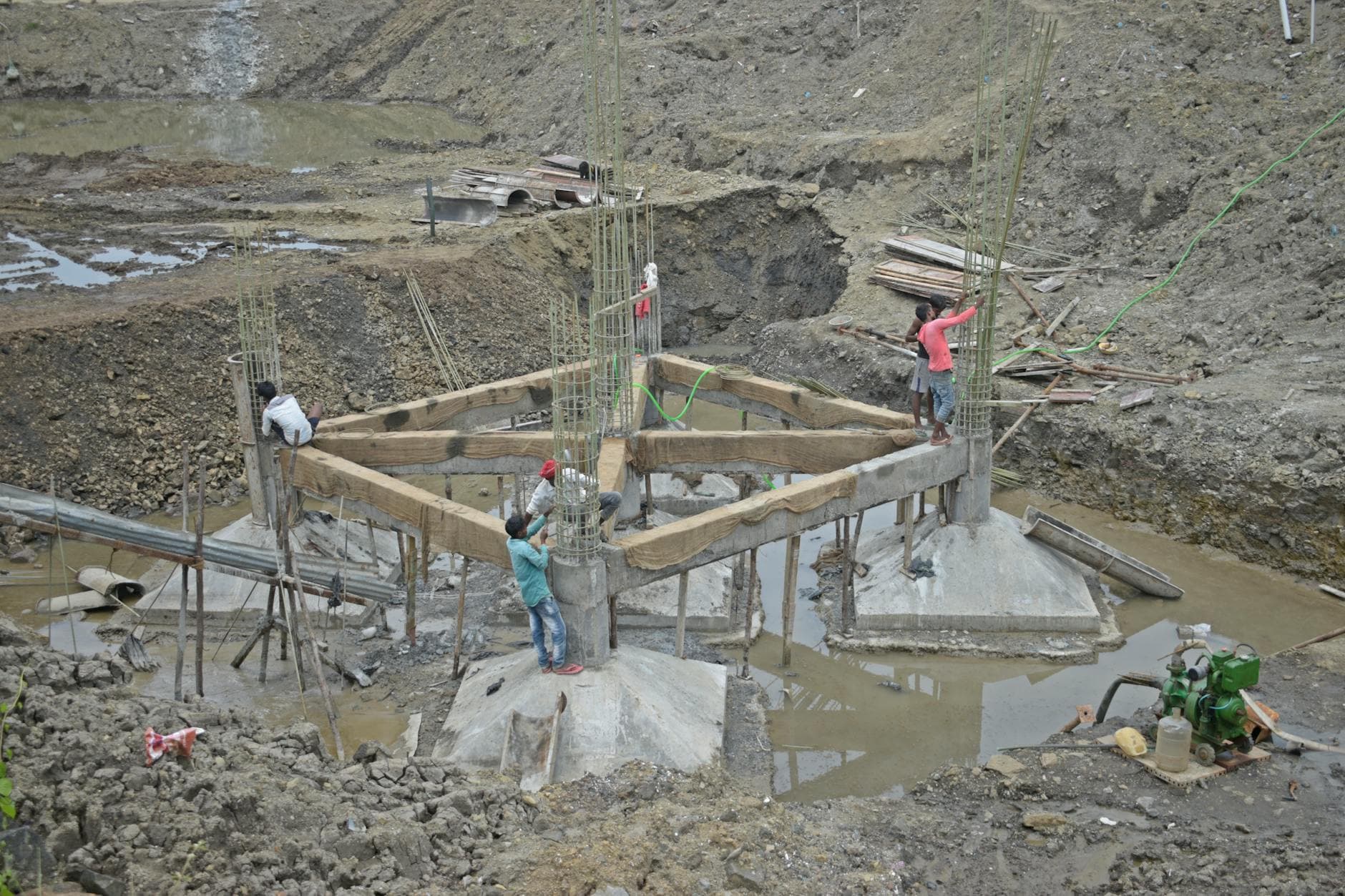
At the Seversk plant in Russia’s Tomsk Region, work has begun on the turbine and generator foundation using 36 spring elements to cut vibration loads on the foundation columns and nearby equipment. The structure is being built to withstand severe earthquakes. More than 620 cubic metres of concrete and more than 100 tonnes of reinforcement and embedded parts will go into the base across three concreting stages. After that, the foundation will sit undisturbed for several months before the turbine unit is installed.
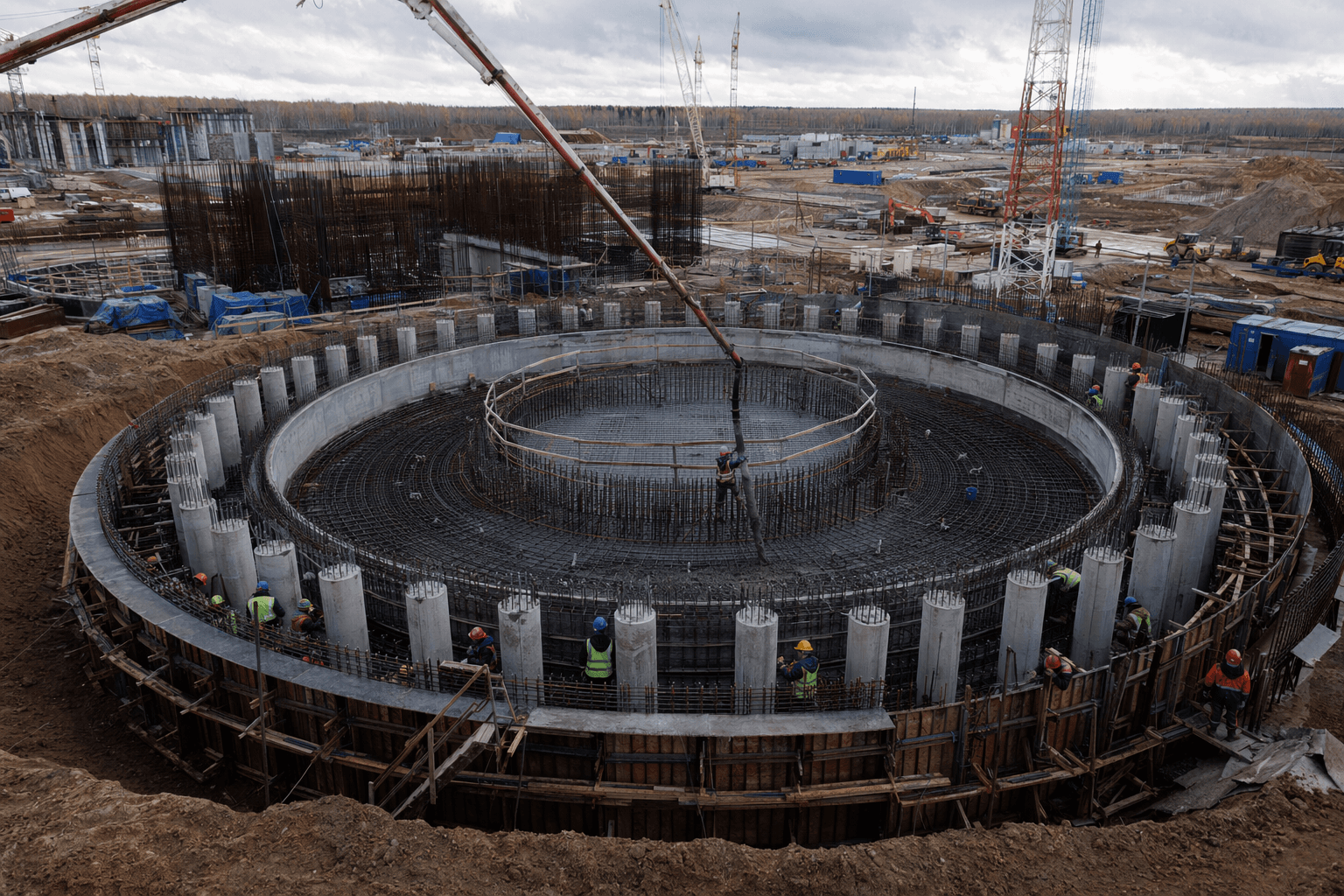
That matters because BREST-OD-300 is Rosatom’s 300 MWe, 700 MWt lead-cooled fast neutron reactor, the centerpiece of the Pilot Demonstration Energy Complex at the Siberian Chemical Combine site in Seversk. The program is supposed to demonstrate a closed nuclear fuel cycle, with mixed uranium-plutonium nitride fuel fabricated and refabricated on site, and used fuel reprocessed as part of the same industrial chain. Rosatom presents the reactor as a “natural safety” design, while International Atomic Energy Agency material points to an integral primary circuit, a multilayer metal-concrete vessel and passive emergency cooling by natural air circulation. The IAEA also notes that an expert review by the Russian Academy of Sciences recommended construction of the power unit.
The turbine-foundation pour also lands against a clear schedule trail. Rosatom said first concrete for the BREST power unit was poured in June 2021, and foundation slabs for the reactor and turbine buildings were completed in November 2021. By late 2024, turbine-island installation work was under way. In 2025, key reactor equipment was still arriving, and in early 2026 the fourth and final shell of the peripheral cavity was installed. Each step has been a test of whether the project can keep moving from heavy civil works into actual plant assembly.
That sequence is why the new pour carries so much weight. BREST-OD-300 is meant to prove a lead-cooled fast reactor can be built as an integrated fuel-cycle platform, not just as a one-off prototype. Rosatom has also indicated that success at 300 MWe could open the door to a larger 1,200 MWe BR-1200 follow-on. For now, the credibility test is much more immediate: pour the foundation, hold the vibration down, and keep the build advancing toward the turbine hall and, eventually, a commercially meaningful fast-reactor milestone.
This article was produced by Prism’s automated news system from verified source data, official records, and press releases, then run through automated quality and moderation checks before publishing. The system is built and supervised by the people who set the standards it runs under. Read our full AI policy.
Did this article answer your question?