Bulgaria clears sanctions exception for Kozloduy nuclear parts imports
A sanctions waiver will keep Kozloduy’s Russian-built systems fed with spare parts after Unit 6 was sidelined three times by a failed rupture disk.
_47423_85576_70889.jpg&w=1920&q=75)
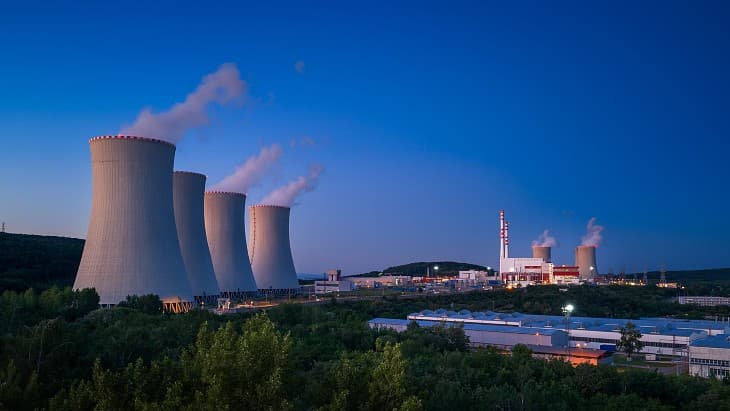
Bulgaria has cleared a fresh sanctions exception to keep Kozloduy Nuclear Power Plant supplied with Russian-made components, a move shaped less by diplomacy than by the hard reality of keeping two aging VVER-1000 units on line. The Council of Ministers approved the derogation so public procurement can continue for equipment tied to safe and reliable operation, with Kozloduy still dependent on hardware that was designed around Russian supply chains.
That dependence has become visible in the plant’s day-to-day reliability. Unit 6 was taken offline three times after a defective rupture disk had to be replaced on the turbine’s moisture separator reheater, a problem in the conventional, non-nuclear part of the unit. The outages came twice in December 2025 and again in February 2026, and the plant said no pollutants were released during the event. For operators, the issue was not theoretical sanctions policy but the need to get a critical part into place quickly enough to avoid further disruption.

Bulgaria’s government framed the exemption as a narrow operational measure, granting derogations from Articles 3j(1), 3i(1) and 5k(1) of Council Regulation 833/2014 so essential supplies for Kozloduy can keep moving. Some contracts with Russian contractors have already been signed, while others still need to be signed, underscoring how deeply the plant’s systems remain tied to legacy suppliers even as Sofia works around the sanctions regime.
Kozloduy remains central to Bulgaria’s power system. Its two operating VVER-1000 units, Units 5 and 6, were connected to the grid in 1987 and 1991 and have already undergone refurbishment and life-extension work to support 60 years of operation. Together they provide about 34 percent of Bulgaria’s electricity. That leaves little room for a prolonged parts shortage when a failed component can put a unit out of service in winter.
At the same time, Bulgaria is trying to turn the page. The country is advancing two Westinghouse AP1000 units, with Unit 7 targeted for 2035 and Unit 8 for 2037. That program began with a June 2023 FEED contract, later extended, and was followed by an engineering agreement involving Laurentis, BWXT and CNPSA. The long view is clear: newer Western technology is meant to replace capacity now anchored by Soviet-era design. But for as long as Kozloduy’s VVERs carry the grid, Bulgaria will still need the spare parts that keep an aging reactor running under sanctions.
This article was produced by Prism’s automated news system from verified source data, official records, and press releases, then run through automated quality and moderation checks before publishing. The system is built and supervised by the people who set the standards it runs under. Read our full AI policy.
Did this article answer your question?