CERN ends LHC proton run, prepares for lead-ion collisions
The LHC finished its proton run at 6 a.m. on May 19 after beating luminosity projections, then turned to a three-week lead-ion shift.
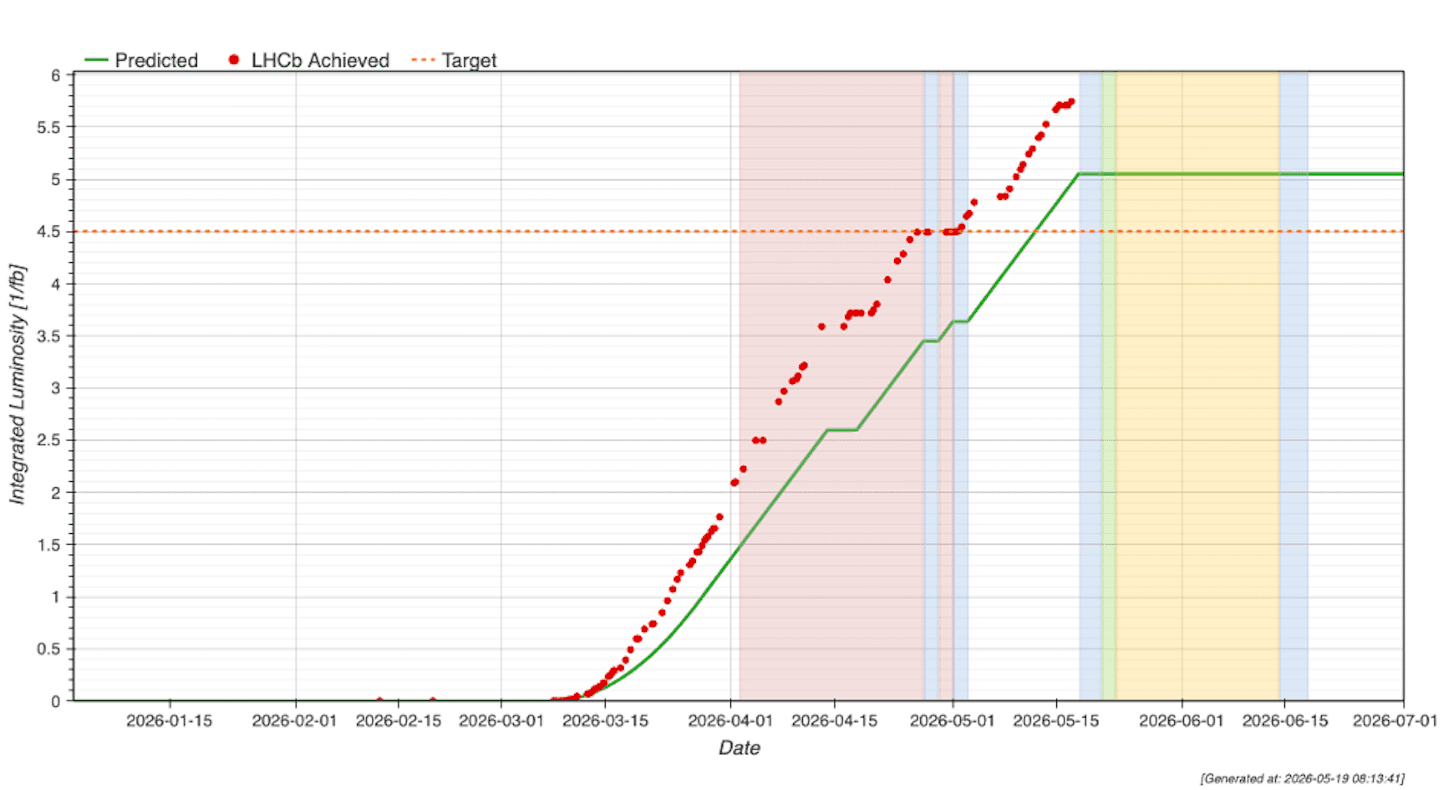
The LHC has finished its proton shift with the numbers to show for it: at 6 a.m. on May 19, the Run 3 proton physics programme closed after a 2026 run that pushed integrated luminosity beyond expectations and left all four main experiments ahead of original projections.
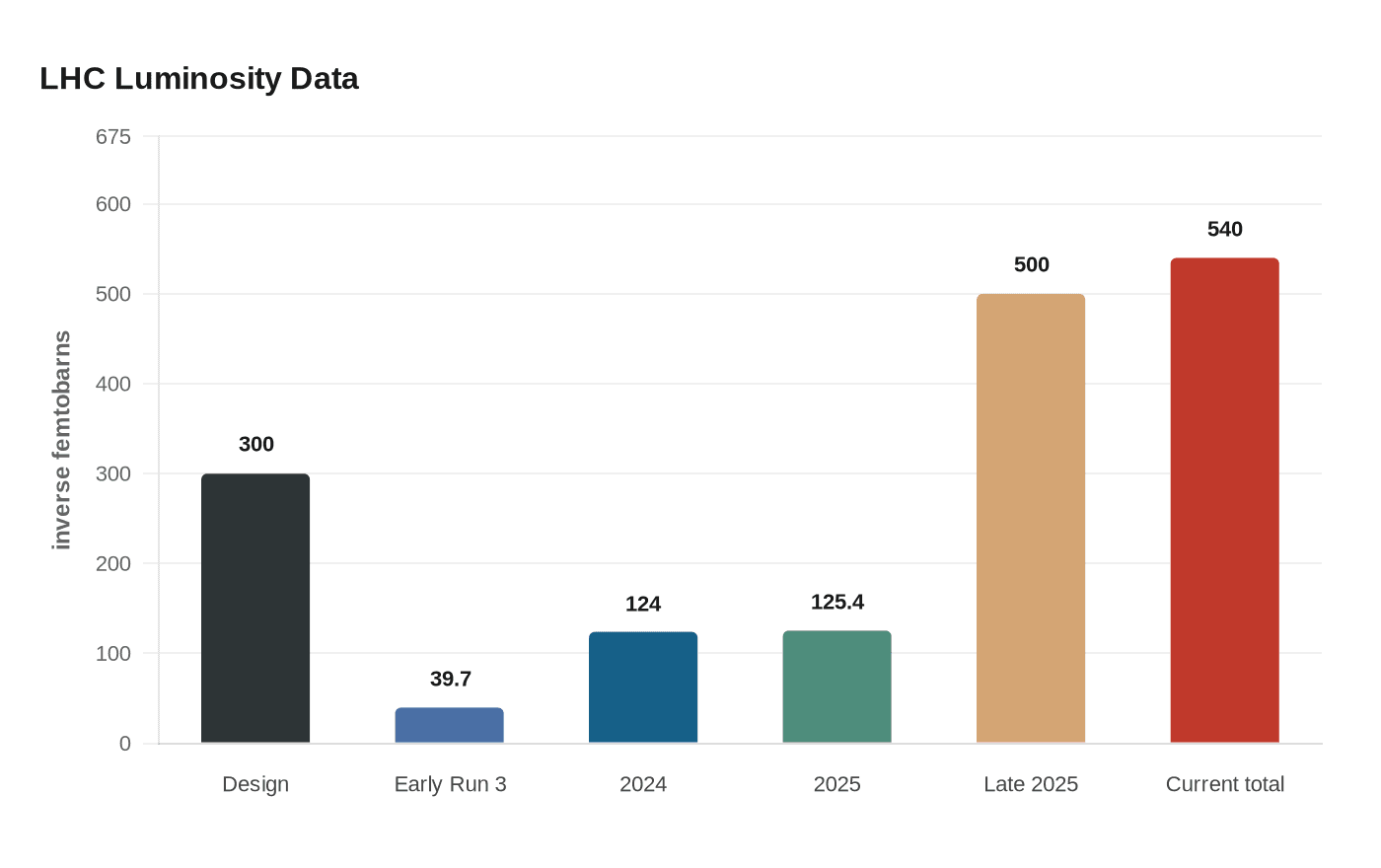
That is the real meaning of “surpassing expectations” in accelerator terms. Luminosity is the scoreboard that tells ATLAS, CMS, LHCb and ALICE how much collision data they can actually mine for rare signals, and this run delivered more of it than planned. Across all three operating periods, ATLAS and CMS have now accumulated roughly 540 inverse femtobarns, well past the 300 inverse femtobarns the machine was originally designed to deliver. CERN had already said by late 2025 that those two experiments had moved beyond 500 inverse femtobarns over the machine’s lifetime, and the 2026 proton run kept stretching that lead.

The pace inside CERN’s 27-kilometre LHC tunnel has been unusually dense. Run 3 began on July 5, 2022, after recommissioning at 6.8 TeV, and CERN said the early part of the run had already beaten expectations with 39.7 inverse femtobarns delivered. The machine then kept building on that momentum: CERN reported 124 inverse femtobarns for ATLAS and CMS in 2024, 11 percent above the goal, and 125.4 inverse femtobarns in 2025. By 2026, the combination of the collider itself and the injector chain feeding it had become the story, with availability and operational stability translating directly into physics output.

This proton phase is not the end of Run 3, only the end of its proton chapter. CERN has put the machine into a short technical stop on May 21 and 22, after which the LHC is preparing for a three-week lead-ion programme. Stable beams for physics data taking were first declared on March 7, and the broader Run 3 schedule now runs to the start of July 2026, when Long Shutdown 3 is set to begin.
That compressed calendar matters because it sits between two eras. CERN’s updated planning has pushed the start of the High-Luminosity LHC to June 2030, with the upgrade project aimed at multiplying integrated luminosity by a factor of 10 relative to the original design. For now, though, the immediate headline is simpler: the proton run ended with the LHC delivering more collisions, more data and more room for rare physics than this phase was built to expect, and the machine is already changing species for its next act.
This article was produced by Prism’s automated news system from verified source data, official records, and press releases, then run through automated quality and moderation checks before publishing. The system is built and supervised by the people who set the standards it runs under. Read our full AI policy.
Did this article answer your question?