China's Lianjiang Unit 2 Reactor Pressure Vessel Successfully Hoisted Into Place
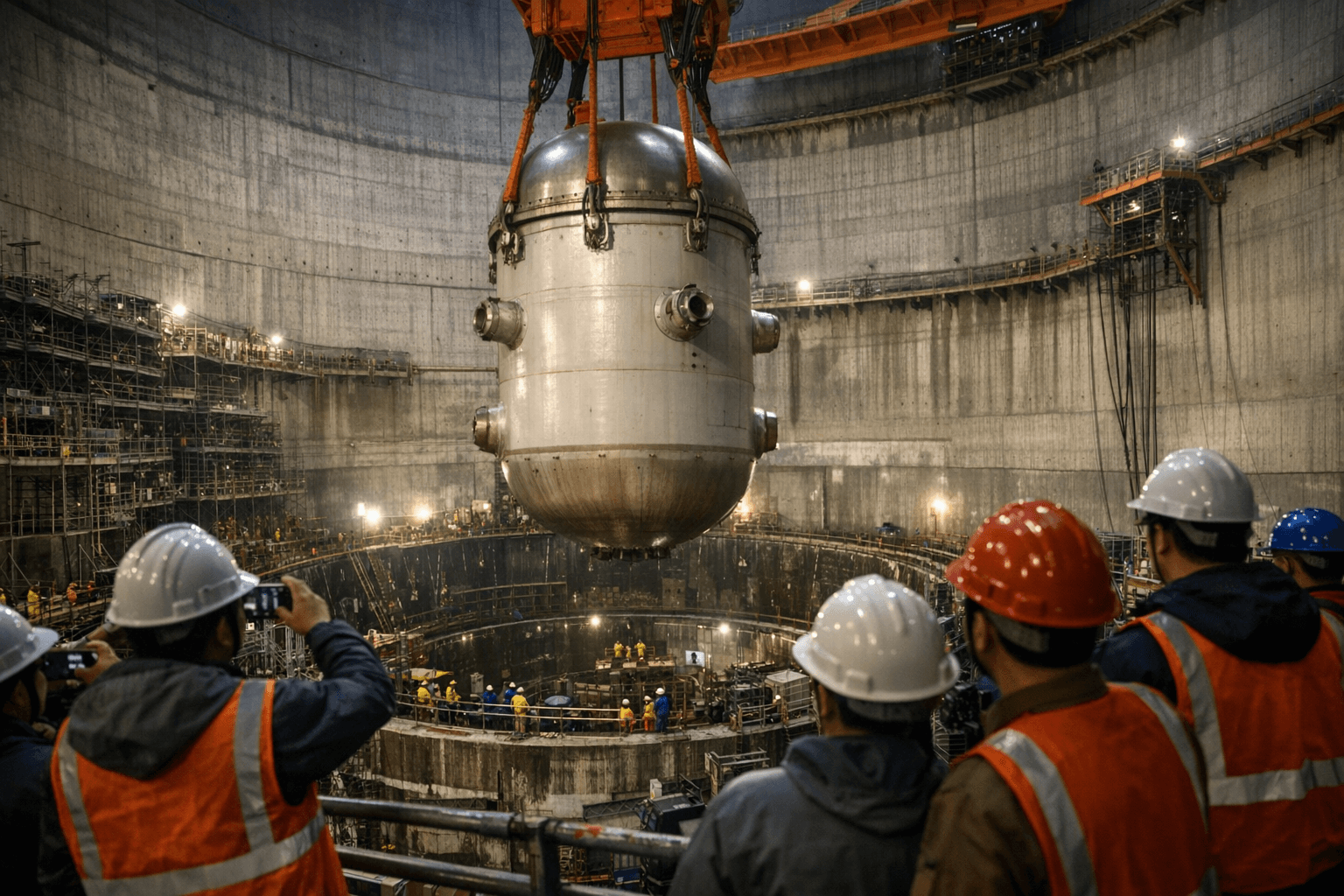
China's SPIC hoisted a 270-tonne reactor pressure vessel into Lianjiang unit 2 on April 2, as its CAP1000 program runs on schedule while Vogtle cost $35 billion and ran years late.
_52398.jpg&w=1920&q=75)
State Power Investment Corp set a 270-tonne reactor pressure vessel into place at Lianjiang unit 2 in Guangdong on April 2, and the milestone is worth more than a construction photo: it's a scoreboard update on a nuclear program that is methodically outpacing every Western counterpart on timeline, cost, and sheer throughput.
SPIC described the lift as "marking the start of the equipment installation phase for both units of the first phase of the project," a phrase that signals Lianjiang is transitioning from civil works into the phase where reactor identity takes shape. The unit 1 RPV went in the prior year, and that unit, which broke ground in October 2023, is targeted for commissioning in 2028, a roughly five-year cradle-to-commercial cadence that China has normalized across its fleet. Unit 2 is expected to follow in the late 2020s. Both are 1,250 MWe CAP1000 pressurized water reactors, China's domestically adapted version of the Westinghouse AP1000 design, and the Lianjiang site is ultimately planned to host six of them, backed by a CNY 130 billion ($18 billion) investment that SPIC projects will produce more than 70 TWh annually at full build-out.
The RPV is not just a ceremonial threshold. It is the hardest component in the schedule to compress: a bespoke, long-lead heavy forging with primary pressure boundary duties that cannot be sourced off-the-shelf or delivered on short notice. Successful installation at Lianjiang unit 2 confirms that China's domestic forging sector is keeping pace with an ambitious construction calendar. The World Nuclear Association has pegged Chinese capacity at roughly ten nuclear island equipment sets per year, a figure already more than double its 2007 output and projected to climb toward 20 with export demand in view.
That supply chain maturity looks sharper against Western numbers. Vogtle units 3 and 4 in Georgia crossed the finish line in 2024 years behind schedule and at roughly $35 billion, more than double their original estimate. Hinkley Point C in the UK is tracking toward $63.7 billion for two reactors. BloombergNEF has calculated that China now builds nuclear at less than a fifth of U.S. and European costs per kilowatt, a gap driven by state financing, a streamlined regulatory cadence, and a domestic supply chain that has been running at volume long enough to erase the bespoke premium that haunts first-of-a-kind builds in the West.
The pace continues to accelerate. By the end of 2024, China had 102 reactors operational, under construction, or approved, totaling 113 million kilowatts of installed or committed capacity. In 2025 alone, 10 additional reactors cleared the approval threshold, including two more CAP1000 units. Sanmen unit 3, another CAP1000, completed cold hydraulic testing in early 2026 and is advancing toward commercial operation, adding another completed data point to a fleet-wide quality record.
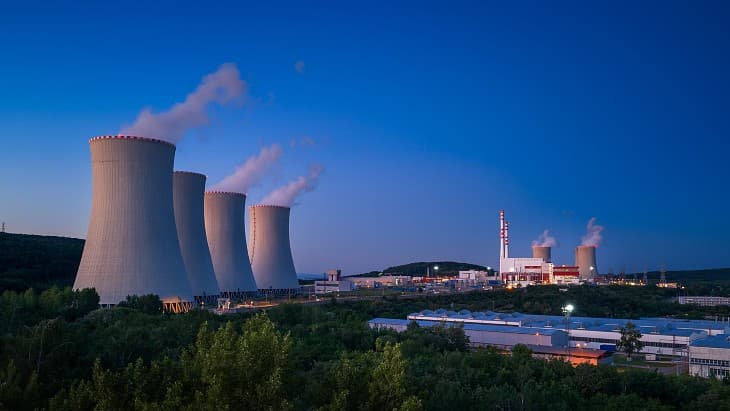
Lianjiang also brings a few design distinctions worth flagging. SPIC describes the site's seawater secondary circulation cooling system and its super-large cooling tower as firsts for a coastal Chinese project of this scale, adaptations with direct relevance to the coastal and water-constrained sites that dominate emerging market nuclear development. That detail matters if the CAP1000 is eventually pitched beyond Chinese borders.
The next sequence to track at Lianjiang is steam generator installation, cold testing, and fuel load authorization for unit 1. If it commissions in 2028 as scheduled, China will have taken a 1,250 MWe reactor from first concrete to full operation in under five years. In the current global nuclear calculus, that is not incremental progress; it is a structural competitive advantage.
This article was produced by Prism’s automated news system from verified source data, official records, and press releases, then run through automated quality and moderation checks before publishing. The system is built and supervised by the people who set the standards it runs under. Read our full AI policy.
Did this article answer your question?