SpectronRx Raises $85 Million to Scale Indiana Radiopharmaceutical Manufacturing Campus
OrbiMed closed an $85 million bet on SpectronRx's Indiana campus to fix U.S. supply gaps for lutetium-177, actinium-225, and isotopes clinics can't afford to wait on.
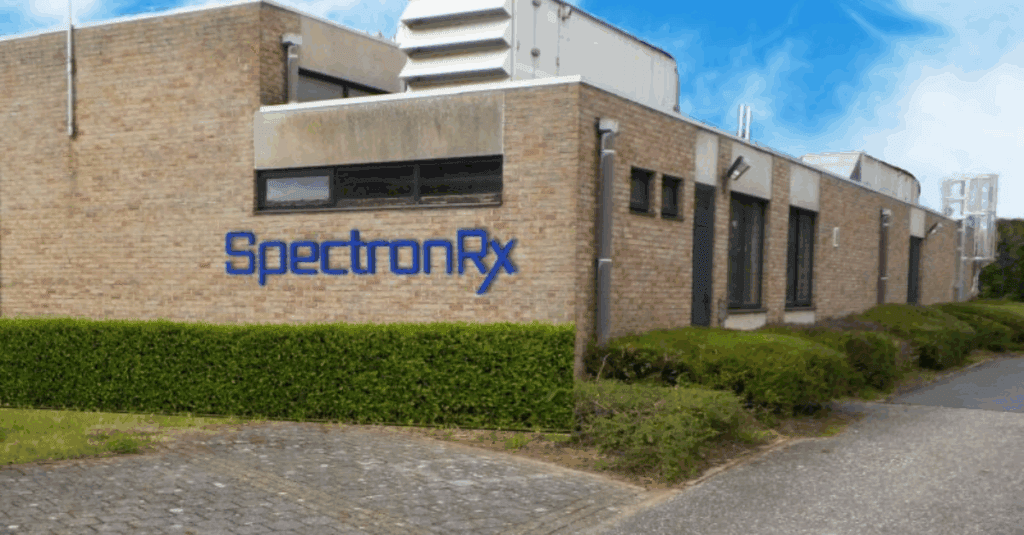
OrbiMed, the New York-based healthcare investment firm, closed an $85 million financing round in SpectronRx on April 4, placing the industry's largest recent private wager on domestic medical isotope supply at a moment when overseas reactor outages have repeatedly derailed U.S. clinical trials and left nuclear medicine clinics scrambling.
The capital goes directly to SpectronRx's Grissom Aeroplex campus near Bunker Hill, Indiana, a 34-acre site that CEO John Zehner has built into what the company describes as the most integrated radiopharmaceutical platform operating in the United States. The campus currently holds roughly 200,000 square feet of GMP-aligned manufacturing space, with plans for a further 150,000-square-foot production facility. Long-term, SpectronRx projects the site could eventually exceed one million square feet of total capacity.
Zehner said the investment "enables us to expand production at scale while strengthening our CDMO and CMO capabilities, supporting our partners from early development through global commercialization."
The isotope portfolio driving that ambition covers the full diagnostic and therapeutic spectrum: lutetium-177 and actinium-225 for radioligand therapies, gallium-68 and copper-64 for PET imaging, and technetium-99m for SPECT diagnostics. Each of those isotopes carries its own supply pressure history. Novartis faced chronic shortages scaling lutetium-177 for Lutathera and Pluvicto. RayzeBio, now part of Bristol-Myers Squibb, paused Phase III enrollment on its actinium-225 program when supply ran short. Technetium-99m, used in more than 40,000 U.S. diagnostic procedures per day, was entirely import-dependent for decades until federal policy began redirecting investment toward domestic sourcing after a severe shortage exposed just how fragile that arrangement was.
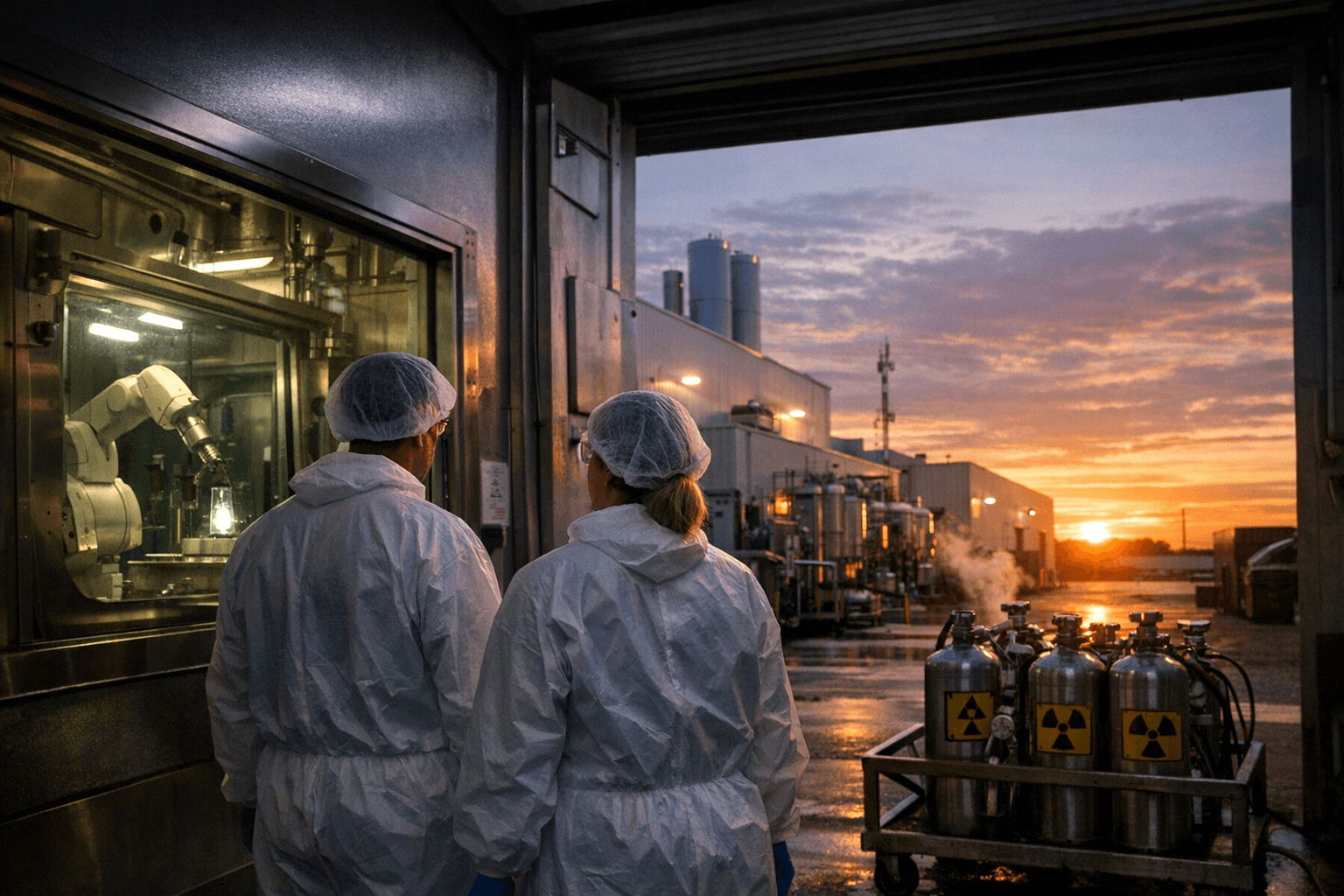
SpectronRx's integrated CDMO and CMO model is built to compress the distance between isotope generation and finished drug product under one roof, a structural advantage that becomes critical when half-lives are measured in minutes and hours rather than days. Gallium-68 decays with a 68-minute half-life; technetium-99m checks out in six hours. Every added transit leg is a dose lost. The Grissom site's co-location with a 24/7 airport gives SpectronRx direct overnight reach to major U.S. medical centers without the compounding delays of international shipment.
The campus currently supports more than 300,000 patient doses annually, with all GMP operations running in compliance with 21 CFR Part 211, 21 CFR Part 212, and Annex 1. The $85 million will fund construction acceleration, equipment purchases, and GMP commissioning. For those tracking domestic radiopharmaceutical buildout closely, the milestones to watch are new hot cell installation, targetry expansion, QA/QC line commissioning, and FDA-facing capacity validation. Those are the concrete steps that separate a financing headline from actual throughput, and they will determine whether SpectronRx can credibly backstop the isotopes that keep proving, shortage after shortage, that the U.S. cannot afford to depend on aging foreign reactors for its most time-sensitive medicines.
This article was produced by Prism’s automated news system from verified source data, official records, and press releases, then run through automated quality and moderation checks before publishing. The system is built and supervised by the people who set the standards it runs under. Read our full AI policy.
Did this article answer your question?