Chinese Tokamak Achieves Stable Fusion Regime, Reducing Wall Heat Stress
EAST held a minute-scale plasma state that cut divertor heat while keeping high confinement and killing ELMs, a rare combination for reactor walls.
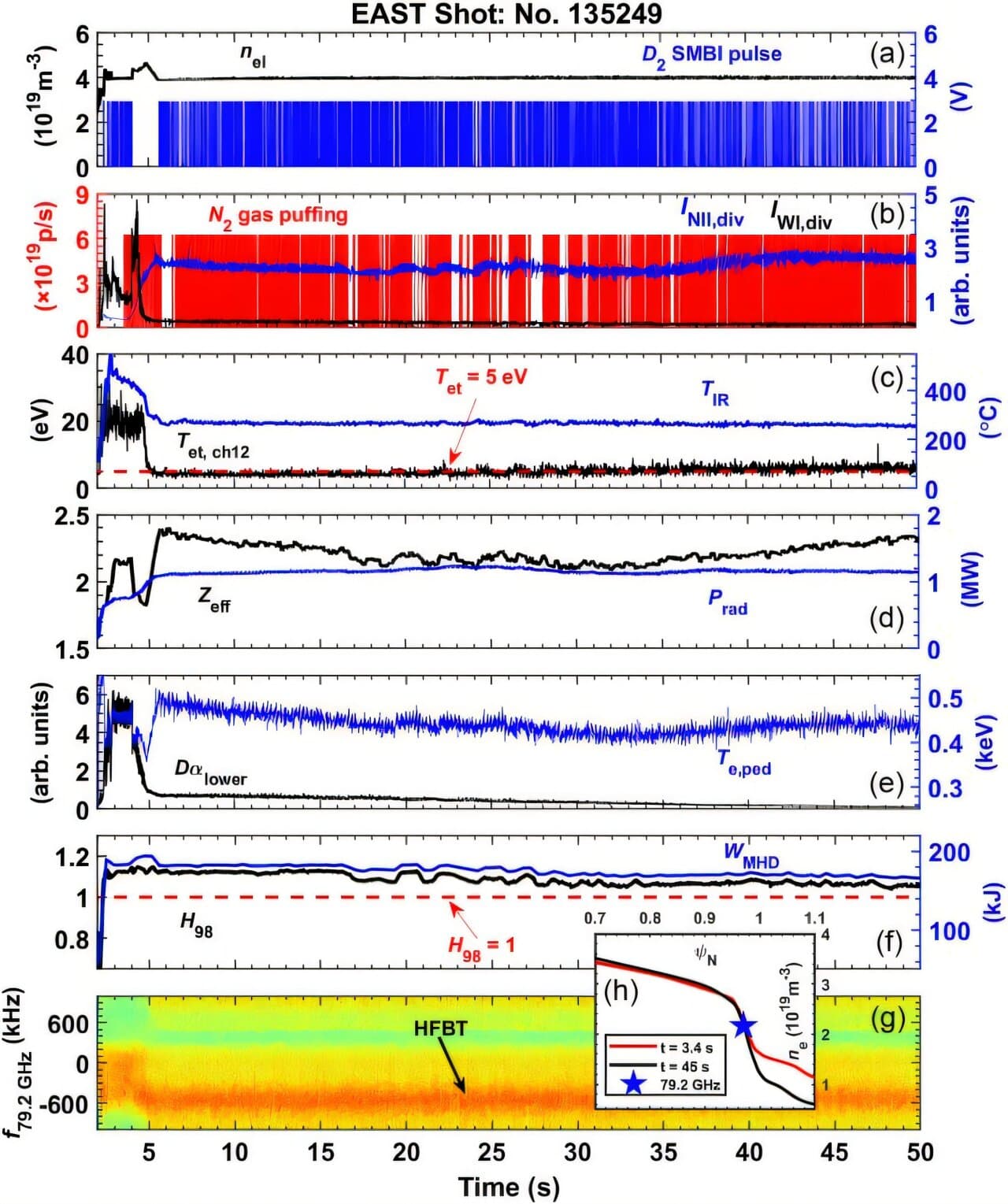
A Chinese tokamak has done something fusion researchers have chased for years: it kept plasma stable while easing the heat burden on the divertor, rather than forcing one goal to come at the expense of the other. On the Experimental Advanced Superconducting Tokamak in Hefei, Xu Guosheng’s team reported a regime that combined partial divertor detachment, an edge-localized-mode-free high-confinement state and stronger pedestal performance in the same discharge.
The experiment ran in EAST’s metal-wall environment for about a minute, long enough to matter in a field where edge control usually falls apart as soon as heat, particles and confinement start fighting each other. The team tuned fueling in real time and injected light impurity gases to create what it called a detached divertor and turbulence-dominated pedestal regime, or DTP. In that configuration, heat flux dropped on the divertor plates while the plasma edge stayed in high confinement without ELMs, the violent bursts that can slam reactor-facing components with sudden energy loads.
The physics is the part that will draw the most attention. Instead of letting edge cooling collapse confinement, the new regime appears to have used reduced ionization and stronger pumping in a closed divertor to limit the recycling of neutrals and seeded impurities. That left the pedestal less cooled, raised the pedestal electron temperature and steepened the temperature gradient enough to trigger high-frequency broadband turbulence. Gyrokinetic simulations identified that turbulence as a temperature-gradient-driven trapped electron mode, or e-TEM, which drove outward transport and helped hold the plasma in an ELM-free state.
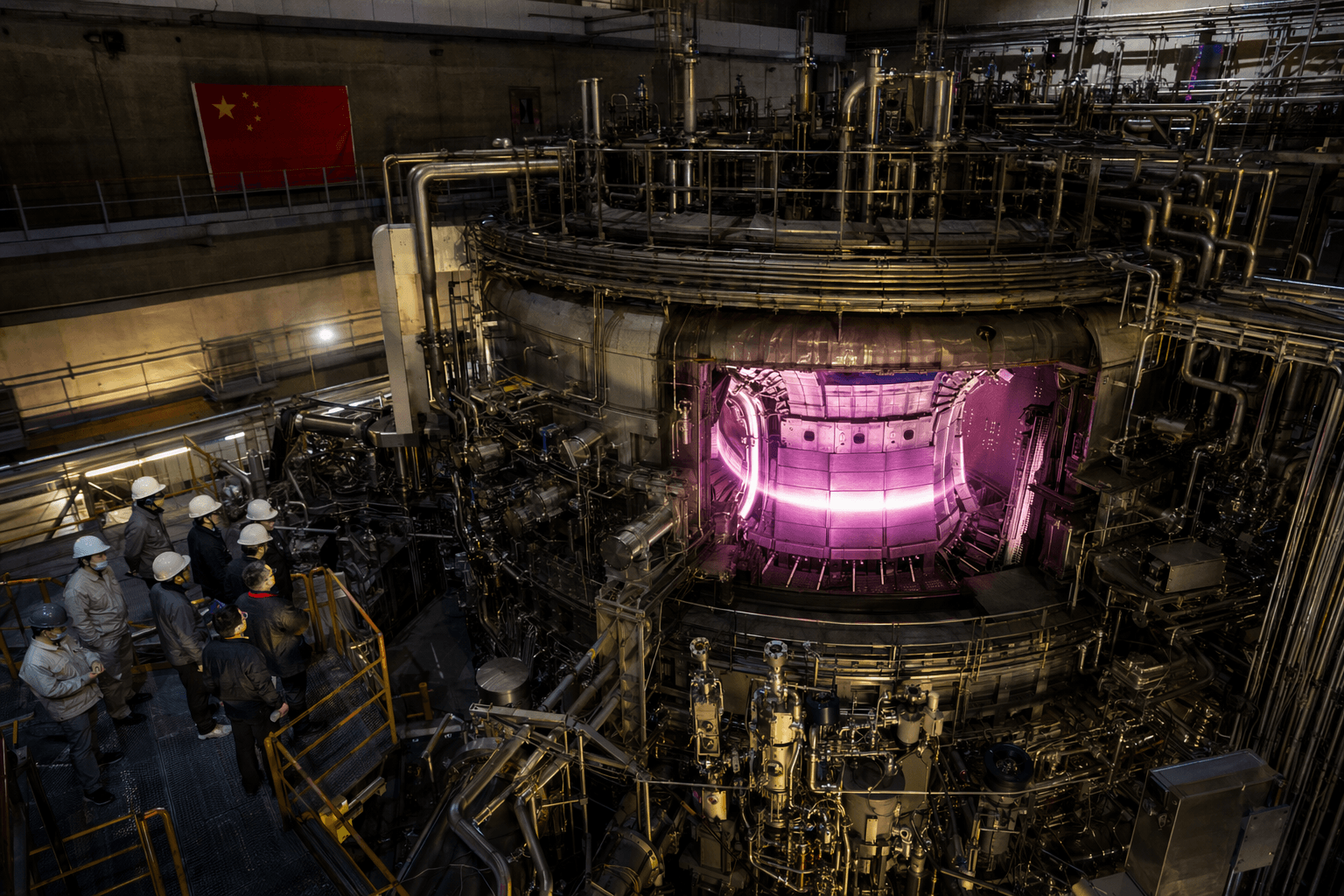
That matters because the usual alternatives are all awkward in their own way. Divertor detachment can protect plasma-facing components, but too much cooling can rob the edge of performance. High-confinement H-mode keeps energy in the core, but ELMs can become destructive. EAST’s result sits directly on that fault line. It did not simply survive the trade-off; it bent the trade-off by making edge turbulence part of the solution.
The paper, published in Physical Review Letters on March 23, 2026, described the regime as especially promising for ITER. The reason is practical: ITER is expected to face about 10 MW/m² of steady-state heat flux on its divertor targets and around 20 MW/m² in slow transients, while ELMs remain a known threat to the divertor and nearby plasma-facing components. The authors argued that a lower pedestal density gradient, reduced E × B shear and lower collisionality in ITER may help excite the same e-TEM turbulence.
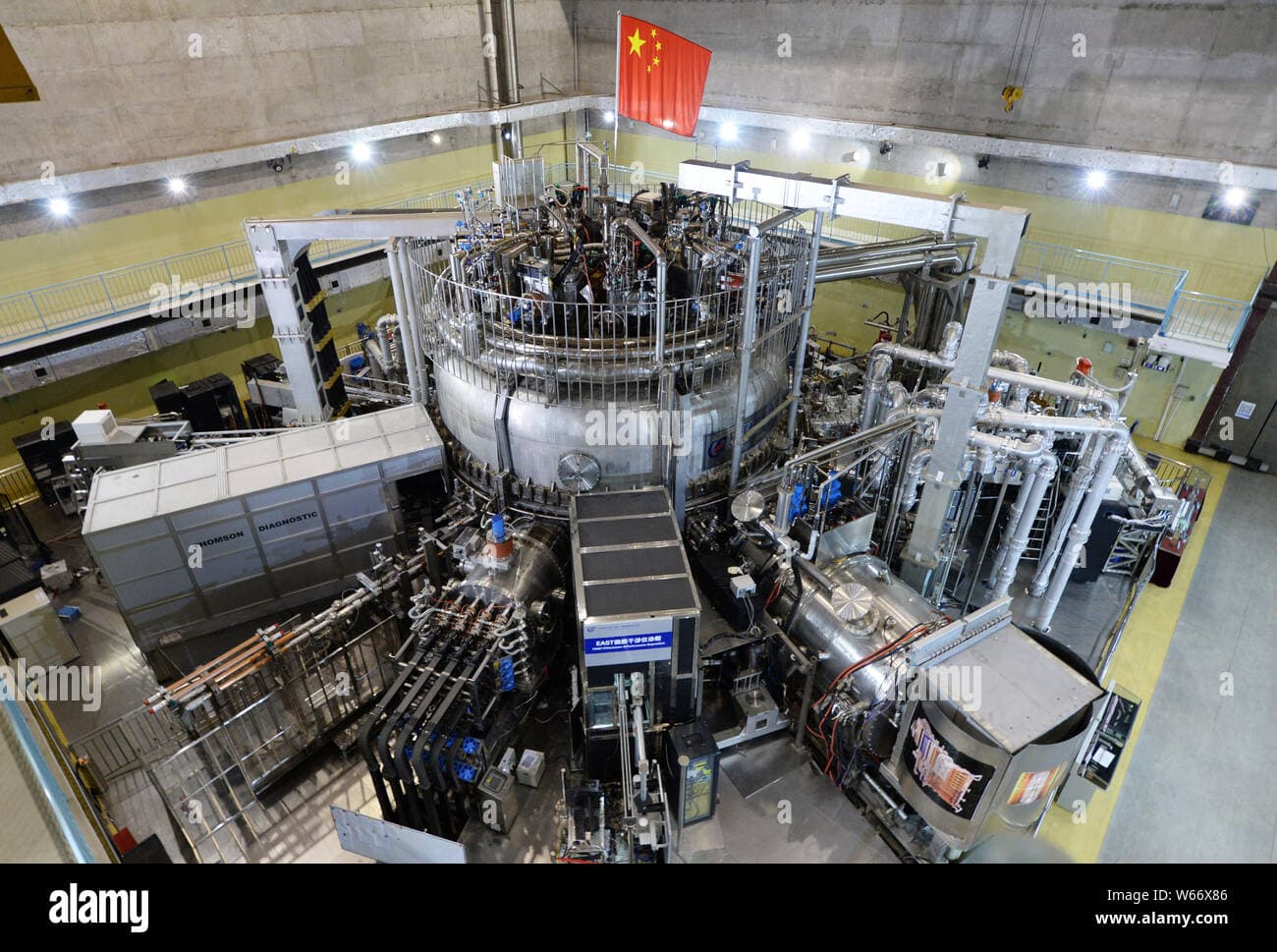
The result does not erase EAST’s bigger long-pulse record, set on January 20, 2025, when the machine sustained steady-state high-confinement plasma for 1,066 seconds, far beyond its 403-second mark from 2023. But it does show a different kind of progress: not just longer confinement, but a more reactor-shaped balance between exhaust and edge performance. Earlier EAST work under Xu, including grassy ELM H-mode and feedback-controlled radiative divertor operation, already pointed in that direction. This latest discharge suggests that the narrowest part of the fusion bottleneck may be starting to open.
This article was produced by Prism’s automated news system from verified source data, official records, and press releases, then run through automated quality and moderation checks before publishing. The system is built and supervised by the people who set the standards it runs under. Read our full AI policy.
Did this article answer your question?


