GSI team sets record low-energy nuclear reaction in storage ring
GSI pushed a nitrogen-proton reaction down to 403 keV in CRYRING@ESR, the lowest-energy nuclear reaction ever measured in a heavy-ion storage ring.
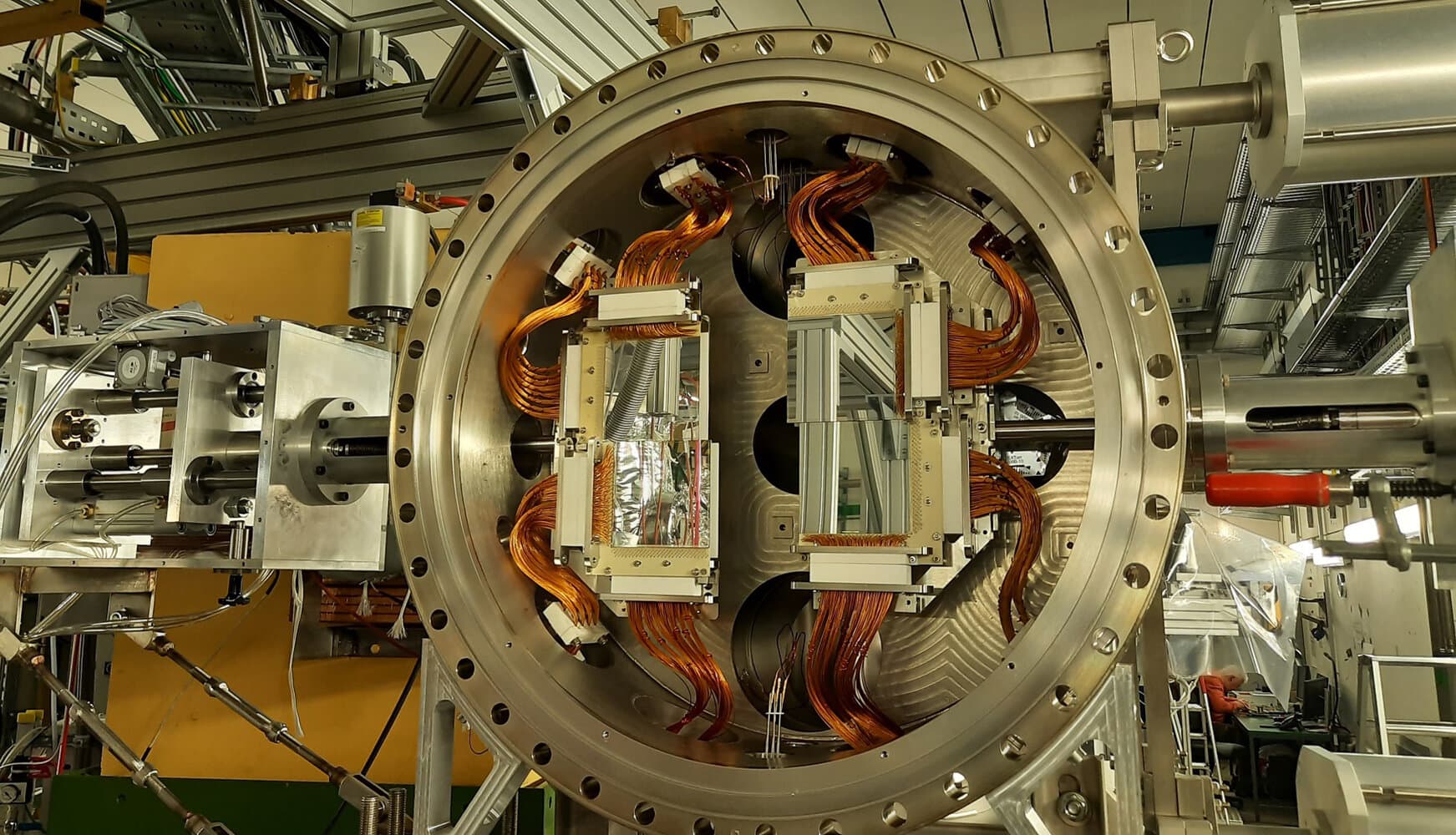
The GSI and FAIR team has taken storage-ring reaction physics into territory that nuclear astrophysicists usually have to infer, not measure. By driving a nitrogen-ion and proton reaction down to a center-of-mass energy of 403 keV inside CRYRING@ESR, the group set a new record for the lowest-energy nuclear reaction ever measured in a heavy-ion storage ring and moved closer to the sub-MeV regime where many stellar reactions actually happen.
That matters because stellar nucleosynthesis work is still full of extrapolation. Lab data at higher energies are often stretched down to the temperatures and tunneling barriers inside stars, which leaves room for uncertainty in the reaction rates that build the elements. This measurement gives the field something much firmer to stand on, especially for reactions that sit near astrophysically relevant energies and for future studies of exotic nuclei that stars make, consume, or bypass along the way.
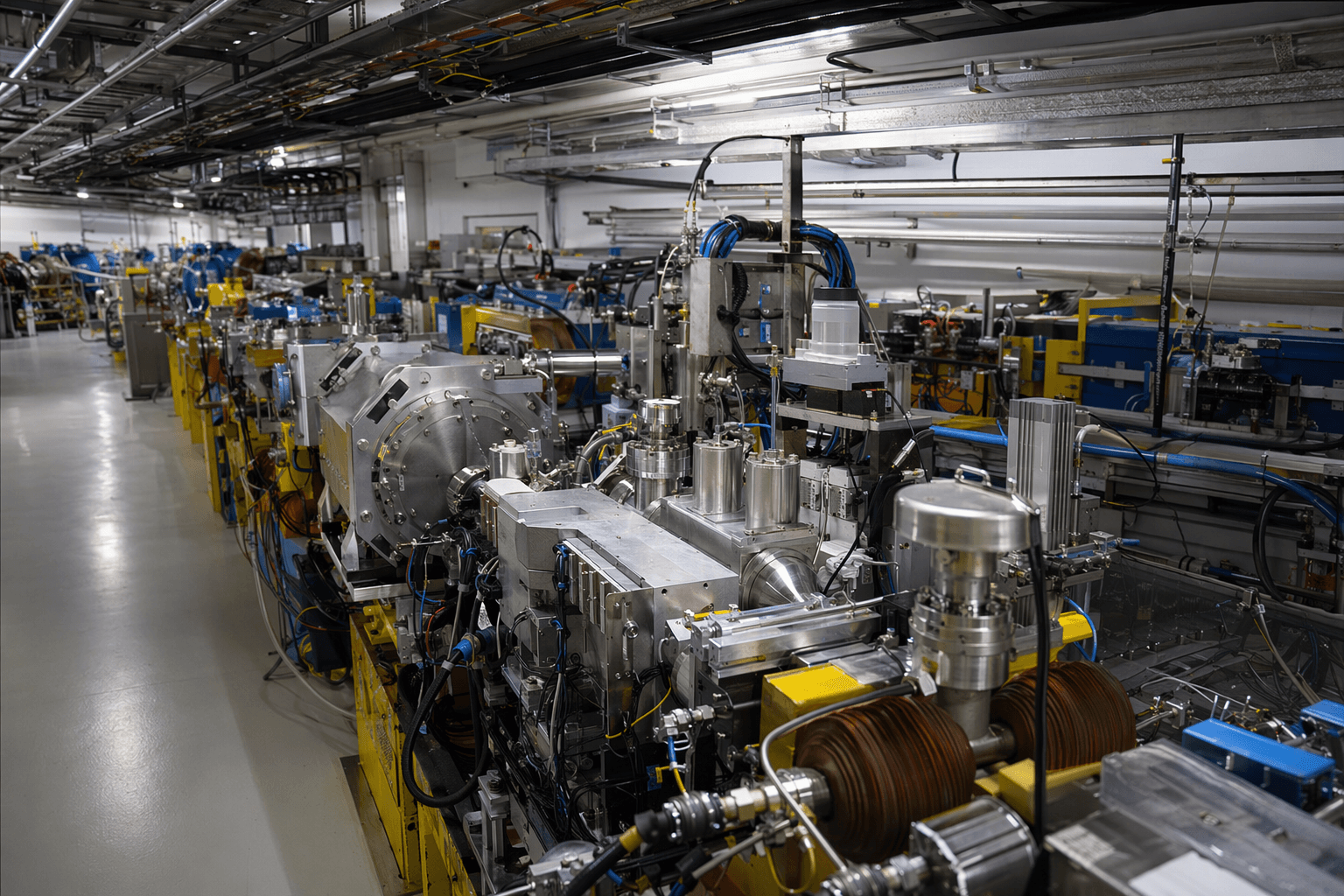
The experiment ran in CRYRING@ESR, the low-energy storage ring for heavy ions integrated into the GSI accelerator complex in Darmstadt, Germany. GSI says the ring can store, cool, and decelerate highly charged ions to a few hundred keV, which is exactly what made this measurement possible. The beam was injected into the ring, sharpened with an electron cooler, and sent through a cryogenic hydrogen gas target, where the nitrogen ions finally met the protons they were meant to collide with.
Detecting the reaction products at that rate required CARME, the CRYRING Array for Reaction Measurements, a high-resolution detector setup built for the kind of low-yield work that would be punishing anywhere else. Edinburgh researchers describe CARME as a charged-particle detector array designed for direct nuclear-reaction measurements at stellar energies and for indirect studies of key nuclear properties. In CRYRING, the vacuum has to be extreme, around 10^-11 to 10^-12 mbar, because at these energies the beam dies fast if ions are stripped or lost before they can react.
That beam lifetime was the hard part. Jordan Marsh of the University of Edinburgh, the paper’s first author, said keeping enough ions alive long enough was the central challenge. The payoff was strong: the measured data agreed very well with theoretical predictions, a sign that the technique is behaving as intended rather than merely scraping by at the edge of feasibility.
The result was published in The European Physical Journal A and strengthens a method that storage-ring physicists have only recently started to use for direct reaction studies at astrophysical energies. With CRYRING@ESR expected to keep pushing later this year, the field now has a more direct route to the reaction rates that decide how stellar material gets assembled, one sub-MeV collision at a time.
This article was produced by Prism’s automated news system from verified source data, official records, and press releases, then run through automated quality and moderation checks before publishing. The system is built and supervised by the people who set the standards it runs under. Read our full AI policy.
Did this article answer your question?


