DARPA and DOE to Host 2026 Workshop on Space Nuclear Power Concepts
DARPA's Tactical Technology Office and DOE just wrapped an invite-only nuclear power workshop in Arlington as NASA's SR-1 Freedom sets a hard June 2026 hardware clock.
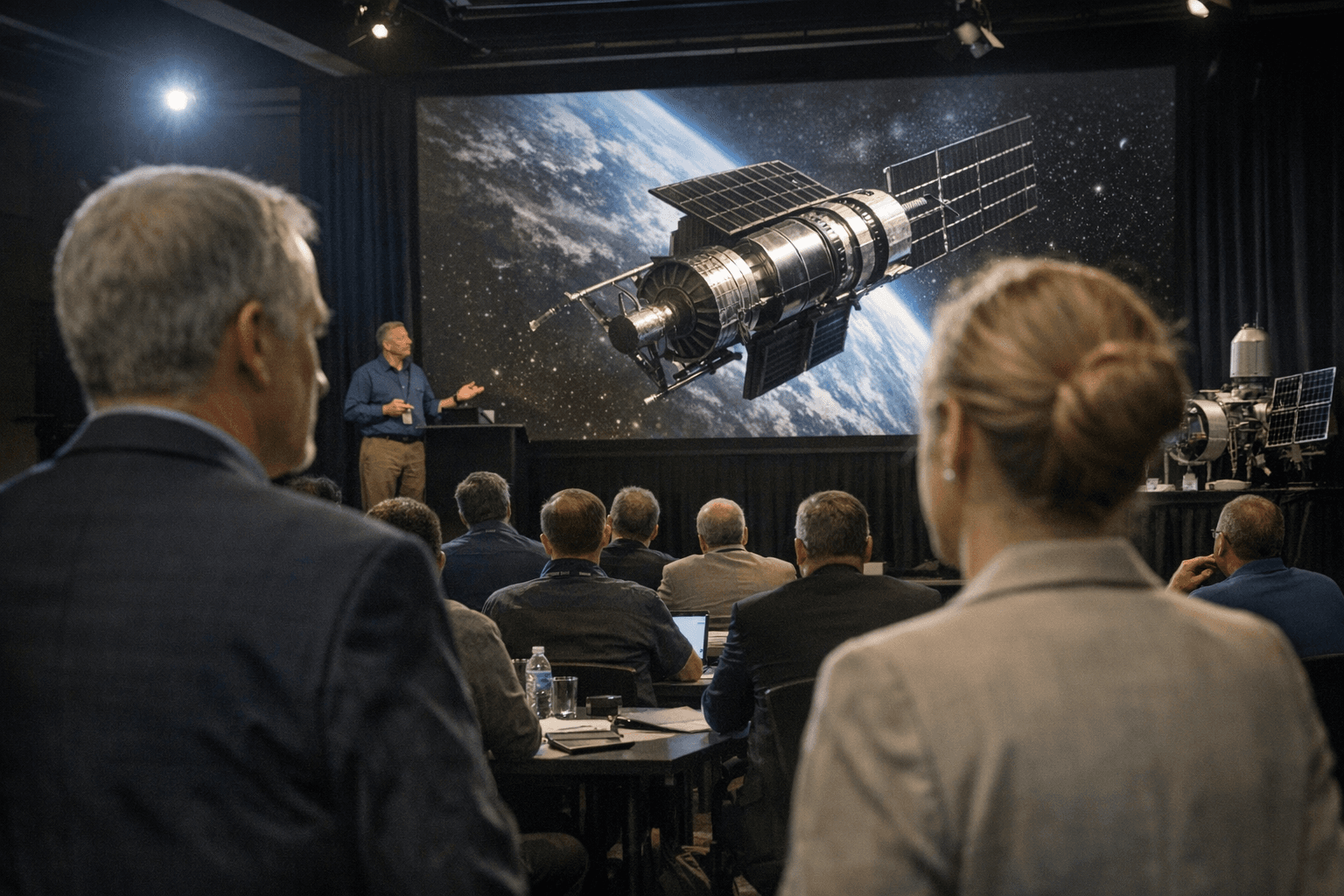
The race to field a working space reactor just got a hard deadline. DARPA's Tactical Technology Office and the Department of Energy convened the On-Orbit Nuclear Power Concepts Workshop on March 31 and April 1 at the DARPA Conference Center on North Randolph Street in Arlington, Virginia, pulling together invited industry firms, national labs, and academics around a question carrying both strategic and scientific stakes: can the United States field a producible, cost-effective on-orbit nuclear reactor before anyone else does?
TTO program manager James Shoemaker organized the forum under RFI DARPA-SN-26-21, first published in December 2025. The framing was deliberate: DARPA's focus is on "producible, cost-effective nuclear reactors, not bespoke designs suited for a one-time demonstration." White paper submissions, due February 20, were the entry ticket; only compliant submitters earned invitations, making the workshop itself a de facto pre-qualification filter for the firms and labs best positioned to compete for what follows.
Three mission profiles shaped the agenda, each implying a different reactor class. On-orbit satellite power, the nearest-term use case, favors compact fission systems compatible with launch vehicle mass budgets and spacecraft electromagnetic interference limits. Nuclear electric propulsion targets the deep-space tier: NASA's SR-1 Freedom, the first nuclear-powered interplanetary spacecraft in history, is scheduled for a December 2028 launch to Mars, where it will deploy the Skyfall payload of three Ingenuity-class helicopters to survey potential human landing sites. Hardware development for SR-1 Freedom is expected to begin in June 2026, meaning the industrial base DARPA and DOE are now mapping must produce real components within months, not years. The third profile, lunar surface power, anchors the 2030 horizon with Lunar Reactor-1, which will be informed by SR-1 Freedom lessons learned, and scales into the 2030s toward hundreds of kilowatts and eventually megawatt-class systems for sustained human presence on the Moon and crewed Mars missions.
For DOE, the workshop served as a coordination mechanism rather than a competitive starting gun. DOE labs bring the enriched fuel handling expertise, safety analyses, and regulatory interface that no private contractor can replicate unilaterally. Launch approval for nuclear systems threads through multiple federal authorities, and the workshop helped clarify that regulatory path before any demonstration program is formally awarded.
Export controls will shape which companies can realistically compete. Space nuclear reactor designs are treated as defense articles under the International Traffic in Arms Regulations, limiting participation to U.S. persons and entities and ruling out the international cost-sharing common in commercial satellite programs. DARPA TTO's lead role, rather than a civilian agency directing alone, signals that at least some downstream applications will carry national security sensitivity, further concentrating the eligible industrial base.
Three gating items will determine who wins contracts from here. Watch for a follow-on Broad Agency Announcement from Shoemaker's TTO: the RFI-and-workshop sequence is the standard precursor to a formal program solicitation. The June 2026 hardware milestone for SR-1 Freedom is the clearest near-term filter; teams that can credibly support that timeline are already ahead. And the first organization to file a comprehensive, approvable nuclear launch safety case with the relevant federal authorities will set legal and regulatory precedent that governs every subsequent mission approval. In sixty years of spaceflight, no nation has ever flown a fission reactor for propulsion; the institutions that filled that Arlington conference room this week are in direct competition to change that.
This article was produced by Prism’s automated news system from verified source data, official records, and press releases, then run through automated quality and moderation checks before publishing. The system is built and supervised by the people who set the standards it runs under. Read our full AI policy.
Did this article answer your question?