DOE awards third round of nuclear energy vouchers to Aalo Atomics
Aalo Atomics got INL-backed design-analysis help, while Raven-Flint’s fluoride-free uranium conversion may be the fastest path to a reactor milestone.
Aalo Atomics won a DOE voucher to sharpen the design-analysis tools behind its EMRALD reactor work. Raven-Flint Nuclear Corp. picked up lab support for a uranium conversion path designed to tighten the fuel-cycle supply chain. The Department of Energy’s Gateway for Accelerated Innovation in Nuclear announced the third round of fiscal 2026 nuclear energy voucher recipients on June 24, sending the awards to four companies tied to Idaho National Laboratory, Oak Ridge National Laboratory, and Sandia National Laboratory.
These are not direct cash grants. GAIN vouchers pay for work at DOE laboratories, and recipients must cover at least 20 percent of the cost share, including in-kind support.

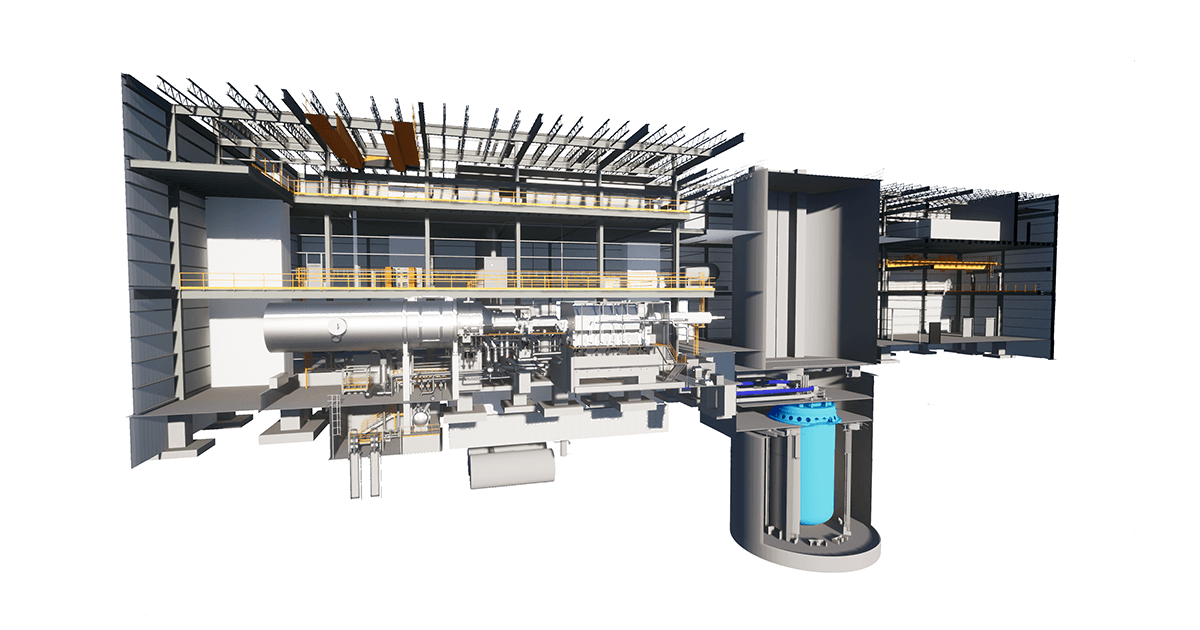
Aalo, based in Austin, Texas, will work with Idaho National Laboratory on modifications that support economic generational risk analysis and design decision capabilities for its EMRALD effort. Aalo’s EMRALD effort is a low-pressure sodium-cooled reactor system with passive-safety features, including 72 hours of unpowered decay heat removal and diverse shutdown mechanisms.
Raven-Flint, based in Idaho Falls, Idaho, will also work with INL, this time on domestic uranium conversion by a zero-F2 process. The project aims to eliminate elemental fluorine and fluorine-derived fluorinating agents, with the remaining technical hurdle centered on pilot-scale mass balance, material control and accountancy, and stream-characterization methods that can satisfy NRC licensing expectations.
OrganiCore Nuclear, Inc., of New York, New York, will partner with Oak Ridge National Laboratory on design-enabling nuclear data evaluation for organic-cooled small modular reactors. The project will use the Spallation Neutron Source, machine-learning-enabled molecular dynamics, and prior validation work to generate critical-path data for design, safety analysis, and licensing, while ORNL’s nuclear-data work spans transport, activation, depletion, decay, and uncertainty analysis. Srijan LLC, of College Station, Texas, will work with Sandia National Laboratory to overcome the material-growth barrier in a semiconductor neutron detector built around hexagonal boron nitride, where carbon impurities are limiting charge-collection efficiency.
The proposal deadline for the round was April 30 at 5:00 p.m. EST, after DOE had already announced the second round on April 2.
This article was produced by Prism’s automated news system from verified source data, official records, and press releases, then run through automated quality and moderation checks before publishing. The system is built and supervised by the people who set the standards it runs under. Read our full AI policy.
Did this article answer your question?