DOE Partners With SoftBank to Build 10-Gigawatt AI Campus on Ohio Nuclear Site
SoftBank's $33.3 billion AI campus on Ohio's former uranium enrichment site would, if built today, be larger than every data center on Earth combined, Energy Secretary Wright said.

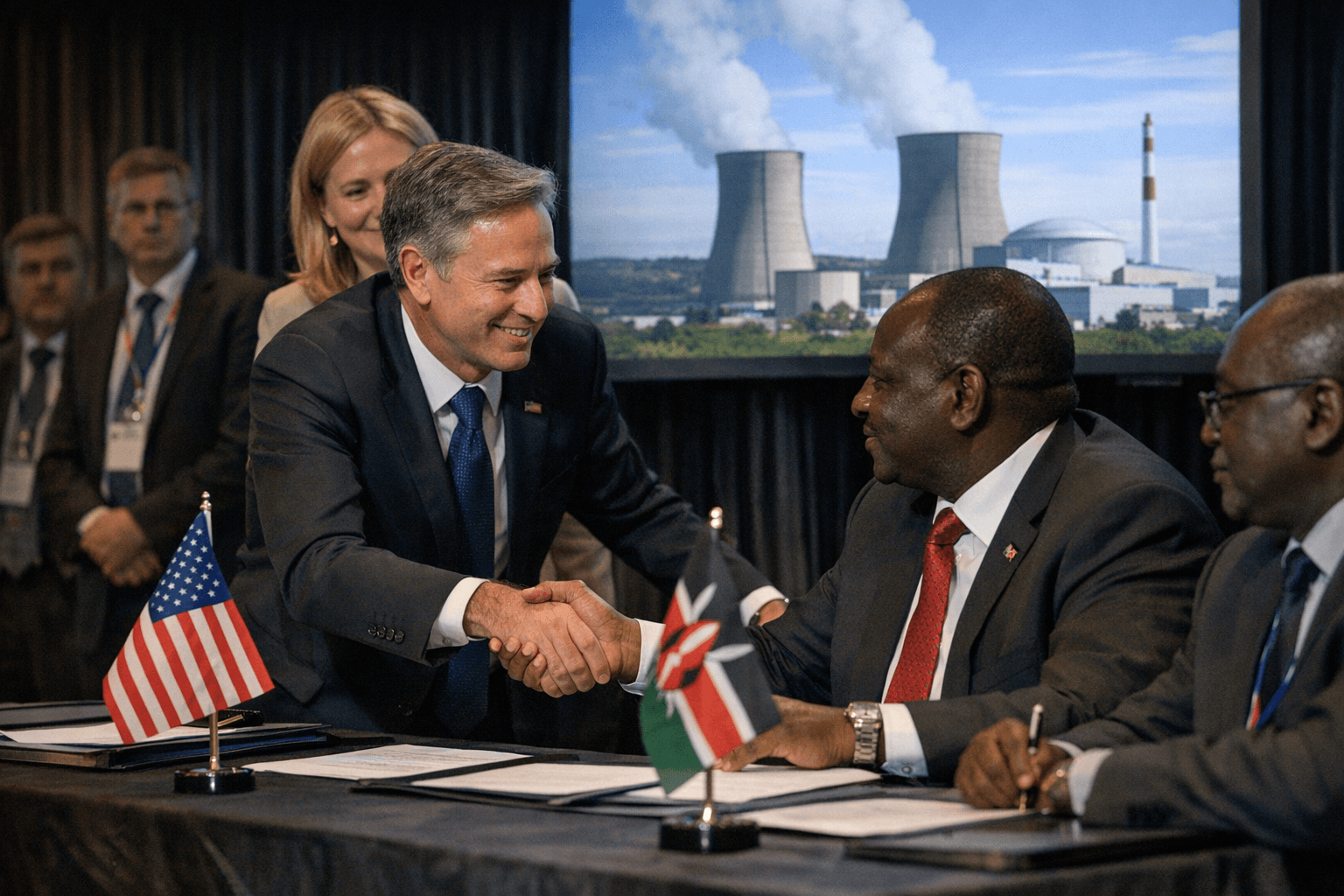
SoftBank Group CEO Masayoshi Son and Energy Secretary Chris Wright stood together at a March 20 groundbreaking at the Portsmouth Gaseous Diffusion Plant in Piketon, Ohio, to announce what Wright captured in one sentence: "If it was done today, it would be larger than all of the other data centers in the world combined, so it is gigantic in scale." The project is a $33.3 billion, 10-gigawatt AI campus backed jointly by DOE, the Department of Commerce, SB Energy, and AEP Ohio, formalized in a public announcement on March 24.
Ten gigawatts is roughly the equivalent of nine large nuclear reactors, a scale the nuclear community will immediately recognize as the kind of demand signal that should, in theory, justify a new wave of advanced reactor construction. In practice, SB Energy has committed to producing that power with 9.2 gigawatts of new natural gas generation plus an additional 800 megawatts of capacity still unspecified. That gap between expectation and execution is the central question for the nuclear industry: the world's largest planned compute cluster, built on a federal site that enriched uranium for the entire U.S. civilian fleet and weapons program throughout the Cold War, will run on methane.
The DOE's Office of Environmental Management has managed remediation at Portsmouth for decades since Cold War operations ended. Under the new agreement, SB Energy is leasing the federal land and has committed to fund accelerated cleanup to clear additional acreage for redevelopment, packaging private capital with federal EM authority in a structure no conventional developer could replicate.
The transmission side adds another $4.2 billion. SB Energy and AEP Ohio struck a deal to upgrade and build new transmission lines across southern Ohio, a commitment DOE described as compliant with the administration's Ratepayer Protection Pledge, meaning no cost increase to utility customers. Excess transmission capacity will be shared with the broader grid under the terms announced.
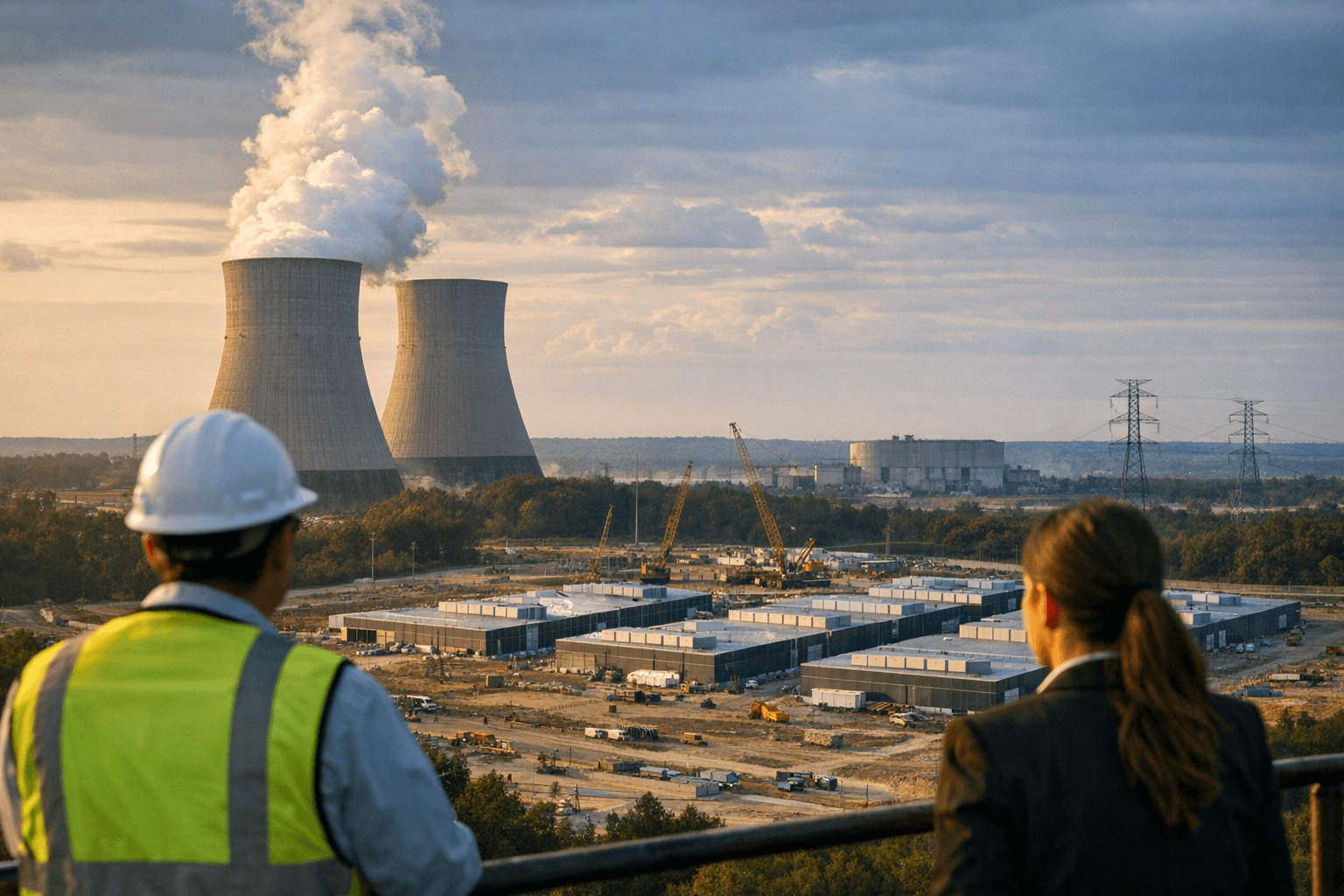
Backing the project is what Son called the Portsmouth Consortium, which spans Hitachi, Mitsubishi Electric, Toshiba, TDK, and Sumitomo Mitsui Banking on the Japanese side, alongside Bechtel, Morgan Stanley, Goldman Sachs, and J.P. Morgan. Son, who has pledged $1 trillion in U.S. data center investment over time, framed Portsmouth as the first major project under the $550 billion U.S.-Japan Strategic Trade and Investment Agreement announced in February. Project leaders estimated a peak workforce of 35,000 construction workers and 2,500 permanent positions once the campus is fully operational.
SoftBank already supplies power infrastructure for OpenAI's Stargate program, including a 1.2-gigawatt Texas site in Milam County. Portsmouth extends that playbook to an order of magnitude greater scale, stressing every gating mechanism in the PJM footprint: interconnection queue filings, state air permit approvals for a gas fleet larger than most states' entire installed capacity, and DOE EM clearances that must pace the construction schedule. No environmental impact assessment had been made public as of the March 20 groundbreaking.
The nuclear industry's working theory entering 2026 was that AI demand would be the forcing function for SMR deployment and large-unit uprates. Portsmouth tests that thesis directly. When DOE opened a legacy enrichment site to private capital, the market answered with gas. Whether NRC permitting reform and maturing SMR cost curves can change that calculus before the next wave of federal land leases closes is the industry's most consequential open question.
Know something we missed? Have a correction or additional information?
Submit a Tip