Fast computing helps engineers design safer fusion reactors
Fast modeling is turning fusion design into a faster, cheaper trial run, letting engineers probe plasma control and material limits before hardware is built.
Fusion plasmas on Earth must be pushed above 100 million C, far hotter than the roughly 15 million C core of the sun. The bottleneck is not just reaching that heat. It is shrinking the design loop so engineers can test control systems, heat loads and material limits before a reactor ever leaves the drawing board. That is where fast, reliable computing changes the pace of the field: it turns the hardest parts of fusion into problems that can be attacked in silico first, when mistakes are cheaper.
Why the math has to move as fast as the machine
A terrestrial reactor cannot borrow the sun’s gravity for compression, so the plasma has to be held in place another way. Because no known material can simply contain a plasma at those temperatures, the practical answer is magnetic confinement, with the plasma suspended and shaped by fields rather than by walls.
That makes the control problem unforgiving. Once the plasma starts to drift, turbulence can bleed away heat and ruin the conditions needed for fusion. Ionut Farcas, the mathematician at the center of this work, puts the pressure on the software side plainly: the control algorithms for a real fusion power plant have to be “bulletproof.” In other words, the code is not a side tool, it is part of the reactor’s safety case.
What fast computing changes first
The most immediate payoff from rapid modeling is not a miracle reactor overnight. It is a shorter path to answering the questions that would otherwise force costly trial-and-error on real hardware. If a design can be stressed virtually, engineers can see how the plasma behaves, where control margins get thin, and which materials or operating loads are likely to fail long before a large component is welded together.
That changes the economics of fusion development in a concrete way. Instead of building first and learning later, teams can narrow the field of viable options before committing expensive metal, magnets and support structures. Modeling reduces risk and design uncertainty by moving the hardest decisions earlier, when they are still reversible.
What the simulations have to capture
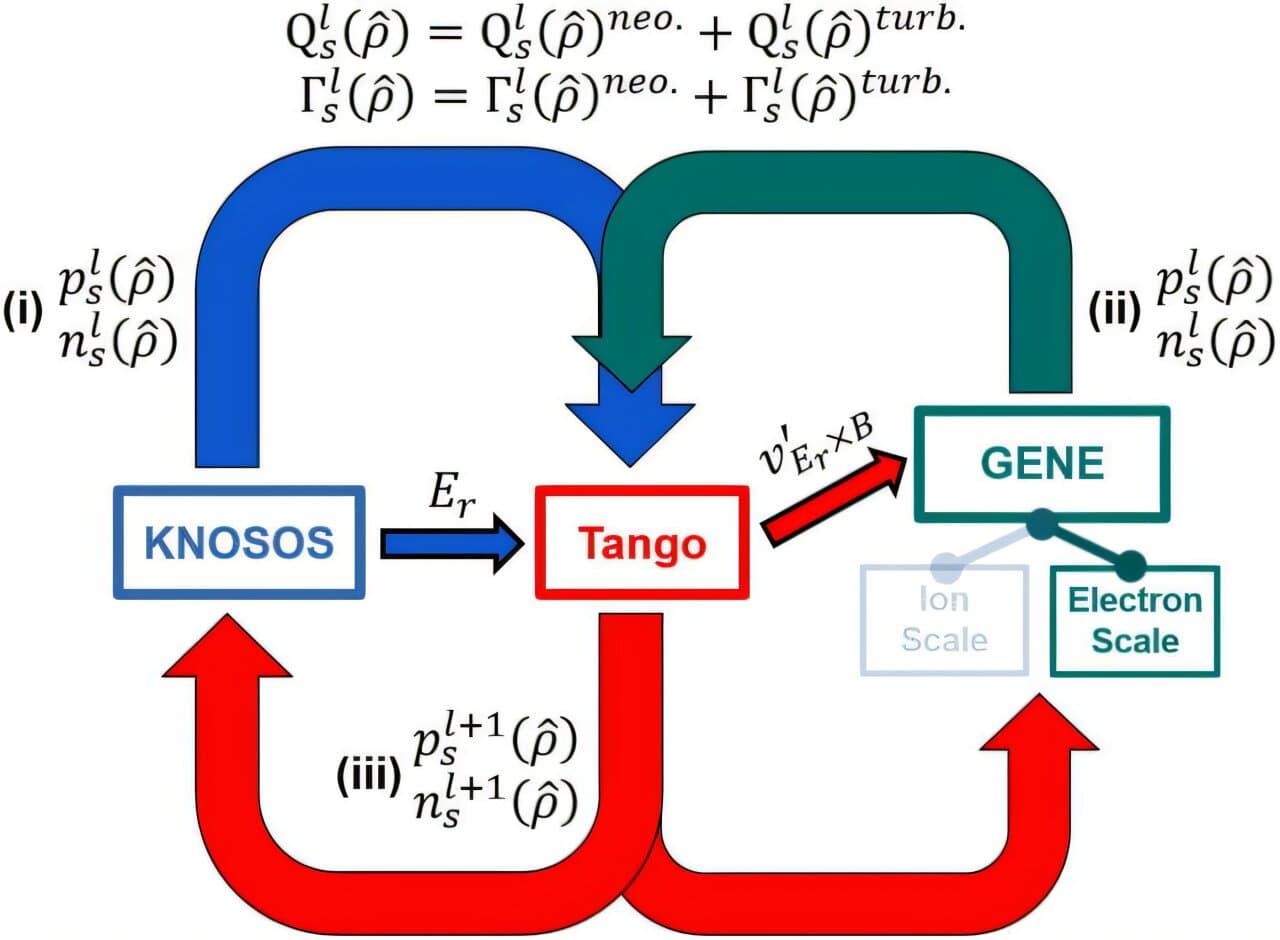
Fusion modeling has to do more than produce pretty plots of a stable plasma. It needs to track the evolution of plasma density and pressure profiles, because those profiles shape whether the plasma stays confined or slips into instability. The framework named in the story, GENE-KNOSOS-Tango, is being used for exactly that kind of work, evolving how density and pressure change so engineers can see what a proposed reactor would be asking of its control system.
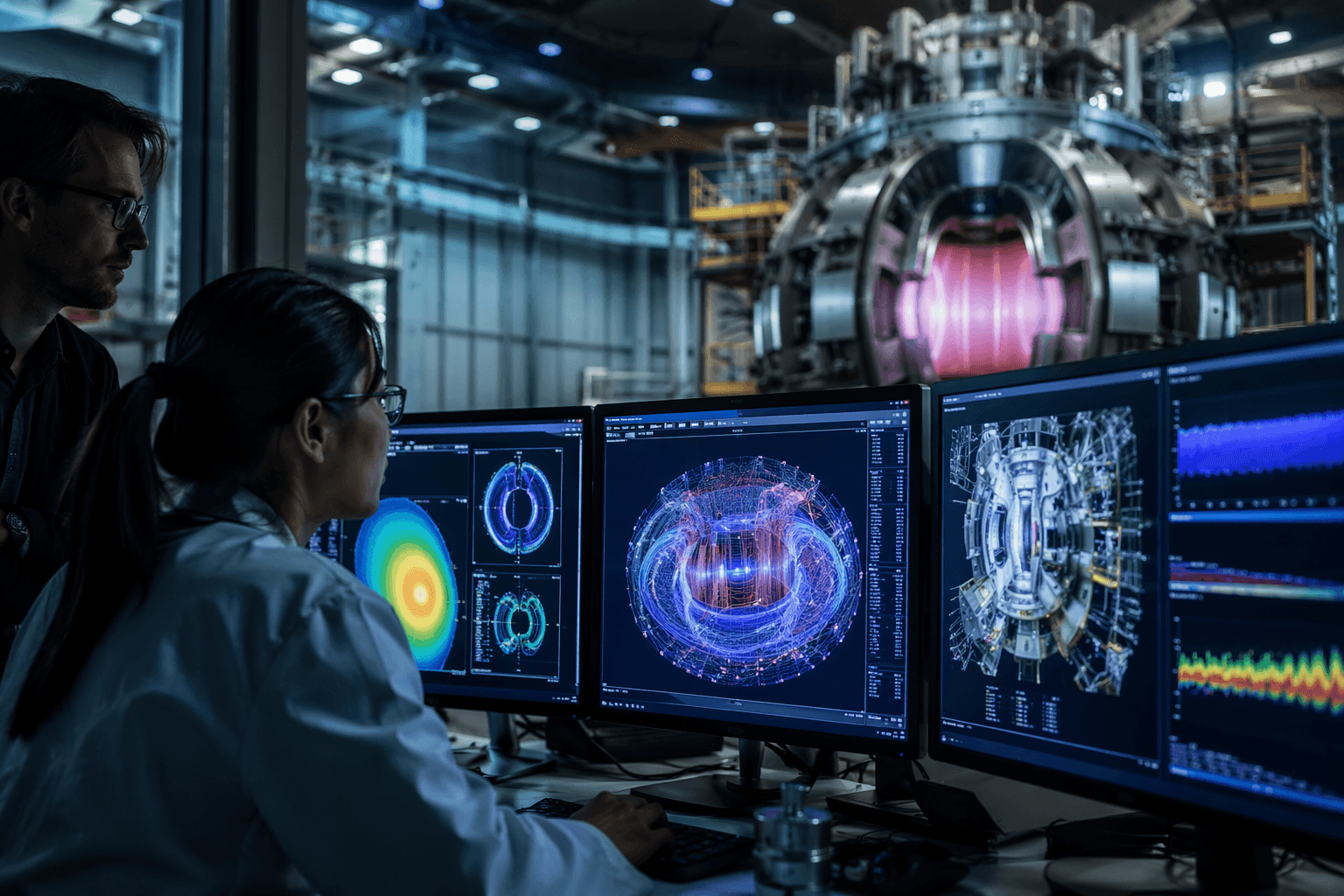
A reactor is not just a physics experiment scaled up. It is a machine that has to survive extreme temperatures and operational loads while keeping the plasma steady enough to sustain fusion. Farcas’s point about “bulletproof” control is really a warning that the software, magnets, materials and plasma physics have to line up at the same time. If any one of those pieces is underdesigned, the whole concept loses margin.
Why materials and controls rise together
Plasma behavior and the materials that surround it are tightly linked. Since no material can directly hold a plasma at more than 100 million C, the engineering challenge becomes one of indirect survival: keep the plasma floating in magnetic fields, keep the control system responsive, and keep the surrounding structures from being damaged by the loads the reactor creates.
That is why materials research and control strategy cannot be separated in a fusion program. Farcas says researchers need materials and control strategies that can survive those temperatures and loads. A control system that works in a toy model but fails under real operational stress is no better than a material that looks strong on paper and cracks under heat. Fast computation lets both be tested against the same demanding conditions before a plant exists.
The real payoff for engineers
In practical terms, the value of lightning-fast modeling is that it lets a fusion team ask and answer the expensive questions earlier. Can the plasma be kept stable long enough? Will the density and pressure profiles drift into a regime that the control system cannot recover from? Which material and operating choices can survive the thermal and mechanical punishment of a reactor cycle?
That operational shift is putting computational physics at the core of fusion engineering, not in the background. If fusion power is going to move from promise to plant, the path runs through models that can reproduce plasma behavior, stress control logic and expose material limits before the first major component is ever built.
This article was produced by Prism’s automated news system from verified source data, official records, and press releases, then run through automated quality and moderation checks before publishing. The system is built and supervised by the people who set the standards it runs under. Read our full AI policy.
Did this article answer your question?