Fulcrum Point and Blue Castle revive Utah's Green River nuclear project
A 19-year reactor proposal in Emery County just picked up a new owner mix. Fulcrum Point and Blue Castle are tying Green River to Holtec's SMR-300 and a fresh development push.
_87383.jpg&w=1920&q=75)
A project that has lived for nearly two decades in plans, studies, and reactor swaps finally got a new chassis. Fulcrum Point Holdings and Blue Castle Holdings said Friday that they have formed a joint venture to drive the Green River nuclear project in Utah through site development, licensing, and eventual reactor deployment, with Holtec International’s SMR-300 now the chosen technology.
That matters because Green River has already burned through the usual first-act nuclear steps. Blue Castle traces the project back to a 2007 proposal by Transition Power Development, and the company was formally consolidated into Blue Castle Holdings in 2009. By August 2011, U.S. Nuclear Regulatory Commission inspectors were already on site near Green River to observe pre-application subsurface investigation work tied to an Early Site Permit. In 2014, Blue Castle also signed a memorandum of understanding with Westinghouse Electric Company to pursue a two-unit AP1000 plant, a concept that never became the final path. The current site has been described as a 1,700-acre parcel west of Green River in Emery County.
That long front-end effort is not trivial. The project site has already seen meteorological and seismic data collection, core boring, geophysical surveys, groundwater monitoring, ecological studies, and bathymetry work. In nuclear development, that kind of paper trail can shave time off the next round if the commercial plan actually holds together.
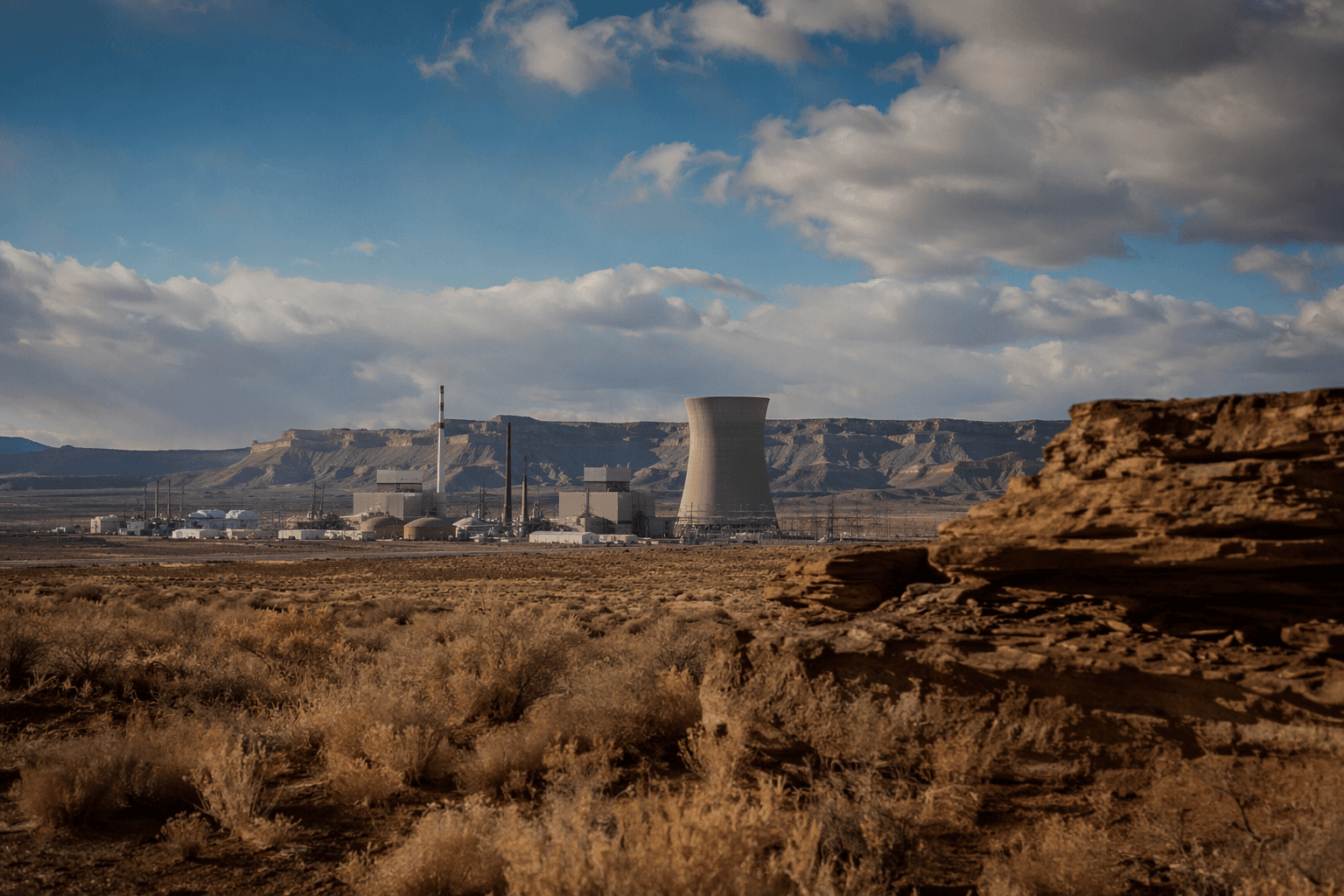
Fulcrum Point’s role gives the revival more than a new logo. The firm is affiliated with Utah nuclear services company Hi Tech Solutions, which last year signed a strategic cooperation agreement with Holtec and the State of Utah to support SMR-300 deployment in Utah and across the Mountain West. The project also fits neatly into Utah’s Operation Gigawatt push and broader regional energy-corridor planning, giving it a state-policy lane that earlier versions never had.
The hard part, as always, is turning alignment into a buildable balance sheet. Earlier estimates put Green River in the roughly $15 billion to $20 billion range, with Blue Castle once floating a $13.4 billion figure in 2017. Utah has already approved two water-rights applications for the plant after more than two years of study, but court records also described the water demand as continuous depletion of nearly all of the local districts’ apportioned water for power generation and cooling. HEAL Utah, Uranium Watch, and Living Rivers recently said they were dropping their appeal, but they also argued the project still faces serious financing obstacles.
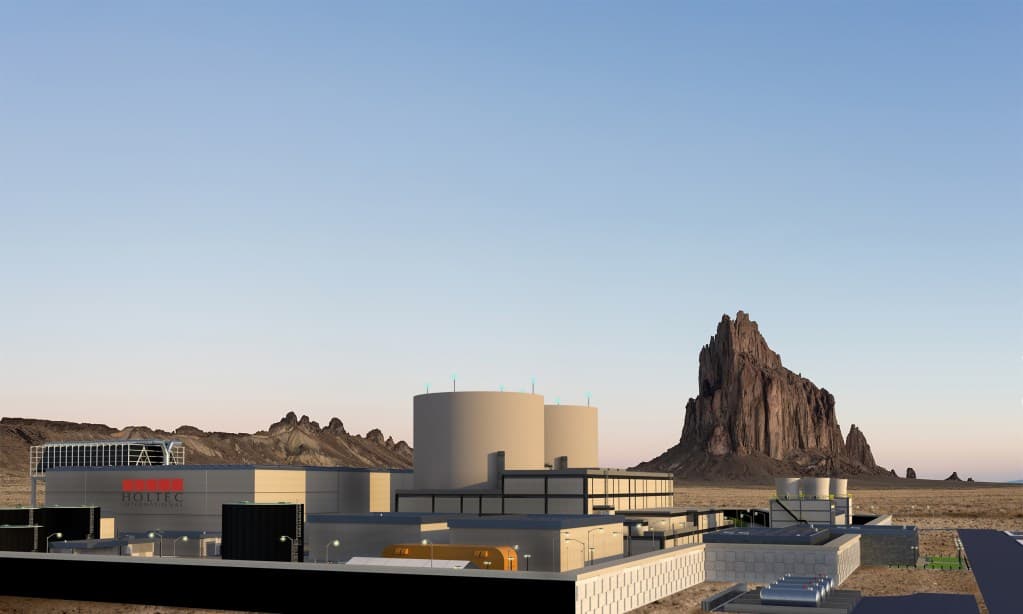
So this is the real test now: not whether Green River can generate another announcement, but whether the joint venture can lock down a financing posture, keep the licensing path moving, and show that the Holtec SMR-300 plan is more than a revived paper study. After 19 years, that is the gate that matters.
This article was produced by Prism’s automated news system from verified source data, official records, and press releases, then run through automated quality and moderation checks before publishing. The system is built and supervised by the people who set the standards it runs under. Read our full AI policy.
Know something we missed? Have a correction or additional information?
Submit a Tip