Helion’s Polaris hits 150 million degrees, first private fusion milestone
Polaris hit 150 million degrees Celsius and logged measurable D-T fusion, making Helion’s 7th prototype the first private machine to clear both marks.
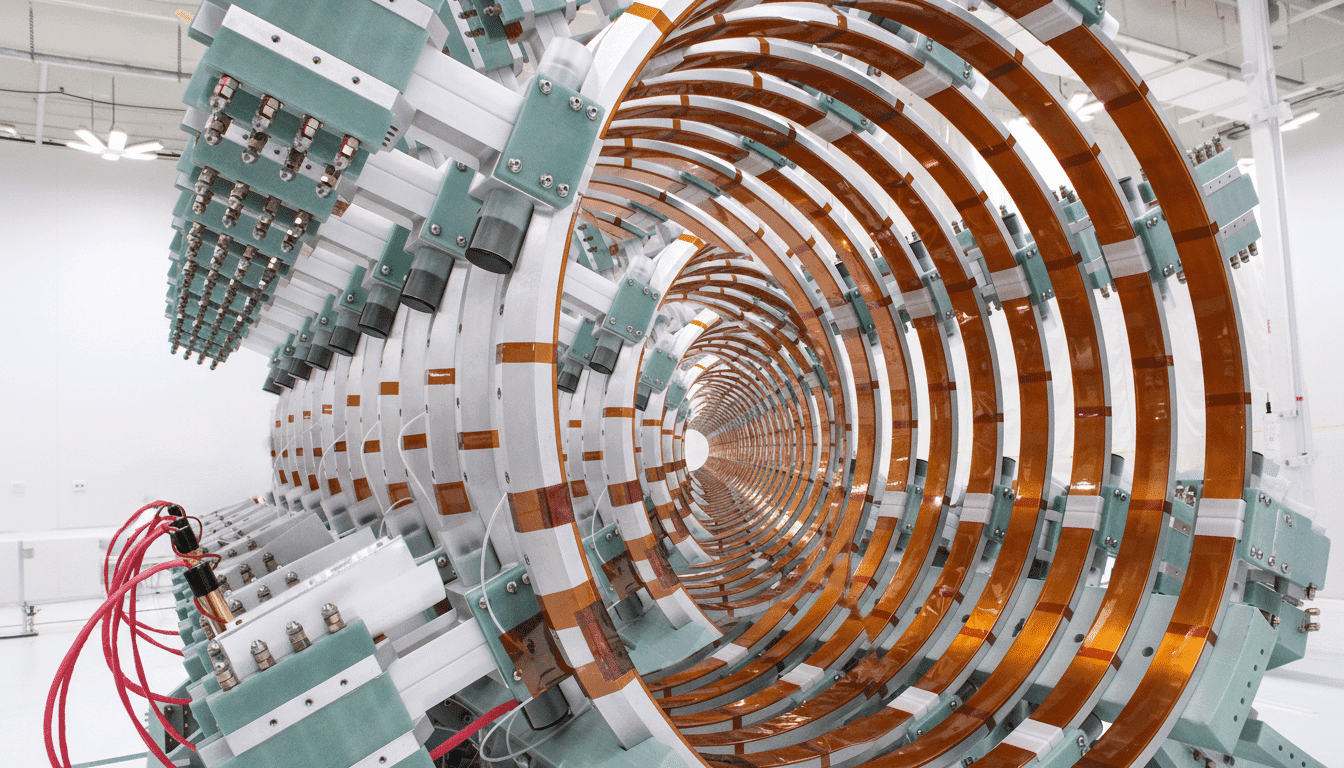
Polaris reached 150 million degrees Celsius and measured deuterium-tritium fusion, putting Helion Energy in a new category: the first privately developed fusion machine to clear both the temperature threshold and a measurable D-T result. In fusion terms, that is more than a hot-plasma milestone. Helion said the achievement shows Polaris operating in the range it sees as necessary for a commercial power plant, while still leaving the harder questions of confinement, stability and net electricity on the table.
Helion announced the result on Feb. 13, 2026, and said Polaris is its seventh fusion prototype. The company also said the machine crossed more than 13 keV, a temperature band it has tied to commercial relevance. That follows Trenta, Helion’s sixth-generation prototype, which reached 100 million degrees Celsius in 2021 and set the company’s earlier private-sector record. Helion says Trenta’s results directly shaped Polaris, which is built around a field-reversed configuration that accelerates two plasma streams, crashes them together and compresses them to fusion temperatures in less than a millisecond.
The company has framed Polaris as a machine meant to do more than post a record. Helion says it is designed to demonstrate electricity production from fusion and validate the path to its first power plant, Orion. Helion’s first commercial plant is intended to begin initial operations in 2028, with Microsoft lined up under a 2023 power purchase agreement that targets 50 MW or more after a one-year ramp-up. Helion has also said it secured land and approvals for construction in Everett, Washington, as it pushes toward grid electricity from fusion.

Helion Energy chief executive David Kirtley called the milestone exciting, and Jamie Furlong, a fusion scientist at the University of Washington, said it was exciting to see measurable D-T fusion and temperatures above 13 keV. Those reactions do not yet amount to a working power plant, but they do show Polaris doing something no privately funded fusion machine had done before. The next test is whether Helion can turn that brief, violent burst of plasma physics into repeatable, controllable electricity on the way to Orion.
This article was produced by Prism’s automated news system from verified source data, official records, and press releases, then run through automated quality and moderation checks before publishing. The system is built and supervised by the people who set the standards it runs under. Read our full AI policy.
Did this article answer your question?