ITER installs first Russian gyrotrons for plasma heating system
Three Russian gyrotrons are now in ITER’s Radiofrequency Building, a concrete step toward the heating system that will push plasma to fusion temperatures.
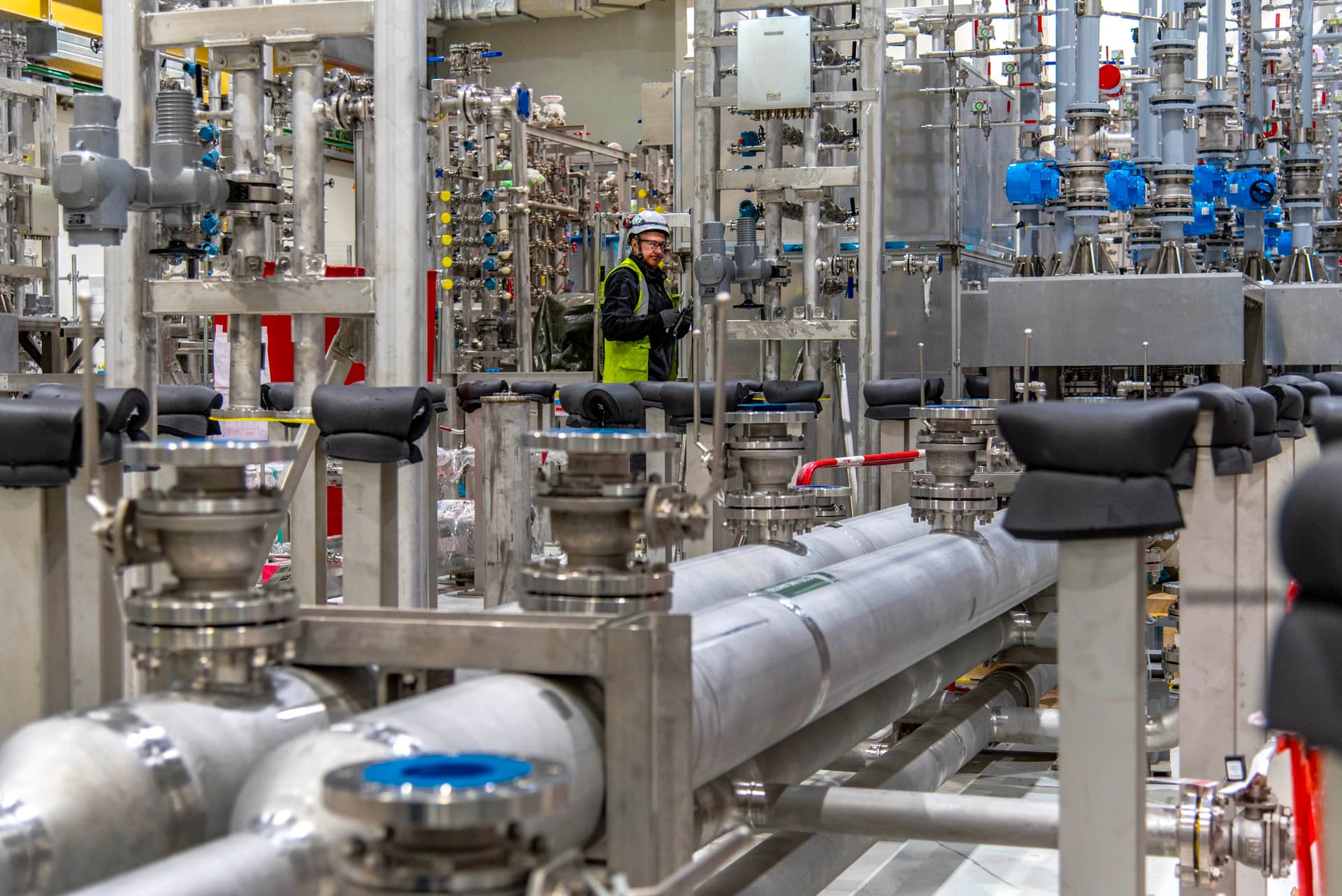
The first three Russian-made gyrotrons are now installed in ITER’s gyrotron hall, a visible step from delivery toward the plasma-heating system that will help drive the machine to fusion conditions. The installation matters because these units are not spare hardware on the sidelines, they are part of the electron cyclotron resonance heating system, one of the external systems ITER will use to raise plasma to 150,000,000 °C.
ITER said the work was carried out during a six-week mission by a three-person team representing the Russian Domestic Agency, the Institute of Applied Physics of the Russian Academy of Sciences, and the gyrotron manufacturer GYCOM. With the units in place on the top floor of the Radiofrequency Building, the project can now finish auxiliary cabling and associated systems before testing begins once all connections are complete.

That building was designed for exactly this job. The Radiofrequency Building is a three-storey structure about 25 metres high and 50 metres long, set beside the Assembly Hall. Its top floor houses the wave generators, while the first two floors contain the power supplies and current stabilizers that feed the system. The gyrotrons themselves are among the most demanding microwave sources in fusion engineering, and ITER’s units are designed to deliver 1 MW each at 170 GHz.
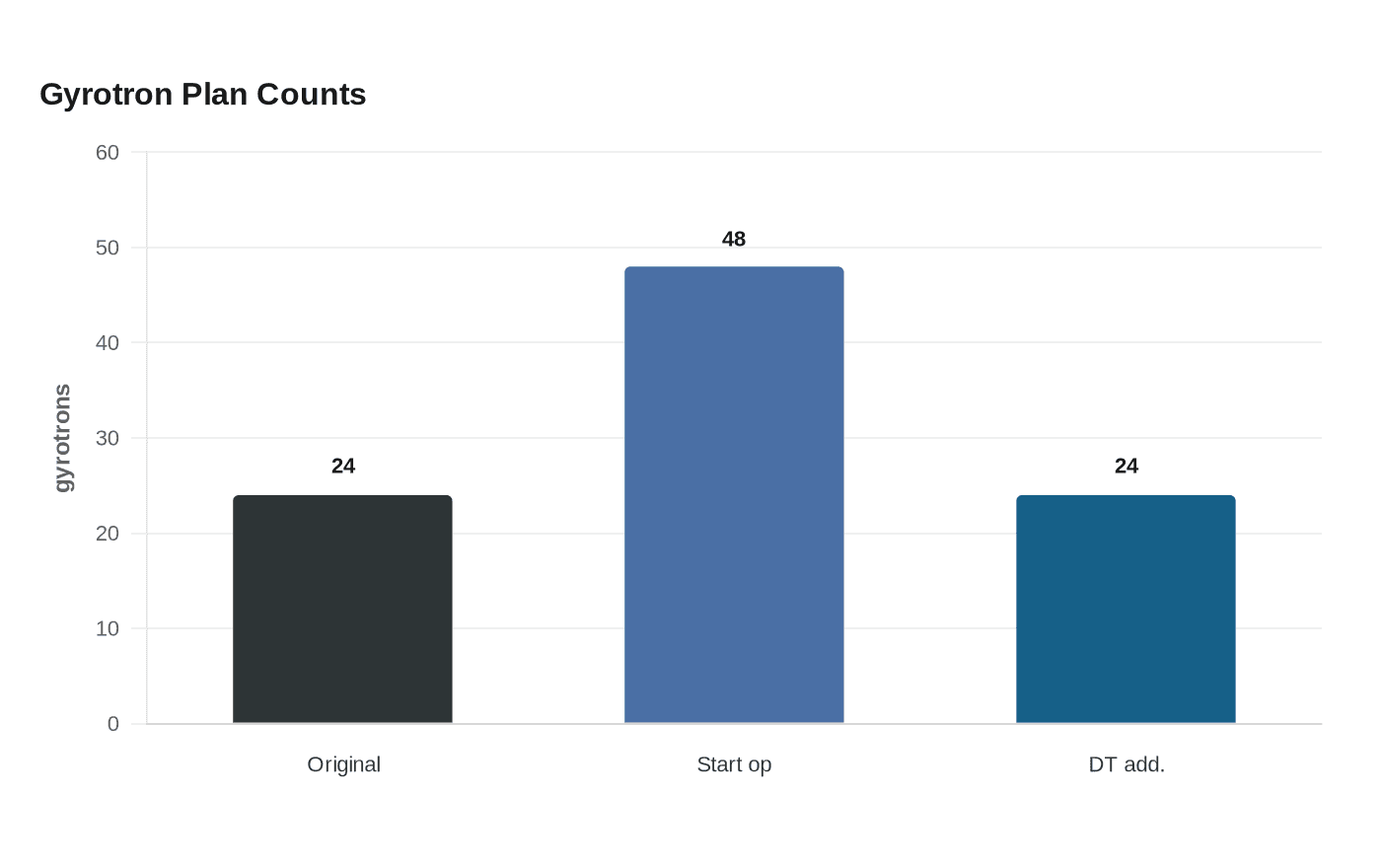
The installation also marks another checkpoint in a long international supply chain. ITER’s original plan called for 24 gyrotrons in total, eight from Russia, eight from Japan, six from Europe and two from India. A newer project baseline now calls for 48 gyrotrons at the start of operation, plus another 24 for the first phase of deuterium-tritium operation, which helps explain why each installed unit carries more weight than a simple procurement update.
The hardware has been years in the making. ITER has said gyrotrons have been in development for decades, with Russian prototype factory acceptance testing reported in 2018, the fourth Russian gyrotron passing factory acceptance testing in 2019, and the first 16 gyrotrons from Japan and Russia delivered to ITER by 2021. This latest installation shows the work has moved well beyond factory checks. The heating system that will help make plasma controllable in the tokamak is now entering the stage where building, cabling and commissioning have to line up before the system can matter in operation.
This article was produced by Prism’s automated news system from verified source data, official records, and press releases, then run through automated quality and moderation checks before publishing. The system is built and supervised by the people who set the standards it runs under. Read our full AI policy.
Did this article answer your question?