JUNO delivers first neutrino results, sharpens reactor oscillation measurements
JUNO’s first 59.1 days of validated data already cut oscillation uncertainty by 1.6 times, a strong early check on the detector’s mass-ordering mission.

JUNO has cleared its first real milestone. With just 59.1 days of validated data, the giant detector in southern China has already delivered the most precise reactor-neutrino oscillation measurement yet, showing that the machine is behaving like the precision instrument it was built to be.
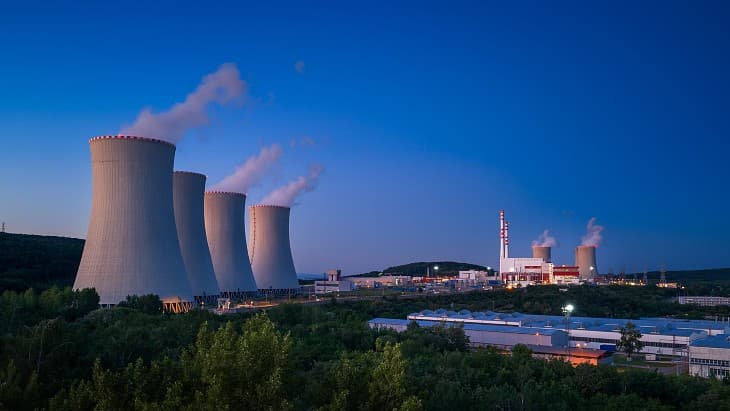
The Jiangmen Underground Neutrino Observatory sits about 700 metres underground in Guangdong, China, in a spherical tank holding 20,000 tonnes of liquid scintillator. From that depth, it watches antineutrinos streaming from a cluster of nuclear reactors 52.5 kilometres away, turning tiny distortions in their behavior into a test of the detector’s design. The collaboration used data collected between August 26 and November 2, 2025, and the result sharpened two key oscillation parameters with uncertainties reduced by a factor of 1.6 compared with the combined results from previous decades.

That is the kind of early report card reactor-watchers look for. JUNO’s central job is to determine the neutrino mass ordering, one of particle physics’ major unresolved questions, and the first analysis showed the detector is already operating at the level needed for that campaign. Nature said the result validates the detector design and points to readiness for the larger dataset JUNO will need to resolve the interference pattern in reactor antineutrinos with sub-percent precision.
The performance details matter as much as the headline physics. JUNO says it can already measure neutrino energy to about 3% at 1 MeV, and the new analysis also supports the collaboration’s claims on radiopurity, energy resolution, and detector stability. Those are the boxes that have to be checked before a mass-ordering measurement can move from aspiration to serious prospect, and they were strong enough to earn praise from outside experts as well. Arthur McDonald highlighted JUNO’s design-level performance, while reviewers described the work as validating both the detector performance and the analysis methodology.
The first result also broadens JUNO’s horizon beyond reactor neutrinos. The detector is meant to serve a wider program that includes supernova neutrinos, geo-neutrinos, solar neutrinos, and atmospheric neutrinos, but the reactor signal is the cleanest early proof that the instrument is ready for precision work. A detector-performance paper had already appeared as a cover article in Chinese Physics C in April 2026, and the new Nature result now turns that commissioning promise into a working physics measurement. For JUNO, the milestone is simple: the machine is not just built, it is already seeing the reactor world as designed.
This article was produced by Prism’s automated news system from verified source data, official records, and press releases, then run through automated quality and moderation checks before publishing. The system is built and supervised by the people who set the standards it runs under. Read our full AI policy.
Did this article answer your question?