Low-frequency lasers could boost fusion tunneling by orders of magnitude
A Chinese theoretical study says low-frequency lasers can reshape fusion collisions so tunneling jumps by orders of magnitude. The catch: it is still a paper result, not a reactor demo.

A different way to push fusion
The most interesting part of this work is not that it promises hotter plasmas. It points to something more awkward for the usual fusion playbook: using intense low-frequency laser fields to change how nuclei meet in the first place. In the model led by Jintao Qi of Shenzhen Technology University, with Zhaoyan Zhou of the National University of Defense Technology and Xu Wang of the Graduate School of the China Academy of Engineering Physics, the laser does not replace the Coulomb barrier. It makes tunneling through that barrier more likely by broadening the collision-energy distribution during the interaction itself.
That is a meaningful shift for fusion builders. Traditional approaches lean on extreme temperature, often described as tens of millions of kelvin, to increase the odds that nuclei get close enough to fuse. This study suggests a different lever: if the field can be made intense enough, and if its frequency is low enough, the laser can add and remove energy through multi-photon processes during the collision, nudging the quantum probability in the right direction.
What the laser method changes
The core mechanism is multi-photon interaction. In plain reactor language, the laser dresses the collision, so the pair of nuclei does not arrive at a single neat energy but at a spread of effective energies. That spread matters because fusion at low energies is a tunneling problem, and tunneling probability rises sharply when the distribution is widened toward the barrier.
The authors argue that low-frequency lasers outperform high-frequency lasers in this framework because they can drive many-photon absorption and emission events during the collision. That matters because the study is not saying “any brighter laser helps.” It is saying the frequency regime changes the interaction physics, and the low-frequency side may be better suited to this specific route to enhancement.
The paper also takes care to place the result inside the existing laser toolbox. The analysis is described as relevant to most fusion reactions and to currently available intense lasers, including X-ray free-electron lasers and solid-state near-infrared lasers. In other words, the concept is not limited to a single futuristic machine class, even if the performance thresholds are still extremely demanding.
The benchmark numbers that make the claim concrete
The cleanest benchmark in the study is deuterium-tritium fusion at a collision energy of 1 keV. In that case, a low-frequency laser with a photon energy of 1.55 eV and an intensity of 10^20 W/cm² was reported to raise fusion probability by three orders of magnitude. Push the intensity to 5×10^21 W/cm², and the same framework was reported to boost fusion efficiency by nine orders of magnitude.
Those are striking numbers, but they need to be read correctly. They are theoretical outputs from a model, not an experimental proof of fusion gain. The result shows how much the tunneling picture can shift if the field-collision coupling behaves the way the analysis predicts. It does not show that a real target, real optics system, or real reactor environment will deliver those gains on demand.
That distinction is the whole story for fusion people. A paper can identify a route where the math becomes dramatically friendlier. A reactor still has to survive the engineering.
Why the result matters to the fusion roadmap
This work lands in a broader Chinese and international effort to lower the brutal temperature requirements of controlled fusion. That effort is visible across inertial-fusion research and the expanding buildout of high-intensity laser facilities in China. The attraction is obvious: if a laser field can increase the effective fusion probability without relying exclusively on hotter and hotter plasmas, it could ease one of the hardest bottlenecks in the field.
For serious fusion builders, the practical appeal is not just higher probability on a whiteboard. It is the possibility of changing how one thinks about target conditions, laser coupling, and the energy balance of a reaction system. If the laser can help the nuclei tunnel more easily, then in principle it may reduce the amount of thermal hammering needed to get useful reaction rates.
That said, the pathway from a theoretical gain to reactor relevance is long. The paper suggests a possible route, but the system-level questions remain the ones that always decide whether a result survives the trip from theory to hardware.
The engineering hurdles that still stand between the paper and the machine
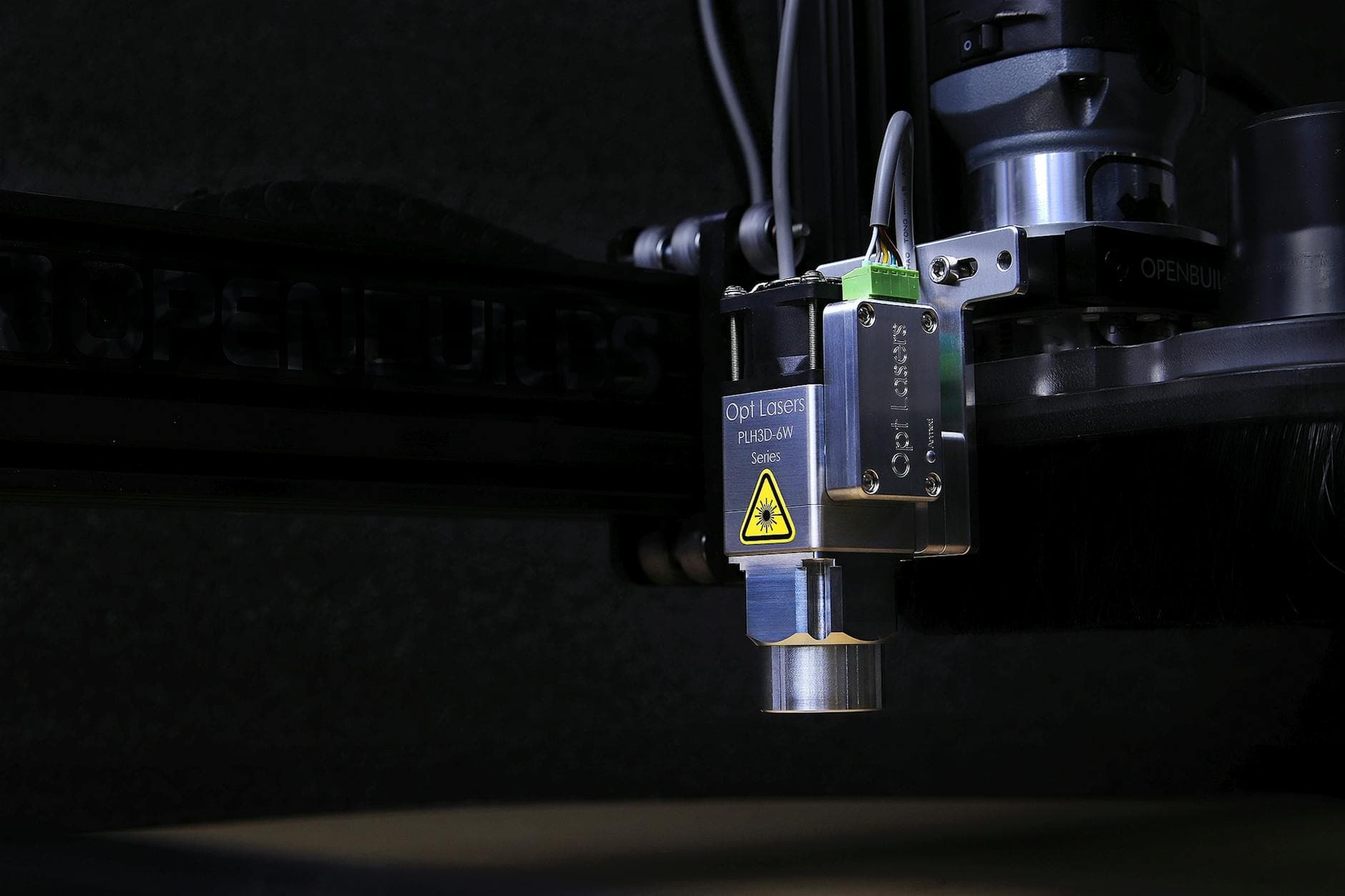
The largest hurdle is delivering these intensities efficiently and repeatably in a real reactor environment. A field on the order of 10^20 W/cm², let alone 5×10^21 W/cm², is not a laboratory curiosity when it comes to fusion hardware. It raises obvious questions about pulse delivery, target survival, repetition rate, optical damage, and whether the coupling remains stable enough to matter shot after shot.
There is also the matter of timing and geometry. The effect described here depends on the laser interacting with the nuclear collision in just the right way, which means the target design, beam shaping, synchronization, and plasma conditions all become part of the physics, not just the engineering. A fusion device cannot simply “add a stronger laser” and expect the tunneling picture to scale cleanly.
That is why the theoretical nature of the study is so important. It establishes a mechanism and provides quantified benchmarks, but it does not yet answer the most expensive question in the room: can the effect be turned into a robust, reactor-compatible process?
The real takeaway for fusion watchers
What this paper changes is not the state of fusion hardware. It changes the map. Instead of treating temperature alone as the main road to fusion, it suggests that intense low-frequency lasers may be able to reshape the collision itself and make quantum tunneling work harder in our favor.
That is enough to matter, even before the first experimental proof arrives. For now, the promise is not a fusion breakthrough but a sharper route through the maze: one that says the next big advance might come from learning how to tune the collision, not just how to heat the plasma.
Know something we missed? Have a correction or additional information?
Submit a Tip