Mammoet and ULC-Energy Team Up to Speed Dutch Nuclear Builds
Mammoet and ULC-Energy signed a Dutch build pact aimed at the hardest nuclear job: moving giant modules on time. It backs delivery logistics, not a named reactor order.
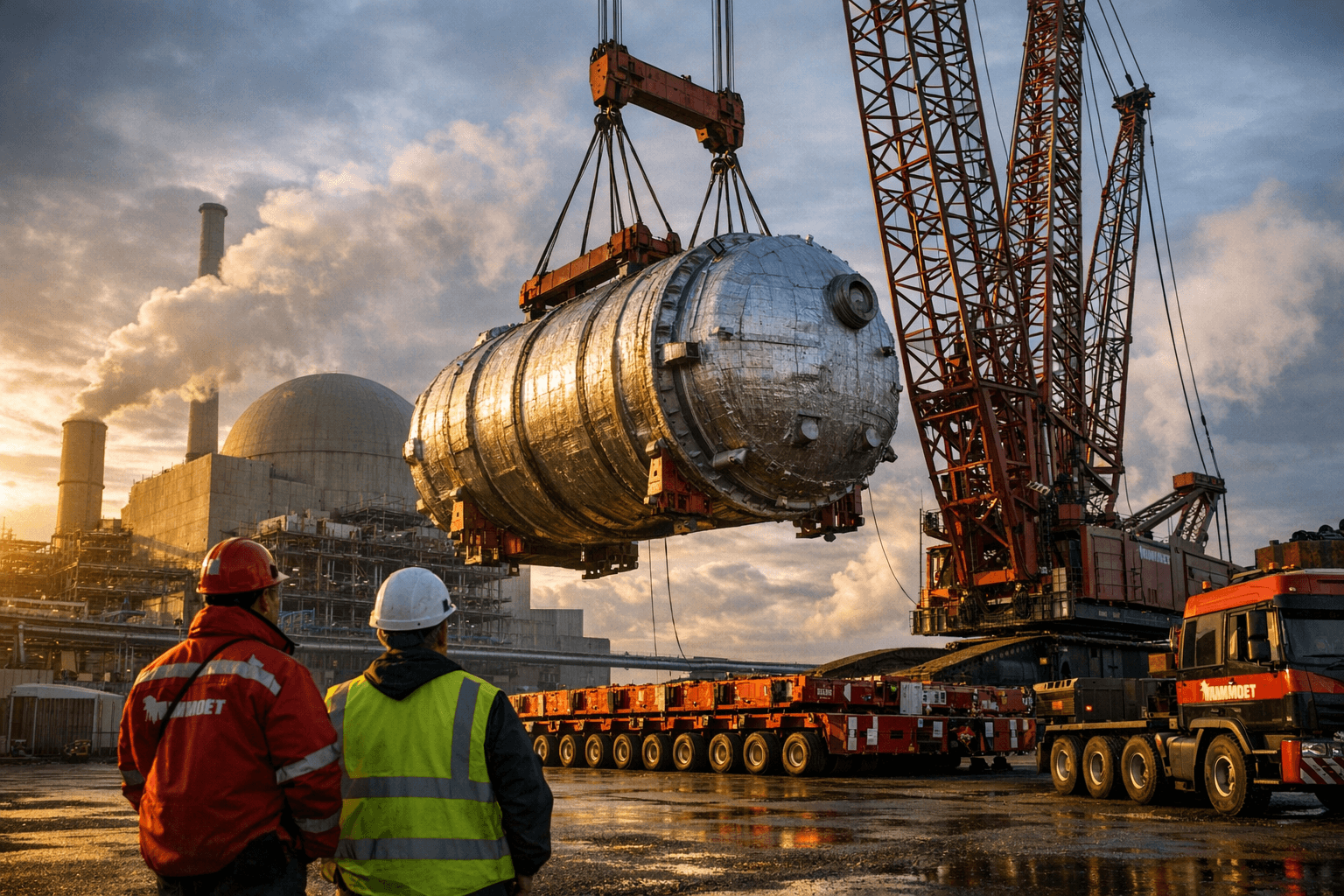
Mammoet and ULC-Energy signed a cooperation agreement on April 14 aimed at making Dutch nuclear projects easier to build, with modular construction and logistics at the center. The idea is blunt and useful: fabricate large reactor components off-site, move them with Mammoet’s heavy transport and lifting capability, then install them on a tight sequence so the jobsite stays simpler, faster and less exposed to the kind of execution risk that usually haunts nuclear new-builds.
The agreement does not attach itself to a single named reactor program. That matters, because ULC-Energy has been positioning itself as a Netherlands-only development shop, with offices in Amsterdam and Arnhem, coordinating the full stack needed to get an SMR project built: a location, an operator, licences, shareholders, funding, customers and the commercial contracts to hold the deal together. In other words, this is not just a memo about ambition. It is an attempt to build the delivery machinery before concrete and steel dominate the schedule.
The timing is no accident. The Dutch government made nuclear power central to climate and energy policy in December 2021, then chose Borssele in December 2022 as the preferred site for two new reactors. Industry reporting has said those units could be completed around 2035, a timeline that only works if the supply chain and construction plan are disciplined from the start. Borssele itself is a 485 MWe pressurised water reactor operated by EPZ and in service since 1973, so the country already has one living reference point for how hard it is to keep nuclear infrastructure moving cleanly over decades.
The policy framework has kept thickening. In October 2025, the Dutch cabinet submitted an amendment to the Nuclear Energy Act to allow Borssele to keep operating beyond 2033, and the government asked that the plant remain open until 2054 if it can be done safely. The same package included plans for a new state-owned company to build and operate two new nuclear power plants. Earlier, the draft 2024 Climate Fund set aside €320 million for nuclear-related work, including Borssele’s extension, two large reactors, SMR development and nuclear skills. ULC-Energy already has an exclusive agreement with Rolls-Royce SMR to work on deployment in the Netherlands, so the industrial pieces are starting to line up around actual build options. One industry forecast says Dutch nuclear capacity could reach 7 GW by 2050, and deals like this are the sort that turn that number from policy language into a construction problem with a real answer.
This article was produced by Prism’s automated news system from verified source data, official records, and press releases, then run through automated quality and moderation checks before publishing. The system is built and supervised by the people who set the standards it runs under. Read our full AI policy.
Did this article answer your question?


