Nakamura’s Blue Laser Fusion pushes uranium-free fusion with optical cavities
Blue Laser Fusion’s optical cavity bet now has Nakamura on a November 2025 paper, as the startup chases uranium-free fusion with pulsed lasers.
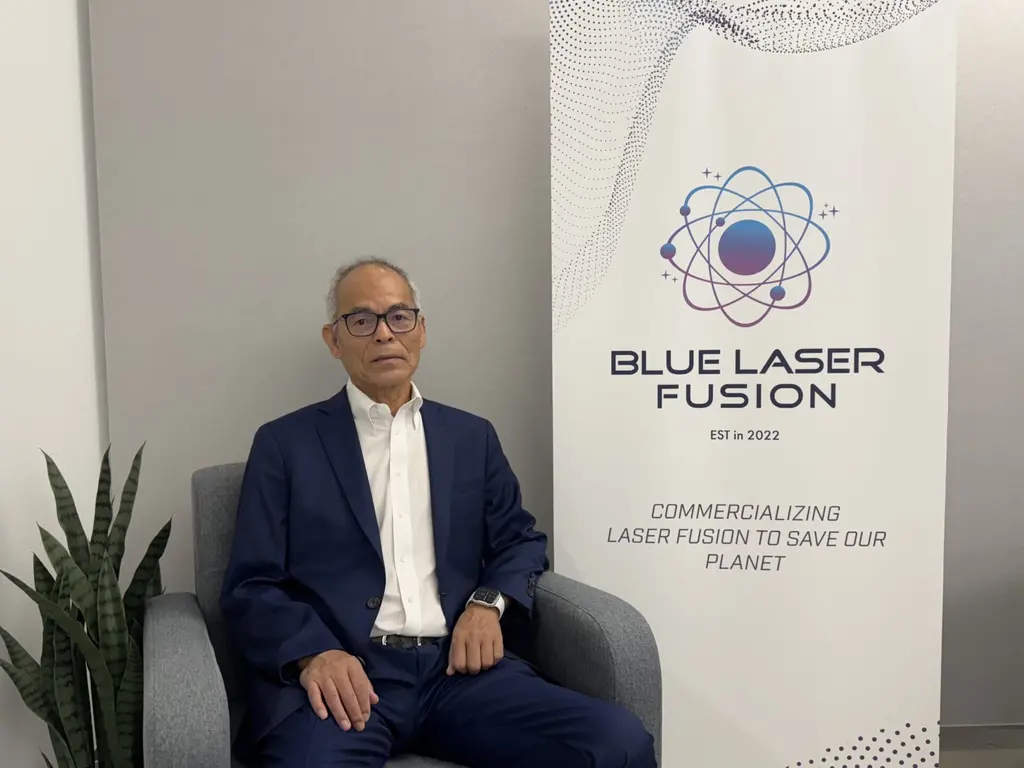
A November 2025 Optics Express paper listed Shuji Nakamura among the authors on Blue Laser Fusion’s optical enhancement cavity work, putting the Nobel Prize winner’s name on the startup’s attempt to make laser fusion less cumbersome and more repeatable. The company’s wager is simple enough to state and hard enough to pull off: use a coherent-beam combined laser, an optical enhancement cavity and a direct-drive reactor layout to push inertial fusion energy past the lab-demo stage.
Blue Laser Fusion was founded in 2022 and says it is based in Santa Barbara, California, with an R&D lab in Osaka, Japan. Company materials also describe a headquarters in Palo Alto and a Tokyo office. The startup says it is aiming for a 1-gigawatt pilot fusion power plant near Santa Barbara by 2032, a timeline that depends on turning its cavity-based laser architecture into something that can fire cleanly, align tightly and hold up under power-plant conditions.
The hardware case runs through two Department of Energy INFUSE awards. In September 2024, Blue Laser Fusion said it won a project with Caltech on high-energy pulsed laser technology. In 2025, the company said it won another INFUSE award, this time with Colorado State University on high-energy pulsed laser optics. An ARPA-E presentation described the platform as a coherent-beam combined laser using an optical enhancement cavity and a modular laser architecture, which is the kind of system-level detail that matters if the goal is to turn a bench-scale fusion concept into a plant design.
Nakamura gives the project its marquee credibility. He won the 2014 Nobel Prize in Physics for inventing efficient blue LEDs, and a 2025 UCSB profile said the 72-year-old was still pursuing what he has called an “endless” clean-energy source. Blue Laser Fusion has framed that work as laser-based inertial fusion energy, and it has paired the energy pitch with a broader list of targets: data centers, AI, manufacturing, water desalination and EVs. The company also says its platform has relevance for directed-energy defense, underscoring how much interest sits around high-energy pulsed lasers beyond the power sector.
Blue Laser Fusion’s financing trail has been just as aggressive. The startup said it completed a $25 million seed round in 2023, then later announced a $37.5 million Series Seed round with SoftBank Corp., the Maezawa Fund and Itochu Corporation. ITOCHU announced a capital and business alliance with Blue Laser Fusion in March 2024, and company and ARPA-E materials identify SoftBank and Itochu as strategic shareholders. In October 2025, a director of the company’s Energy Collaborative Research Institute was selected as project manager for Japan’s Fusion Energy Moonshot Program Goal 10.
That leaves the same central question that has followed every serious laser-fusion program for years: whether the optical cavity can do more than sharpen the beam on paper, and actually make a uranium-free fusion platform that can survive the machine physics.
This article was produced by Prism’s automated news system from verified source data, official records, and press releases, then run through automated quality and moderation checks before publishing. The system is built and supervised by the people who set the standards it runs under. Read our full AI policy.
Did this article answer your question?