Nebraska and Minnesota advance plans for new nuclear construction
Nebraska narrowed a 16-town nuclear siting search to four communities, while Minnesota funded a study that could test whether its 1994 nuclear ban can survive its 2040 climate goal.
A siting study in Nebraska just cut a 16-community search down to four names, and that is the kind of move that tells you nuclear planning has left the whiteboard. Sutherland, Beatrice, Brownville and Norfolk emerged as the strongest prospects for next-generation reactors, with the screening tied to infrastructure and other siting criteria that were checked against Nuclear Regulatory Commission considerations.
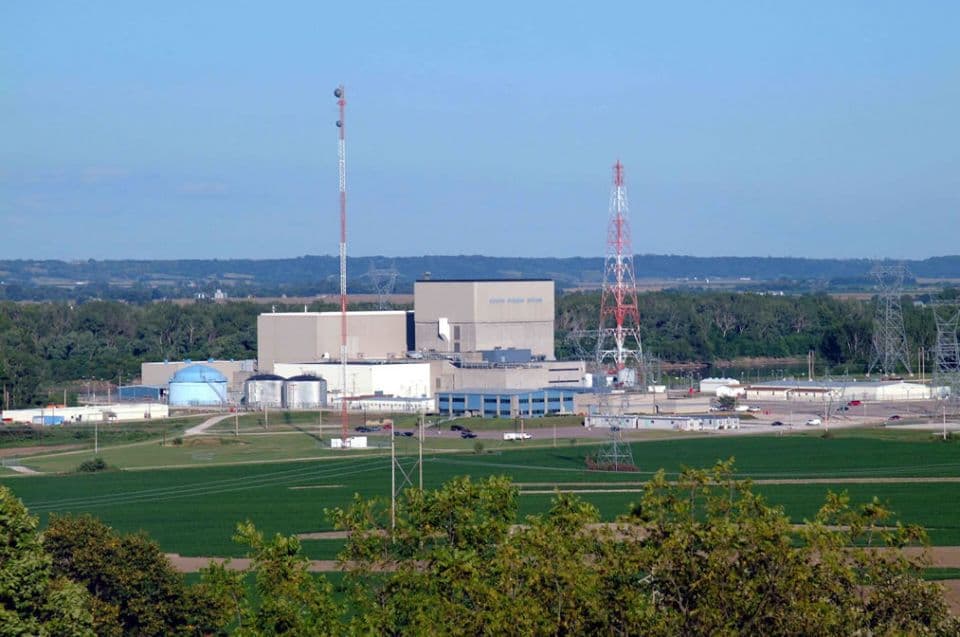
Nebraska already has a nuclear anchor in place. Cooper Nuclear Station, near Brownville, is the state’s only nuclear power generator, and Nebraska Public Power District says it produces about 835 megawatts, enough to serve more than 385,000 residential customers during the hottest summer. That matters because new reactor talk in Nebraska is not starting from scratch; it is building around an operating plant, an existing workforce and a utility that already knows what nuclear operations look like on the ground.
The next gate is just as concrete. Cooper’s current operating license expires on January 18, 2034, and Nebraska Public Power District filed a subsequent license renewal application with the Nuclear Regulatory Commission in May. If that renewal is approved, Cooper could keep running for 20 years beyond the current license period. The Nebraska Legislature put $1 million behind the feasibility work, routed through the Nebraska Department of Economic Development, and the study’s second phase included deeper public conversations with the 16 communities that volunteered to host them. Tom Kent, Nebraska Public Power District’s president and chief executive, said those conversations were positive and valuable. The results now feed into the Great Plains New Nuclear Consortium, the utility group formed by Nebraska Public Power District, Omaha Public Power District, Lincoln Electric Systems and Grand River Dam Authority.

Minnesota is moving on a different track, but the signal is similar: the state is spending money on the front end of a nuclear decision instead of treating it as a hypothetical. Lawmakers authorized $500,000 for a study of new nuclear construction, to be carried out by the Minnesota Department of Commerce with the Great Plains Institute, and the report is due January 30. The study will look at costs, federal regulations, financial risks, environmental impacts, waste storage or reprocessing, advances in conventional plants and small modular reactors, and effects on workforce and host communities.
That study lands in the middle of a bigger fight. Minnesota’s Clean Electricity Standard, enacted in 2023, calls for 100% carbon-free electricity by 2040, with interim targets of 80% by 2030 for investor-owned utilities and 90% by 2035 for all utilities. But state law still bars a certificate of need for a new nuclear-powered generating plant, and that moratorium dates to 1994. A coalition of roughly 60 utilities, electric cooperatives, labor unions, local governments and others has been pressing to repeal it, while Prairie Island leaders keep raising the old wound: the plant was built without their consultation, and spent fuel storage remains part of the argument.

Put the two states side by side and the pattern is hard to miss. Nebraska is narrowing sites, renewing a plant and preparing utility-led planning. Minnesota is testing whether a climate target, a 1994 ban and a very long memory can all survive the same nuclear conversation.
This article was produced by Prism’s automated news system from verified source data, official records, and press releases, then run through automated quality and moderation checks before publishing. The system is built and supervised by the people who set the standards it runs under. Read our full AI policy.
Know something we missed? Have a correction or additional information?
Submit a Tip